I mentioned the nineteen-year-old commis who had to teach a former finance controller how to hold a knife. What I didn’t tell you is how badly I needed it. In my first week I diced an onion the way most home cooks do — clutching it in a fist, hacking downward, eyes streaming, pieces flying everywhere in a dozen different sizes. The commis watched for about four seconds, gently took the knife off me, and showed me the grip and the claw. Within a day my onion looked like an onion is supposed to look. Within a week I was twice as fast and no longer afraid of the blade. Here is the honest truth no cookbook prints in bold: knife skills are the single highest-leverage thing a beginner can learn. Not a recipe. Not a fancy technique. Just learning to cut properly, because you do it before almost everything else you’ll ever cook.
Good knife work makes you faster, safer, and — this surprised me — a genuinely better cook, because evenly cut food cooks evenly. It’s also the skill that instantly separates people who look comfortable in a kitchen from people who look terrified. The good news is that it’s mostly a handful of fundamentals plus practice, and the practice is free: you’re going to be chopping vegetables anyway. Here’s the whole curriculum, in the order I wish I’d learned it.
Before You Cut Anything
Everything starts with the right blade in the right hand on the right surface. Choosing Your First Chef’s Knife matters less than the marketing suggests — one good, comfortable 20cm chef’s knife will do ninety percent of your work — but it has to feel right in your hand. Just as important and far more overlooked is Choosing a Cutting Board: big, heavy, and stable, because a board that slides is how people get hurt. Then, before any food is touched, comes the professional habit that reorganised my entire way of cooking — Prep Like a Pro: Mise en Place, everything measured, cut, and in its place before the heat goes on. It’s the closest thing cooking has to a well-built spreadsheet, and I fell for it instantly.
The Grip That Changes Everything
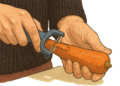
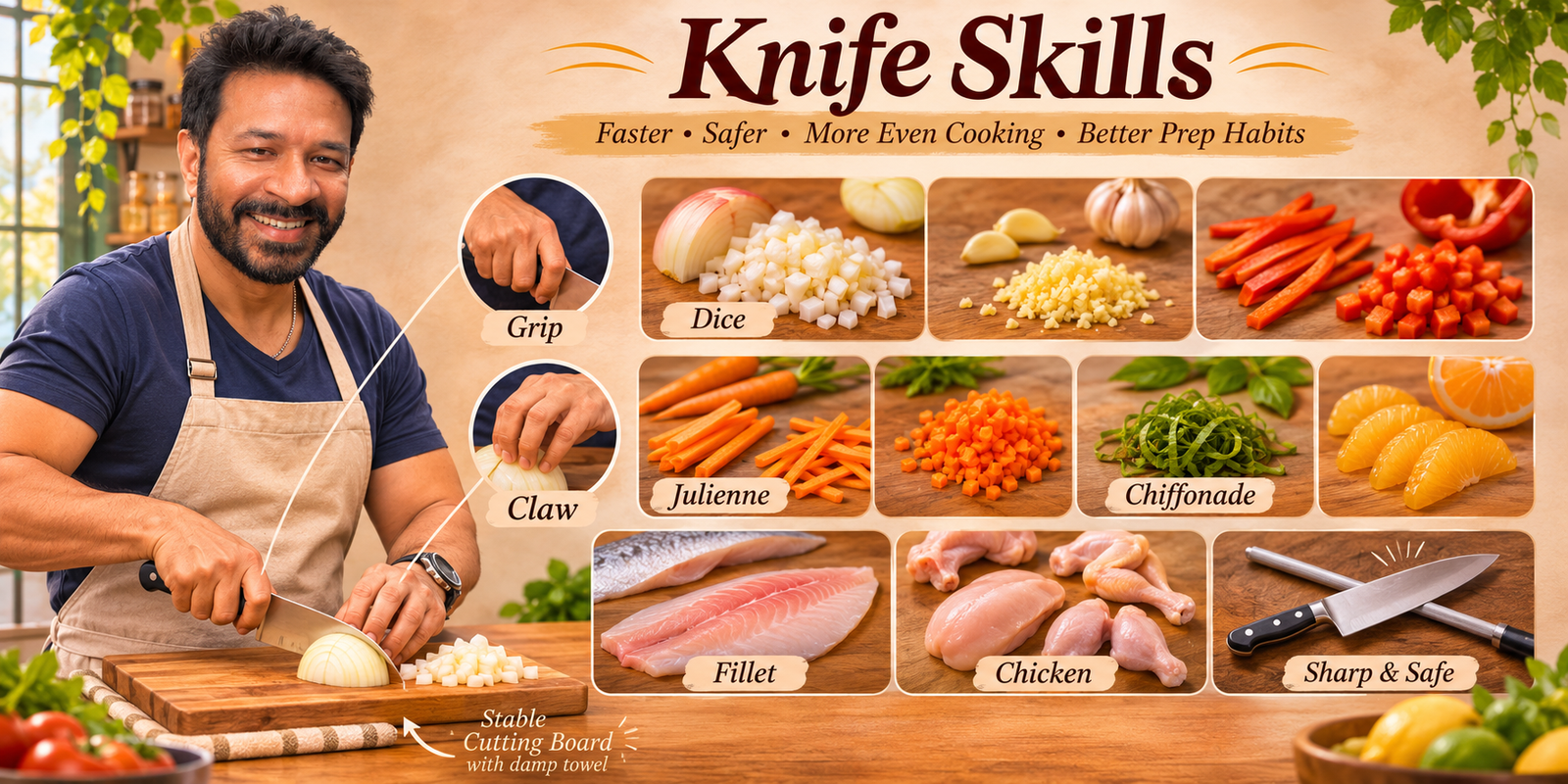
This is the part the commis fixed in four seconds, and it’s the foundation of all of it. How to Hold a Knife Correctly — pinching the blade rather than gripping the handle — gives you control you didn’t know was missing, and The Claw Grip: Protecting Your Fingers is the curled-knuckle guiding hand that keeps your fingertips out of the blade’s path. Learn these two things and nothing else, and you’ll already be safer and better than most home cooks. Everything that follows is just these two habits applied to different foods.
The Cuts That Do the Everyday Work
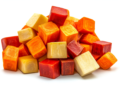
Once your hands know the grip, you learn the actual cuts — and it helps to understand Slicing vs Chopping vs Mincing as distinct actions, not vague synonyms. The one everyone needs first is How to Dice an Onion, the cut you’ll make more than any other, and close behind is Mincing Garlic Three Ways, from rough to paste. Rounded, rolling vegetables are their own small terror at first, so How to Cut Round Vegetables Evenly and How to Deseed and Dice a Pepper are worth their own lessons, and Cutting Even Batons and Sticks gives you the uniform pieces that cook at the same rate — the whole secret behind food that’s done all at once.
The Cuts That Make You Look Like a Chef
These are the ones that feel like showing off and are secretly quite simple. How to Julienne Vegetables — fine matchsticks — and its tiny cousin The Brunoise: Fine Dice Explained are the precise, even cuts that make a plate look professional and cook in seconds. How to Chiffonade Herbs turns basil and mint into elegant ribbons instead of bruised confetti, and How to Peel and Segment Citrus gives you those clean, membrane-free orange and grapefruit segments I used to assume were witchcraft. None of them are hard. They just take the grip, a sharp knife, and a little patience.
Breaking Down Whole Ingredients
This is where knife skills start saving you real money, because whole ingredients are cheaper than pre-cut ones. How to Fillet a Fish felt impossibly intimidating until someone walked me through it, and now it’s oddly meditative. Breaking Down a Whole Chicken is the single most economical skill in this whole list — one bird becomes portions, plus a carcass for stock — and it demystifies the animal in a way that made me a more thoughtful cook. Both look like magic and are really just knowing where the joints and bones are.
Keep It Sharp, Keep It Safe
Here’s the counterintuitive lesson that took me too long to believe: a sharp knife is a safe knife, because a dull one slips and forces you to push. So How to Sharpen a Knife — restoring the edge on a stone — and Honing with a Steel — the quick realignment you do often — are not optional extras; they’re the difference between control and my six-stitch thumb. Wrap it all together with Knife Safety and Maintenance, the habits that keep both you and the blade in good shape for years. A cared-for knife is a joy. A neglected one is an accident waiting to happen.
The Skill Everything Else Sits On
If you take one thing from this entire guide, let it be this: learn to cut before you learn anything else. It’s the skill you’ll use every single time you cook, the one that makes you faster and calmer and safer, and the one that quietly improves every dish you make because evenly cut food simply cooks better. I came to it late, a grown man being taught the claw grip by a teenager, and I have never once regretted the hours I spent just chopping onions until my hands knew the way. Get the grip, get a sharp knife, and practise on the vegetables you were going to cut anyway. Everything else in cooking gets easier from there.