I resisted baking for a whole year. Cooking had seduced me precisely because it was loose and forgiving — a splash more oil, a handful of this, taste and adjust — and after fifteen years trapped inside the rigid cells of a finance spreadsheet, that freedom felt like oxygen. Baking looked like everything I’d just escaped: exact grams, fixed temperatures, no improvising, no second chances. So I avoided it. And then, at Le Cordon Bleu, a pastry chef made me weigh flour to the gram for a simple sponge, and the thing rose into something so light and perfect that I actually laughed. That was the moment I understood my mistake. Baking isn’t the spreadsheet. Baking is what the spreadsheet was always secretly promising — that if you respect the numbers, they’ll reward you, exactly and beautifully, every single time.
If cooking is jazz, baking is a string quartet: precise, structured, and utterly worth the discipline. The good news for a recovering finance person is that this is the one corner of the kitchen where my old instincts were an outright advantage. This guide is the foundation — the handful of principles and techniques that everything sweet is built on. Learn these, and cakes stop being a lottery and start being a certainty.
Why Baking Is a Different Game
The first thing to internalise is that you are not cooking anymore, and How Baking Differs from Cooking is the mindset shift that changes everything: baking is chemistry, and the oven is a reaction chamber you can’t open and stir. The single habit that transformed my results overnight is in Why Measuring by Weight Matters — a cup of flour can vary by thirty percent depending on how you scoop it, which is madness when you think about it, and a scale ends the madness. And because the oven itself lies to you, Understanding Ovens and Hot Spots taught me why one side of the tray browns faster than the other, and why the dial rarely matches the real temperature inside.
The Techniques That Build Structure
Baked goods rise and hold their shape because of a few mechanical techniques, and getting them right is most of the battle. How to Cream Butter and Sugar is the one beginners rush and shouldn’t — those minutes of beating are literally whipping air in to lift your cake. Its opposite number is How to Fold Ingredients Gently, the careful move that keeps that air in rather than knocking it out. For the lightest results you’ll need How to Whip Egg Whites to Stiff Peaks, a small miracle of physics, and underpinning all of it is Understanding Leavening Agents — the difference between baking soda, baking powder, and yeast, and why using the wrong one gives you a hockey puck.
Your First Real Bakes
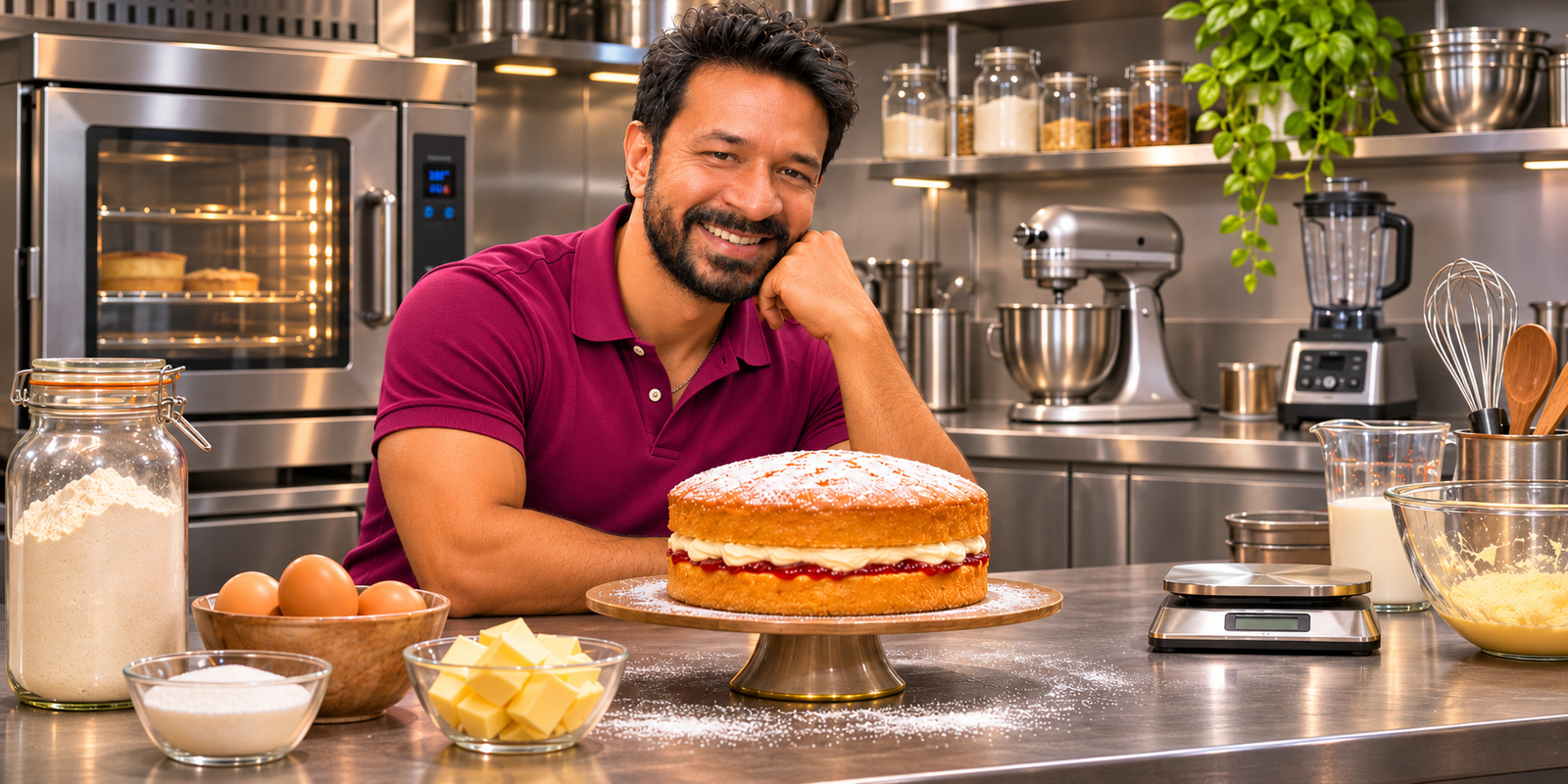
Theory means nothing until something comes out of the oven, so start with the classics that teach the most. How to Make a Simple Sponge Cake is the bake that converted me, and it quietly teaches creaming, folding, and doneness all at once. How to Bake Perfect Cookies is the most forgiving entry point of all and endlessly satisfying. Two methods widen your range fast: The Muffin Method Explained, the easy wet-into-dry approach behind muffins and quick breads, and Rubbing In: Making Shortcrust Pastry, the fingertip technique that opens the whole world of tarts and pies.
The Fiddly Bits That Make or Break It
Baking is full of small, unglamorous steps that beginners skip and then wonder why things went wrong. Greasing and Lining Tins is the difference between a cake that slides out and one you serve in heartbroken pieces. Blind Baking a Pastry Case — pre-baking the crust — is the only cure for the soggy bottom that haunts every new baker. And the question that causes the most anxiety of all, How to Know When a Cake Is Done, has real answers: the skewer, the spring-back, the pulling-away from the tin, cues that replace guesswork with confidence.
Finishing, Fixing, and Keeping
The bake is only half the job. How to Make Buttercream gives you the frosting that turns a plain sponge into a celebration, and Working with Chocolate: Melting and Tempering is the slightly technical art behind glossy, snappy chocolate that doesn’t turn dull and streaky. Once it’s made, Cooling and Storing Baked Goods keeps it at its best for longer than you’d expect. And because everyone fails — I failed spectacularly and often — How to Fix Common Baking Failures is the troubleshooting guide I wish I’d had: the sunken middle, the dense crumb, the cake that domed and cracked, each with a cause and a cure.
When the Rules Need Bending
Precision is the rule, but real life sometimes demands flexibility, and knowing how to flex safely is its own skill. Substitutions in Baking That Actually Work is honest about which swaps succeed and which quietly ruin everything — baking is far less forgiving of improvisation than cooking, and it pays to know the difference. And if you live somewhere high above sea level, Baking at High Altitude explains why your recipes keep betraying you and how to adjust the chemistry to match the thinner air.
Precision as Freedom
Here’s the reframe that finally made me love the thing I’d feared. I thought precision was a cage, the very thing I’d quit my job to escape. But in baking, precision is what buys you freedom — the freedom to make the same perfect sponge every single time, to trust the process so completely that you can start playing with flavours on top of a foundation that never wobbles. My finance brain, which I’d assumed had no place in a kitchen, turned out to be the perfect baker’s brain: respect the ratios, trust the numbers, and let the chemistry do what chemistry reliably does. Weigh your flour. Preheat properly. Follow these foundations until they’re second nature, and baking will give you the most reliable joy in the whole kitchen — results so consistent they feel, pleasingly, like a balance sheet that always adds up.