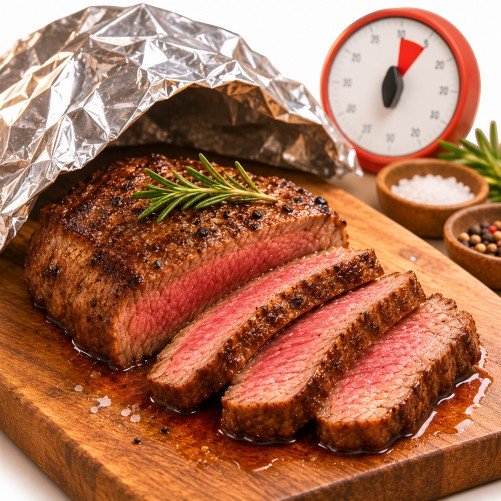
That steak might be perfectly cooked, but cutting into it too soon could spoil the moment.
There’s something almost impossible about waiting when a beautifully seared steak comes off the pan. The crust is golden, the kitchen smells incredible, and all you want to do is slice into it immediately. But if you’ve ever done that, you’ve probably noticed a puddle of juices collecting on your cutting board.
That’s where resting meat comes in. It’s one of the simplest cooking habits to learn, yet it’s also one of the most misunderstood. You don’t need special equipment or complicated techniques. Sometimes, all you need to do is leave your food alone for a few minutes.
Why Should You Rest Meat After Cooking?
When meat cooks, heat causes its muscle proteins to change shape and lose some of their ability to hold water. Moisture moves within the meat, and some escapes during cooking.
If you cut into a hot steak immediately, juices can flow onto the plate. Allowing the meat to rest gives its temperature and internal moisture more time to redistribute and stabilise, which can reduce the amount of liquid lost during slicing.
Resting won’t magically restore moisture that has already evaporated, and it cannot rescue severely overcooked meat. But it can make a noticeable difference to how juicy the finished portion feels.
How Long Should You Rest Meat?
The right resting time depends on the size, thickness, and type of meat. A thin chicken cutlet doesn’t need the same treatment as a large roast.
For everyday cooking, these are useful starting points:
| Type of meat | Approximate resting time |
|---|---|
| Steak | 5–10 minutes |
| Chicken breast | 3–5 minutes |
| Pork chops | 3–5 minutes |
| Whole roast chicken | 10–20 minutes |
| Large beef or lamb roast | 15–30 minutes |
These are general guidelines rather than strict rules. A thick steak may benefit from a longer rest than a thin one, while a large roast can continue cooking internally for some time after leaving the oven.
For safety, check that meat has reached the appropriate internal temperature. Resting time is not a substitute for proper cooking.
The Surprising Thing About Carryover Cooking
One detail that catches many beginners off guard is that meat doesn’t necessarily stop cooking the moment you remove it from the heat.
The hotter outer layers continue transferring energy toward the cooler centre. This is called carryover cooking, and it can cause the internal temperature to rise during resting.
The effect is usually small in thin pieces of meat but can be much greater in large roasts.
This is why experienced cooks often consider carryover cooking when deciding when to remove meat from the oven or pan. However, the amount of temperature rise isn’t perfectly predictable, so a food thermometer remains the most reliable way to check doneness.
Should You Cover Meat While It Rests?
This is where things get interesting. Covering meat can help it stay warm, but it can also trap steam and soften a beautifully browned crust.
For a steak, I prefer leaving it uncovered on a warm plate or board for a short rest. That helps preserve the surface texture.
For a large roast, a loose tent of aluminium foil can help slow heat loss. Avoid wrapping it tightly, especially if you’ve spent time developing a crisp exterior.
The goal is to keep the meat pleasantly warm without turning its crust soggy.
Does Resting Work for Chicken and Fish?
Resting isn’t limited to steak. Chicken, pork, lamb, and other meats can benefit from a short pause before slicing.
A cooked chicken breast, for example, may release less liquid when sliced after a brief rest. Whole roast chickens also become easier to carve after they’ve had time to settle.
Fish is a little different. Delicate fillets cook quickly and can continue cooking from retained heat, so they generally need little or no extended resting. Leaving a thin fish fillet sitting for too long may simply make it colder or more cooked than intended.
The important thing is matching the resting time to the food rather than applying one rule to everything.
Common Mistakes When Resting Meat
The first mistake is slicing too early. Even a couple of minutes can make a difference with smaller cuts, so resist the temptation to carve everything immediately.
The second is resting meat for too long. A steak that’s been sitting on a cold plate for twenty minutes might lose more heat than you’d like. Use a warm plate if necessary, and remember that larger cuts retain heat longer.
Another mistake is confusing resting with food safety. For example, whole cuts of beef, pork, and lamb are generally recommended to reach 63°C (145°F) followed by at least a three-minute rest, while poultry should reach 74°C (165°F). These are safety requirements, not necessarily the ideal resting times for texture.
Don’t leave cooked meat sitting at room temperature indefinitely. Perishable food should generally be refrigerated within two hours, or within one hour if the surrounding temperature exceeds 32°C (90°F).
A Few Minutes Can Make a Difference
The next time you cook a steak or roast a chicken, try giving it a short rest before serving. Use those minutes to finish your sauce, warm the plates, or prepare the vegetables.
Then slice the meat and notice what happens. You may find less juice collecting on the cutting board and more staying with each bite.
What I like about resting meat is that it asks you to do almost nothing. You’ve already chosen the ingredients, controlled the heat, and cooked everything carefully. Now you simply give the food a little time before serving.
Sometimes, the last step in good cooking is knowing when to stop.