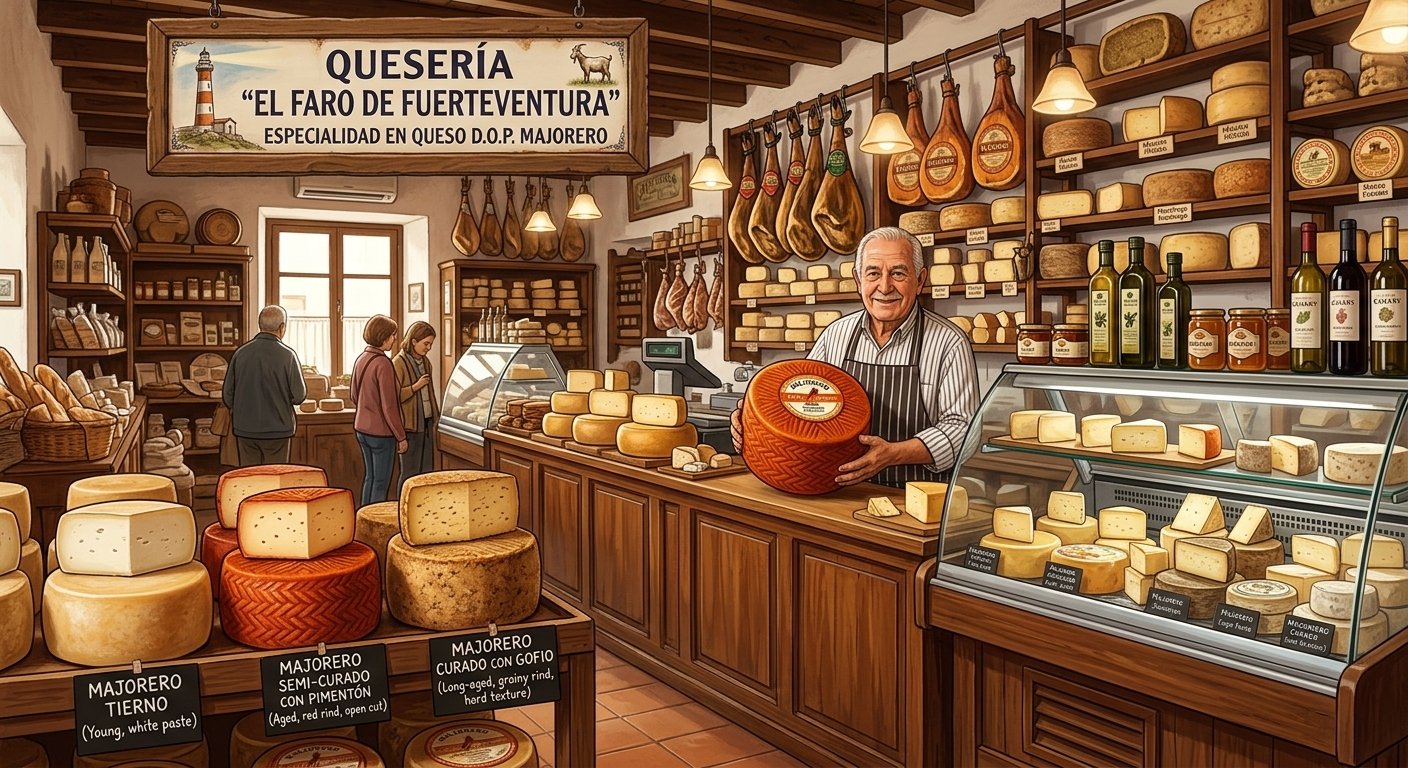
On the dry, windswept island of Fuerteventura, goats have long been part of everyday life. Their milk became the foundation for Majorero, a cheese that turns the island’s rugged landscape and pastoral traditions into something you can taste. Firm enough to slice but creamy enough to feel rich on the tongue, Majorero is one of Spain’s most distinctive goat cheeses.
Its character changes as it matures. Young Majorero is mild, fresh, and gently tangy, while longer-aged versions become firmer, sharper, and slightly spicy. Some cheeses are also rubbed with paprika, oil, or gofio, giving the rind an extra layer of flavour and a striking appearance.
A Cheese Born on Fuerteventura
Majorero comes from Fuerteventura in the Canary Islands and takes its name from the island’s traditional Majorera goats. These goats are particularly well adapted to the island’s dry conditions and have been central to local farming for centuries. Cheese-making offered a practical way to preserve their milk while creating an important food for island communities.
In 1996, Majorero became the first cheese from the Canary Islands to receive Protected Designation of Origin status. It was also the first Spanish goat cheese to receive this recognition. Under the PDO rules, the cheese is made on Fuerteventura using Majorera goat’s milk, although matured versions can contain a small amount of Canarian sheep’s milk.
The Mark of the Palm
One of the easiest ways to recognise Majorero is its rind. The sides traditionally carry a distinctive diamond-like pattern created by the braided palm-leaf moulds once used by cheesemakers. That pattern remains as a visual reminder of the cheese’s handmade origins.
The cheese itself is pressed into a cylindrical shape and develops a compact paste as it matures. Producers can finish the rind in different ways, including rubbing it with olive oil, paprika, or gofio. Each treatment changes the appearance while adding its own subtle notes to the cheese.
From Young and Mild to Firm and Spicy
Majorero is available at several stages of maturity. The youngest version, known as tierno, is aged for roughly 8 to 20 days and has a soft, mild character. It has a fresh goat’s-milk flavour with a pleasant creaminess, making it an easy introduction to the cheese.
As it moves into the semicurado and curado stages, the texture becomes firmer and the flavour grows more pronounced. Mature Majorero develops greater acidity, a deeper savoury character, and a gentle spicy quality. The difference means there is a Majorero for almost every kind of cheese lover.
How to Eat Majorero
Majorero is excellent on a cheese board, especially alongside foods that bring sweetness or freshness. Try it with figs, pears, grapes, quince paste, or a little honey. Nuts also work beautifully because their crunch contrasts with the cheese’s creamy firmness.
For cooking, grate or shave mature Majorero over roasted potatoes, grilled vegetables, pasta, or baked dishes. A younger cheese can also be sliced into sandwiches or melted over toast. Meanwhile, paprika-coated Majorero brings enough extra flavour to make a simple piece of bread feel like a proper snack.
Majorero Toast With Honey and Almonds
This quick recipe keeps the cheese at the centre of the dish. Warm bread softens the Majorero slightly, while honey adds sweetness and toasted almonds bring a crunchy contrast. Use semicurado Majorero for a good balance between creaminess and flavour.
Ingredients
- 4 slices of rustic bread
- 120 g Majorero cheese, thinly sliced
- 2 tablespoons almonds, roughly chopped
- 1 tablespoon honey
- 1 teaspoon olive oil
- Fresh thyme leaves, optional
- Freshly ground black pepper
Method
- Preheat the oven to 200°C.
- Arrange the bread on a baking tray and brush lightly with olive oil.
- Toast for 4 to 5 minutes until the edges become crisp.
- Place slices of Majorero over the warm bread.
- Return the tray to the oven for 2 to 3 minutes, just until the cheese softens.
- Meanwhile, toast the chopped almonds in a dry pan over medium heat until lightly golden.
- Remove the toast from the oven and drizzle with honey.
- Scatter the toasted almonds and a few thyme leaves over the top.
- Finish with a little black pepper and serve while warm.