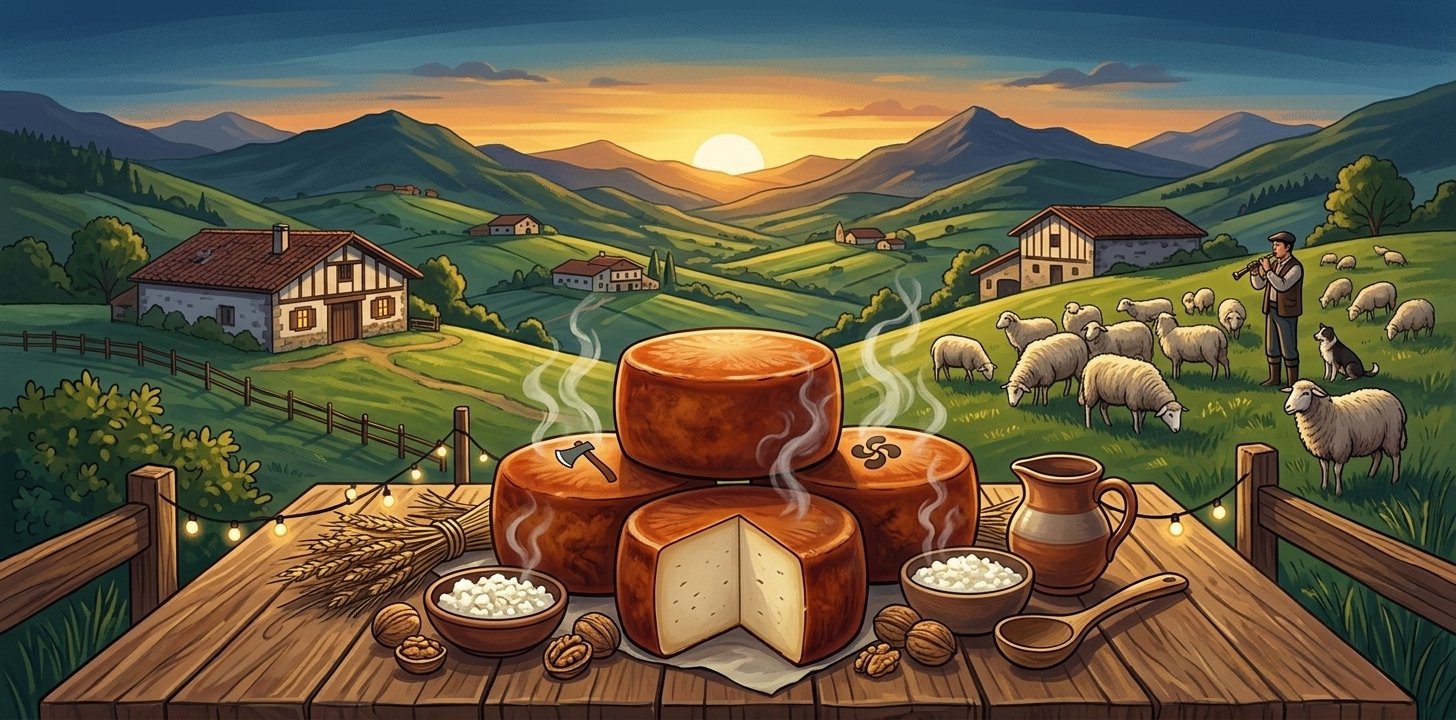
Cut into a wheel of Idiazábal, and the first thing you notice is its firm, pale interior and unmistakable smoky aroma. Take a bite and the texture feels compact yet buttery, while the flavour brings together sheep’s milk richness, gentle nuttiness, and a pleasant savoury sharpness.
This celebrated Basque sheep cheese comes from the mountainous areas of the Basque Country and Navarre in northern Spain. Traditionally made from the milk of Latxa and Carranzana sheep, Idiazábal reflects the landscape around it. Mountain pastures, seasonal sheep farming, and generations of cheesemaking all come together in every wheel.
A Cheese From the Mountains
Idiazábal cheese takes its name from the town of Idiazabal in Gipuzkoa, although production extends across a much wider area. The cheese has deep roots in Basque and Navarrese shepherding traditions, where families traditionally moved sheep between seasonal grazing grounds.
The sheep are especially important to the cheese’s character. Latxa sheep, a breed native to the Basque region, thrive in the area’s rugged landscape and provide rich milk that works beautifully for cheesemaking.
Traditionally, shepherds made cheese with the milk available during the milking season. That connection with seasonal sheep farming remains part of Idiazábal’s identity today, even though modern producers use more controlled cheesemaking methods.
What Is Idiazábal Made From?
Traditional Idiazábal uses unpasteurised sheep’s milk from Latxa or Carranzana sheep. The milk gives the cheese its rich flavour and firm, slightly elastic texture.
The cheese generally ages for at least two months, although longer-aged versions develop a stronger, more complex character. Young Idiazábal feels milder and creamier, while an older wheel becomes firmer and more intense.
The rind can range from pale yellow to darker brown, depending on how the cheese ages and whether the producer smokes it. Inside, the paste remains ivory to pale yellow, sometimes showing a few small eyes.
Smoked or Natural?
One of the most interesting things about Idiazábal cheese is that it can be either smoked or unsmoked. Both styles are traditional, so choosing one comes down to the flavour you prefer.
Smoked Idiazábal develops its distinctive aroma when producers expose the cheese to wood smoke. The smoke adds a warm, almost toasted character without completely hiding the flavour of the sheep’s milk.
Unsmoked Idiazábal, meanwhile, lets the milk and ageing process take centre stage. It tends to taste cleaner and more buttery, with nutty and slightly tangy notes becoming more noticeable as the cheese matures.
How Does Idiazábal Taste?
Take a thin slice of smoked Idiazábal, and the flavour arrives in layers. At first, you get the richness of sheep’s milk. Soon after, the smoky character appears, followed by a gentle nuttiness and a savoury finish.
The texture makes the experience even better. It is firm enough to slice cleanly but not so hard that it feels dry. A well-aged piece can also develop tiny crunchy crystals, adding another texture to the bite.
You do not need much alongside it. A slice of rustic bread, a few walnuts, or some quince paste can bring out different sides of the cheese.
A Natural Match for Spanish Food
Idiazábal cheese works beautifully on a Spanish cheese board, especially alongside other cheeses with contrasting textures and flavours. Pair the smoked version with something sweet, such as membrillo or fig preserves, to soften the savoury intensity.
It also works in cooking. Grate it over roasted vegetables, melt it into a sauce, or fold it into a simple omelette. The smoke becomes particularly noticeable when the cheese warms, adding depth without requiring many other ingredients.
For a drink pairing, try it with a dry cider or a robust red wine. The acidity and fruitiness can cut through the cheese’s richness and refresh your palate between bites.
Protected Basque Tradition
Idiazábal has Protected Designation of Origin (PDO) status, which helps preserve its connection with its traditional production area and methods. The designation also protects the name and sets rules around the milk, production, ageing, and characteristics of the cheese.
That protection matters because Idiazábal is more than simply a smoked sheep cheese. It represents a particular food tradition shaped by Basque and Navarrese landscapes and the people who have raised sheep and made cheese there for generations.
A Cheese With a Strong Sense of Place
Idiazábal does not need elaborate decoration or complicated accompaniments. Put a wedge on a wooden board, add some bread and quince paste, and you already have a wonderful snack.
The smoky aroma, firm texture, and rich sheep’s milk flavour make it easy to recognise. More importantly, every wheel carries a little piece of the mountains where its story began.