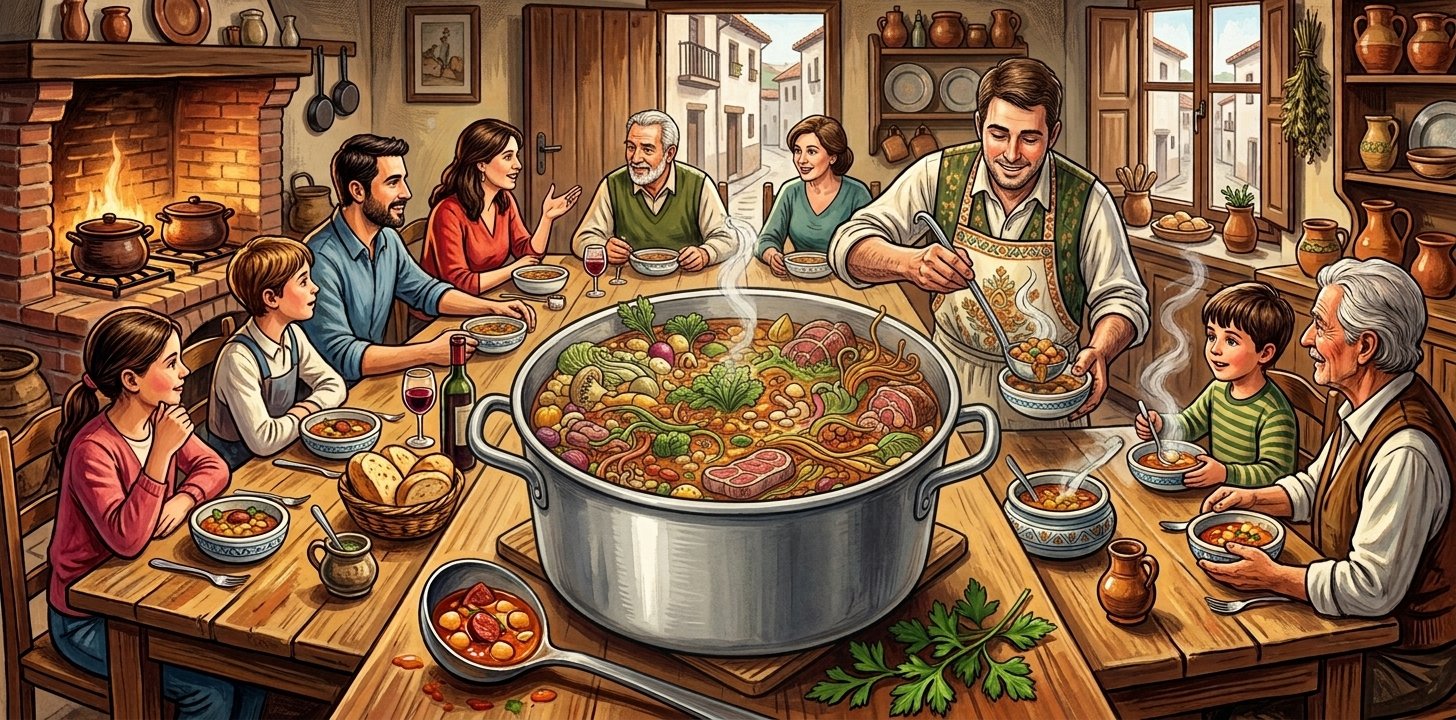
Despite its curious name, olla podrida has nothing to do with rotten food. The famous stew from Burgos in northern Spain gets its unusual name from an old expression that referred to a rich or powerful pot, packed with so many ingredients that it was almost overflowing. Open the lid and you find beans, pork, sausages, beef, and vegetables all simmering together into one deeply comforting meal.
This is traditional Spanish cooking at its heartiest. Olla podrida began as rustic food, but its generous ingredients eventually gave it a place on important tables too. Today, it remains one of the dishes most closely associated with Burgos and the wider cuisine of Castilla y León.
A Rotten Pot Full of History
The story of olla podrida stretches back centuries. Historical references to the dish appear in Spanish literature, including works from the Golden Age, showing how firmly it had become part of Spanish food culture.
Burgos developed its own celebrated version around the area’s famous red kidney beans, known as alubias rojas de Ibeas. These beans have a rich flavour and creamy texture that make them particularly well suited to a long, slow stew.
The rest of the pot can vary, but traditional versions are anything but modest. Pork belly, chorizo, blood sausage, ribs, bacon, and beef may all make an appearance. Rather than cooking each ingredient separately, the slow simmer allows their flavours to mingle.
Why the Name Sounds So Strange
The name olla podrida literally translates as “rotten pot,” which certainly does not sound like an invitation to dinner. However, the name has a more interesting history than its literal translation suggests.
One explanation connects podrida with an older form of the word meaning powerful, rich, or abundant. Another idea comes from the way the long cooking makes the ingredients so tender that they almost seem to fall apart.
Whatever the exact origin, the name stuck. Fortunately, the stew tastes considerably better than its name suggests.
The Beans Come First
The heart of olla podrida burgalesa is its beans. Traditionally, cooks use red beans from the Burgos area, particularly those associated with Ibeas de Juarros.
Soak dried beans overnight before cooking. The following day, drain them and place them in a large pot with fresh water. Add the meats gradually, allowing the beans and pork to cook together over gentle heat.
As the beans soften, they absorb the savoury flavours from the meat. At the same time, some of their starch thickens the cooking liquid, creating a broth that feels almost creamy without adding any dairy.
Then Come the Meats
The meat selection gives olla podrida its unmistakably rich character. Chorizo brings paprika and garlic, while morcilla adds a deeper, earthy flavour. Pork belly and ribs contribute richness, and beef can add another layer of savoury flavour.
Different households use different combinations. That is part of what makes traditional Spanish stews so interesting. The recipe gives you a framework, but the contents of the pot can reflect what is available locally or what a family has always used.
Keep the simmer gentle once the meat goes in. A slow cook allows the tougher cuts to become tender while giving the beans time to absorb all those flavours.
The Stew Becomes a Feast
Traditionally, cooks do not simply ladle everything into one bowl. Olla podrida can arrive at the table in separate parts, with the beans and broth served first and the cooked meats arranged on a platter afterward.
This makes sense when you see just how much goes into the pot. The beans provide a creamy, savoury base, while the meat becomes the centrepiece.
Slice the chorizo and morcilla into thick pieces and arrange them alongside the ribs, pork, and other meats. Suddenly, what started as a humble one-pot meal looks like a feast.
Olla Podrida Is Perfect for Cold Weather
Burgos is known for cold winters, and olla podrida is exactly the kind of food that suits them. A steaming bowl of beans and broth followed by tender, richly flavoured meat makes for an incredibly satisfying meal.
The stew also benefits from resting. If you make it ahead, the beans have more time to absorb the flavours from the broth and meat. Reheat it gently the next day and the whole pot can taste even richer.
Serve it with crusty bread and keep the sides simple. The pot has already done most of the work.
Olla Podrida Recipe
Ingredients
- 400 g dried red kidney beans
- 150 g pork belly
- 150 g pork ribs
- 150 g beef, such as brisket
- 1 cooking chorizo
- 1 morcilla
- 100 g bacon
- 1 onion
- 2 garlic cloves
- 1 carrot
- 1 bay leaf
- 1 tsp sweet paprika
- 2 tbsp olive oil
- Salt, to taste
- Water, as needed
Method
- Soak the beans: Place the dried beans in a large bowl and cover them generously with cold water. Leave them overnight.
- Start the pot: Drain and rinse the beans, then place them in a large heavy pot. Add the onion, carrot, garlic, bay leaf, pork belly, ribs, beef, and bacon.
- Add water: Cover everything with fresh water by a few centimetres. Bring the pot slowly to a gentle simmer, skimming away any foam from the surface.
- Cook slowly: Lower the heat and simmer for about 1½ to 2 hours. Keep the pot at a gentle bubble and add more hot water if necessary.
- Add the sausages: Place the chorizo and morcilla into the pot during the final 30 to 40 minutes. This gives them enough time to flavour the beans without letting them break apart.
- Season: Add the paprika and taste the broth. Season carefully with salt because the bacon, chorizo, and morcilla already bring plenty of flavour.
- Check the beans: Continue cooking until the beans become completely tender and the broth thickens naturally.
- Rest: Turn off the heat and let the stew rest for about 10 to 15 minutes. Remove the bay leaf.
- Serve: Ladle the beans and broth into bowls. Arrange the cooked meats and sausages on a platter, slice them, and serve alongside the beans with plenty of crusty bread.