The difference between soggy vegetables and beautifully browned ones often comes down to a few minutes in the pan.
Have you ever wondered why mushrooms at a restaurant arrive golden and delicious, while the ones you cook at home end up swimming in water? Or why a chef can make something as ordinary as onions and peppers taste so good? The ingredients are probably similar. The difference is often in how they’re cooked.
Sautéing is one of those basic kitchen techniques that seems almost too simple to learn. You heat a pan, add some oil, throw in your ingredients, and stir. But a few small details can completely change the result. Once you understand them, everything from pasta sauces to vegetable dishes becomes easier to cook.
What Does Sauté Actually Mean?
The word sauté comes from the French word sauter, meaning “to jump.” It describes cooking food relatively quickly in a small amount of fat, usually over medium to medium-high heat. The ingredients are stirred, turned, or tossed as needed to cook evenly.
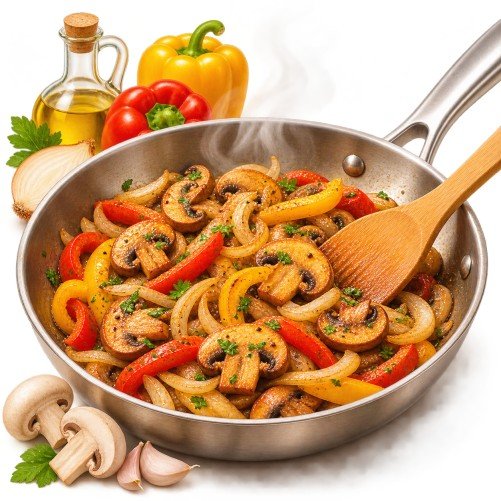
Unlike deep-frying, sautéing doesn’t require much oil. You’re using the hot surface of the pan to cook the food while developing flavour and, when appropriate, a little browning. Think of golden mushrooms, lightly browned onions, or bell peppers that are tender but still have a pleasant bite.
The technique works with vegetables, meat, seafood, and plenty of other ingredients. The important part is learning how to control heat and moisture.
Start With a Properly Heated Pan
One mistake I made when learning to sauté was adding vegetables to a pan before it had warmed properly. I’d pour in the oil, immediately add the mushrooms, and wonder why they were taking forever to brown.
A pan that’s too cool can encourage food to release moisture before its surface has a chance to brown. On the other hand, excessive heat can burn ingredients before they’re properly cooked.
For most everyday sautéing, start with medium heat and allow the pan to warm. Add a little oil, and when it begins to flow easily and shimmer gently, introduce your ingredients. You should hear a steady sizzle rather than complete silence or aggressive crackling.
The right temperature depends on your stove, cookware, and ingredients, so pay attention to what happens rather than relying entirely on the dial.
Stop Crowding the Pan
If there’s one habit worth changing immediately, it’s putting too much food into a small frying pan.
Mushrooms are the perfect example. They contain plenty of water, and when you pile them together, that moisture collects in the pan. Instead of developing golden edges, the mushrooms begin steaming in their own liquid.
Give ingredients enough space to make contact with the hot surface. If you’re cooking a large quantity, divide it into two batches. It might seem inconvenient, but you’ll often get much better colour and texture.
Drying washed vegetables before cooking also helps when browning is your goal. Excess surface water needs to evaporate before the food can develop a properly browned exterior.
Don’t Stir Everything Constantly
There’s something strangely tempting about stirring food every few seconds. It makes you feel involved, as though constant movement must somehow improve the cooking.
But browning often requires patience.
When sautéing mushrooms, for example, spread them across the pan and leave them alone briefly. Give their surfaces time to develop colour before turning them. If you keep moving everything around, you may interrupt that contact with the hot pan.
Of course, not every ingredient needs the same treatment. Garlic burns quickly and requires closer attention, while onions being softened gently benefit from occasional stirring. The trick is learning when to move the food and when to leave it alone.
Add Ingredients in the Right Order
Imagine cooking onions, carrots, garlic, and spinach together. If you add everything at once, the garlic might burn before the carrots soften, while the spinach could become overcooked.
A better approach is to think about how long each ingredient needs.
Start with firmer vegetables such as carrots or onions. Add quicker-cooking ingredients later, and save delicate aromatics such as finely chopped garlic for when the other vegetables are nearly ready. Leafy greens usually go in toward the end because they wilt so quickly.
This small habit makes a surprising difference, particularly when you’re preparing a dish with several vegetables.
Try This: Perfectly Sautéed Mushrooms
If you want to practise, start with something simple. Take about 200 grams of mushrooms, a tablespoon of olive oil, one small garlic clove, salt, and black pepper.
Clean and slice the mushrooms, removing excess surface moisture. Heat a large frying pan over medium-high heat, add the oil, and spread the mushrooms into a relatively even layer. Let them cook undisturbed for a couple of minutes before turning them.
Continue cooking until their released moisture has mostly evaporated and golden-brown patches begin appearing. This may take around six to ten minutes or longer, depending on your pan and the mushrooms.
Reduce the heat slightly, add the chopped garlic, and stir briefly until fragrant. Season with salt and pepper, then serve while warm.
What you’re looking for is a mushroom that’s tender, savoury, and lightly browned rather than pale and watery. Once you can achieve that consistently, you’ve already learned several of the most important principles of sautéing.
The Little Details Make the Difference
Good sautéing isn’t about dramatically tossing vegetables into the air or owning an expensive frying pan. It’s about recognising what the ingredients need.
If your vegetables are watery, give the moisture time to evaporate or cook in smaller batches. If they’re burning, reduce the heat. If garlic is browning too quickly, add it later. And if the food tastes a little flat, adjust the seasoning before serving.
The next time you’re cooking onions for a curry or mushrooms for pasta, pay attention to the sound of the pan, the colour of the ingredients, and the way their aroma changes. These small observations teach you more than simply watching the clock.
Eventually, you’ll find yourself adjusting the heat, turning vegetables, and adding ingredients at the right moment without thinking too much about it.
That’s when sautéing starts to feel less like following a technique and more like knowing how to cook.