
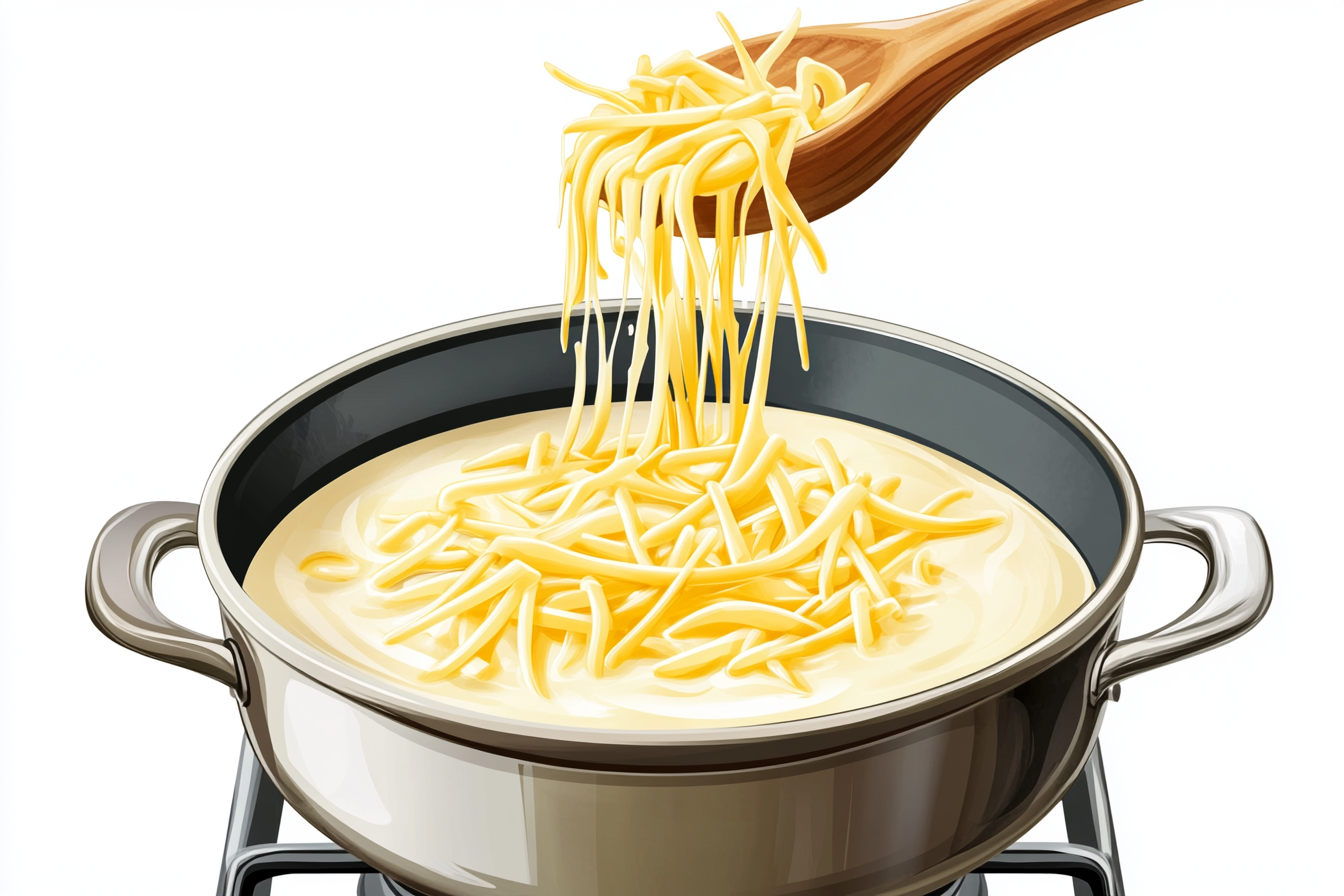
There’s a moment in the kitchen when it hits you: cheese sauce isn’t just melted velvety sauce. It’s something far more profound. It’s about getting the texture just right, balancing flavours, and knowing a little kitchen science. Done well, it turns simple ingredients into something indulgent and irresistible. Think velvety cheese draping over pasta, pooling onto roasted potatoes, or breathing new life into day-old bread. But to get there, you need the right approach—one that keeps your homemade cheese sauce smooth, rich, and full of flavour.
Step 1: The Béchamel Base—Why It Matters
Every great cheese sauce starts with béchamel, one of the classic French Mother Sauces. Béchamel is, at its core, a humble mixture of butter, flour, and milk, but it’s also a blank canvas waiting to be infused with other flavours. I melt two tablespoons of butter in a saucepan over medium heat, then whisk in an equal amount of flour. This creates a roux, a thickening agent that, if treated properly, gives the homemade cheese sauce its smooth, silky texture. Here’s where patience is key: cooking the roux for a few minutes eliminates the raw flour taste while ensuring the final sauce isn’t gritty.
Step 2: The Magic of Warm Milk
A common mistake—one I’ve made more times than I care to admit—is pouring cold milk straight into a hot roux, only to watch it seize up into a grainy, clumpy mess, like a latte gone horribly wrong. The secret? Warm the milk gently first, infused with half an onion, a clove, and a bay leaf. But don’t let the bay leaf overstay its welcome—it’s potent and can easily dominate. Strain the milk, then, with patience and a steady hand, whisk in one cup at a time, stirring constantly as the roux and milk meld into something silky, smooth, and full of promise. The heat works its magic, coaxing out the flavours and creating a velvety foundation for whatever comes next. It’s a lesson in restraint and care, but the reward is a béchamel that feels like a warm embrace—and the perfect base for your cheese sauce.
Step 3: Choosing the Right Cheese (Because Not All Cheese Melts Equally)
Here’s the thing: not all cheese plays nicely with heat. Some varieties, like aged Parmesan or feta, refuse to melt smoothly. Others, like American cheese, are engineered for a flawless, glossy finish. But if you want depth of flavour and a bit of elegance in your homemade cheese sauce, you need a balance. I usually go with a mix of mature cheddar for tang, and Gruyère for nuttiness. The golden rule? Always grate your own. Pre-shredded cheese comes with anti-caking agents that can turn your cheese sauce into a grainy disappointment.
Step 4: The Art of Melting Cheese Without Ruining Everything
Now for the moment of truth. The worst thing you can do at this stage is crank up the heat. Cheese is delicate—too much heat and it will separate into an oily, clumpy mess. I take the pan off the burner and gently stir in the cheese by the handful, allowing each addition to melt before adding the next. The result? A silky, pourable homemade cheese sauce that drapes over anything it touches.
Step 5: Finishing Touches
At this point, I taste and tweak. A pinch of salt, a whisper of nutmeg, maybe a dash of hot sauce if I’m feeling bold. If the cheese sauce is too thick, I loosen it with a bit more warm milk. If too thin, I let it sit for a minute—it thickens as it cools.
Step 6: Serve and Revel in the Glory
This is the kind of homemade cheese sauce that makes everything better. It’s the key to a luxurious mac and cheese, a swoon-worthy drizzle over roasted potatoes, and a decadent dip for crusty bread. And the best part? Once you’ve mastered it, you’ll never go back to store-bought again. The world of cheese sauce is yours—go forth and indulge.
Recipe
Ingredients
- 25g butter
- 25g plain flour
- 400–500ml milk
- ½ small onion, peeled
- 1 whole clove
- 1 bay leaf
- 4–5 black peppercorns
- 40g mature cheddar, grated
- 40g gruyère, grated
- Salt and white pepper
Method
Do not re-boil after adding the cheese, as it may become stringy.
Infuse the Milk:
Pour the milk into a saucepan.
Stud the onion with the clove and add it to the milk along with the bay leaf and peppercorns.
Heat the milk gently over low heat, bringing it just to a simmer.
Turn off the heat and let it infuse for 10–15 minutes.
Remove the onion, bay leaf, and peppercorns before using.
Make the Roux:
In a separate saucepan, melt the butter over medium-low heat.
Stir in the flour and cook for 1–2 minutes, stirring constantly to remove the raw flour taste.
Incorporate the Milk:
Gradually add the infused milk, whisking continuously to prevent lumps.
Ensure each addition is fully incorporated before adding more milk.
Once all the milk is added, continue stirring and bring to a gentle boil.
Simmer & Season:
Reduce the heat and simmer gently for 5 minutes, stirring occasionally.
Season with salt and white pepper to taste.
Add the Cheese:
Stir in the cheddar and gruyère, mixing until fully melted.


I do agree with all of the concepts you’ve introducedon your post. They’re really convincing and will definitely work.Nonetheless, the posts are very brief for newbies.May just you please extend them a bit from subsequent time?Thanks for the post.
Greetings! Very helpful advice in this particular article! It’s the little changes that will make the most significant changes. Thanks a lot for sharing!
One thing I’d really like to comment on is that weightloss program fast can be achieved by the appropriate diet and exercise. Ones size not just affects appearance, but also the general quality of life. Self-esteem, melancholy, health risks, and also physical capabilities are damaged in putting on weight. It is possible to make everything right but still gain. If this happens, a medical problem may be the primary cause. While a lot food and never enough exercising are usually guilty, common medical conditions and widely used prescriptions may greatly amplify size. Thx for your post in this article.
Have you ever thought about including a little bit more than just your articles? I mean, what you say is valuable and everything. But just imagine if you added some great images or videos to give your posts more, “pop”! Your content is excellent but with images and clips, this site could definitely be one of the very best in its field. Great blog!
We absolutely love your blog and find many of your post’s to be just what I’m looking for. can you offer guest writers to write content for you? I wouldn’t mind publishing a post or elaborating on a lot of the subjects you write with regards to here. Again, awesome web site!
You actually make it seem so easy with your presentation but I find this matter to be actually something that I think I would never understand. It seems too complex and very broad for me.I’m looking forward for your next post, I will try to get the hang of it!