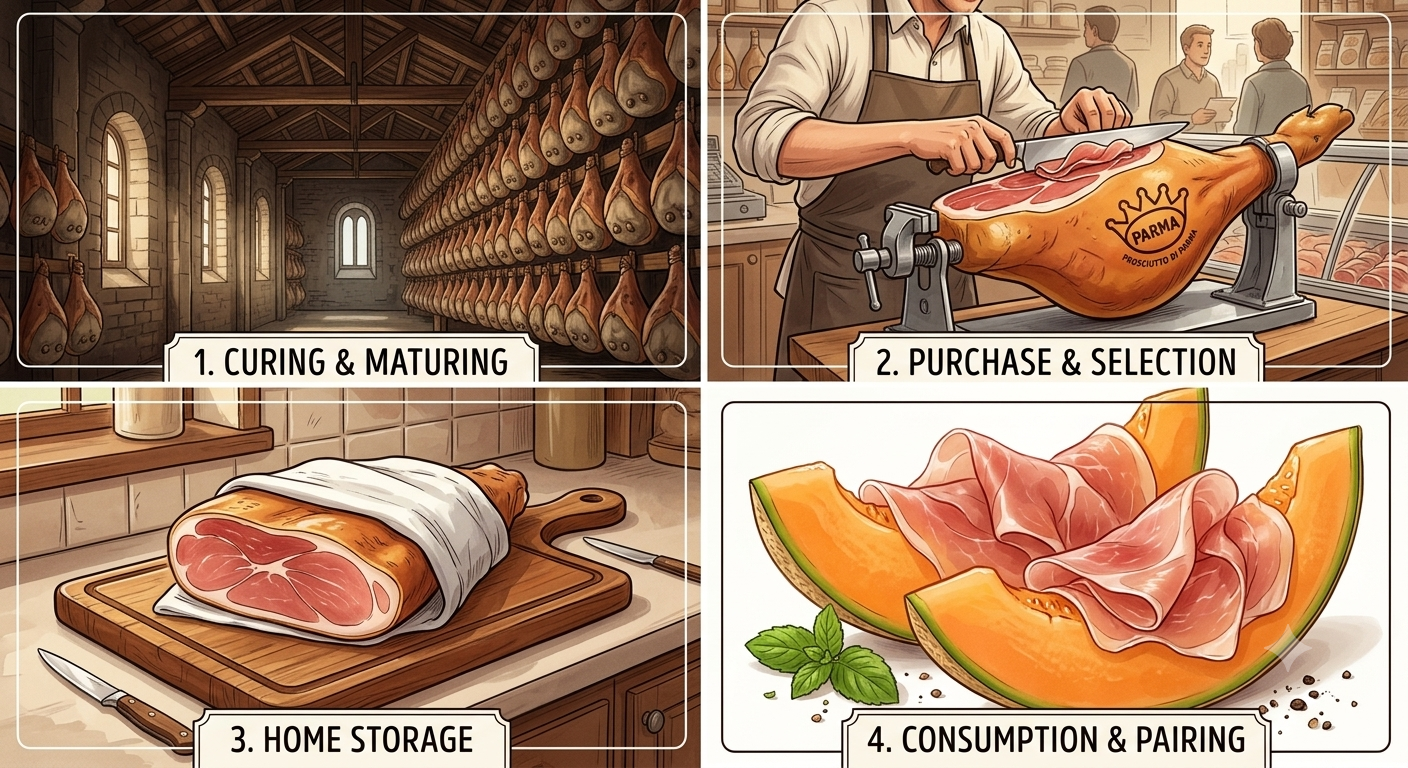
Discover the history, traditional production, culinary uses, and authentic recipe, Italy’s world-famous dry-cured ham celebrated for its delicate sweetness and centuries-old craftsmanship.
The first time I tasted Prosciutto di Parma, I expected a salty cured meat similar to many others I had tried. Instead, I was surprised by its silky texture and remarkably delicate flavor. Thin slices almost melted on my tongue, revealing gentle notes of sweetness, butter, and roasted nuts. Served alongside fresh melon and crusty bread, it was a simple meal that felt effortlessly elegant.
That experience taught me why Italians often say that the finest ingredients need very little preparation. Prosciutto di Parma is a perfect example—crafted with patience, tradition, and only a few carefully selected ingredients.
What Is Prosciutto di Parma?
Prosciutto di Parma is a traditional Italian dry-cured ham produced exclusively in the Parma province of the Emilia-Romagna region in northern Italy. Unlike many cured meats, it is made using only two ingredients: premium pork legs and sea salt.
No artificial preservatives, nitrates, smoke, or flavorings are permitted under the strict production rules. Instead, the ham develops its distinctive taste through natural curing and long aging.
Recognized with Protected Designation of Origin (PDO) status by the European Union, authentic Prosciutto di Parma can only be produced in designated areas following centuries-old methods.
The History
The story of Prosciutto di Parma stretches back more than 2,000 years.
Historical records suggest that the ancient Romans admired the naturally cured hams produced around Parma. The region’s unique climate, where fresh mountain air meets the gentle breezes of the Po Valley, created ideal conditions for preserving pork through natural drying.
During the Middle Ages, local producers refined their curing techniques, and Parma gradually became famous for producing some of Italy’s finest hams. Over generations, these traditional methods were carefully preserved, leading to international recognition and PDO protection in the modern era.
Today, it remains one of Italy’s most iconic culinary exports.
How Prosciutto di Parma Is Made
The production of authentic recipe follows strict regulations.
The process includes:
- Selecting specially raised Italian pigs
- Trimming fresh pork legs
- Hand-salting with sea salt
- Resting the hams under controlled conditions
- Washing and drying the meat
- Applying a protective layer of pork fat to exposed areas
- Naturally aging the hams for at least 12 months, with many maturing for 18 to 36 months
Throughout the aging process, producers carefully monitor temperature, humidity, and airflow to ensure consistent quality.
Before receiving the official Parma Crown brand, every ham undergoes rigorous inspection.
What Makes Prosciutto di Parma Unique?
Several characteristics distinguish Prosciutto di Parma from other cured hams.
Natural Ingredients
Only pork and sea salt are used, allowing the meat’s natural flavor to develop without additives.
Long Aging
Extended maturation creates a delicate texture and complex flavor with subtle sweet and nutty notes.
Silky Texture
Thin slices are tender, moist, and almost melt in the mouth.
Parma Crown
Every authentic ham bears the famous five-pointed Parma Crown, guaranteeing its origin and quality.
Prosciutto di Parma vs. Other Italian Hams
Italy produces several celebrated dry-cured hams, but each has its own identity.
Prosciutto di Parma is prized for its mild sweetness and simple curing process using only salt.
Prosciutto di San Daniele, produced in Friuli Venezia Giulia, has a slightly darker color and a more pronounced flavor due to its unique regional climate.
Other regional hams may use additional seasonings or different aging techniques, but Parma’s minimalist approach remains one of its defining features.
Culinary Uses
Prosciutto di Parma is incredibly versatile and is most often enjoyed without cooking.
It pairs beautifully with:
- Fresh melon
- Figs
- Burrata
- Mozzarella
- Parmesan cheese
- Pizza
- Focaccia
- Bruschetta
- Asparagus
- Arugula salads
Because heat can diminish its delicate flavor, it is usually added to warm dishes just before serving.
Nutritional Benefits
Prosciutto di Parma offers several valuable nutrients.
It contains:
- High-quality protein
- Vitamin B12
- Iron
- Zinc
- Phosphorus
Compared with many processed meats, it contains no artificial preservatives under PDO regulations. However, as a cured meat, it is naturally higher in sodium and should be enjoyed as part of a balanced diet.
Whenever I prepare an Italian-style appetizer, I almost always include Prosciutto di Parma. Draped over ripe melon or paired with creamy Burrata, it reminds me that some of the most memorable dishes require little more than exceptional ingredients and thoughtful presentation.
Prosciutto di Parma in Modern Italian Cuisine
Today’s chefs continue to celebrate Prosciutto di Parma in both traditional and contemporary recipes.
It appears in gourmet sandwiches, elegant salads, handmade pasta, and artisan pizzas. Many restaurants pair it with seasonal fruits such as peaches, pears, or persimmons, highlighting the ham’s natural sweetness.
Despite these modern interpretations, it remains most appreciated when served simply, allowing its delicate flavor and silky texture to take center stage.
Why it Remains a Culinary Icon
What makes Prosciutto di Parma extraordinary is its simplicity. With only pork, sea salt, fresh air, and time, Italian producers create a ham admired around the world.
Its centuries-old production methods, protected origin, and unmistakable flavor reflect the values that define Italian cuisine: patience, craftsmanship, and respect for outstanding ingredients.
Whether enjoyed as part of an antipasto platter or wrapped around fresh fruit, Prosciutto di Parma continues to represent the timeless elegance of Emilia-Romagna’s culinary heritage.
Classic Prosciutto and Melon Recipe
Ingredients
- 12 thin slices Prosciutto di Parma
- 1 ripe cantaloupe or honeydew melon
- Fresh basil or mint leaves (optional)
- Extra virgin olive oil (optional)
- Freshly ground black pepper
Instructions
- Cut the melon in half and remove the seeds.
- Slice the melon into wedges or bite-sized cubes.
- Wrap each piece of melon with a thin slice of Prosciutto di Parma.
- Arrange on a serving platter.
- Garnish with fresh basil or mint if desired.
- Add a light drizzle of extra virgin olive oil and a small amount of black pepper, if preferred.
- Serve immediately while chilled.
Serving Suggestions
Serve Prosciutto di Parma and melon as an elegant appetizer with crusty Italian bread, Burrata, Parmesan cheese, olives, or a fresh arugula salad. It also pairs beautifully with sparkling water, fresh lemonade, or a crisp Italian white wine.
Preparation Time: 15 minutes
Cooking Time: None
Servings: 4