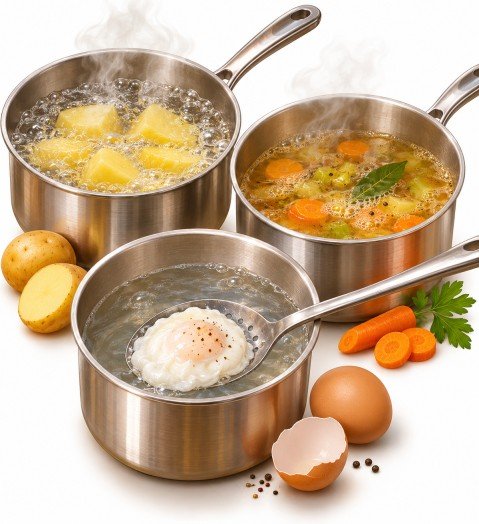
Three cooking methods, one pot of water, and surprisingly different results.
Have you ever followed a recipe that asked you to simmer a sauce, only to wonder whether the water was supposed to bubble that much? Or tried poaching an egg and ended up with a pot full of floating egg whites? These are the little kitchen problems that make simple cooking instructions feel more complicated than they should.
Boiling, simmering, and poaching all involve cooking food in hot liquid, but they aren’t interchangeable. The temperature and movement of the liquid can change how your food cooks, how much moisture it loses, and even whether it holds together.
Once you understand the difference, you’ll know why pasta needs a lively boil, soup often benefits from a gentle simmer, and delicate eggs are better cooked in barely moving water.
Boiling: When You Need Strong Heat
Boiling is probably the first cooking method most of us learn. You fill a saucepan with water, turn on the heat, and wait for bubbles to rise rapidly to the surface. At sea level, water boils at approximately 100°C (212°F), although the temperature is lower at higher altitudes.
A rolling boil is easy to recognise. Large bubbles continuously rise and burst across the surface, and the water moves vigorously.
This is useful for cooking pasta, blanching vegetables, and preparing foods that benefit from plenty of circulating hot water. When making pasta, for example, boiling water helps the pieces move around and cook evenly. You don’t need to keep the stove at maximum power once the water is boiling, though. Just maintain a steady boil.
One mistake beginners make is assuming that more bubbles always mean faster cooking. Once water reaches its boiling point at a given pressure, turning up the heat mainly produces more steam and evaporation rather than substantially increasing the water temperature.
Simmering: The Gentle Way to Develop Flavour
Simmering is what I turn to when something needs time rather than aggressive heat. Think about a pot of tomato sauce slowly thickening, lentils becoming tender, or a soup developing flavour while you prepare the rest of dinner.
A simmer happens just below the boiling point, commonly around 85–96°C (185–205°F), although exact ranges vary. Instead of vigorous bubbling, you’ll see smaller bubbles gently breaking the surface, with much less movement in the liquid.
This gentler cooking is particularly useful for soups, stews, sauces, beans, and tougher cuts of meat that need time to soften.
If you’ve ever made a curry that reduced too quickly or a lentil soup that kept sticking to the bottom, excessive heat may have been part of the problem. A vigorous boil can evaporate liquid rapidly, cause splashing, and break apart delicate ingredients.
To simmer properly, bring the liquid close to a boil, then reduce the heat until the bubbling becomes gentle and consistent. Check occasionally, especially with thick sauces that need stirring to prevent sticking.
Poaching: Cooking Delicate Food Without the Fuss
Poaching is the quietest of the three methods. The liquid is kept hot enough to cook food gently, but there’s little movement at the surface.
Depending on the food, poaching temperatures are often around 70–85°C (158–185°F). Unlike boiling, you shouldn’t see large bubbles continuously breaking the surface.
Eggs are a classic example. Drop an egg into vigorously boiling water, and the movement can scatter the whites before they set. Place it in gently heated water, and the whites have a better chance of gathering around the yolk.
Poaching also works beautifully for fish, chicken, and fruit. You can use water, stock, milk, or another suitable liquid, depending on the flavour you’re trying to achieve.
The trick is patience. Keep the liquid gentle, avoid unnecessary stirring, and check the food’s doneness rather than relying only on the clock. For chicken and fish, use a food thermometer to confirm safe cooking temperatures.
How to Recognise Each Method Without a Thermometer
You don’t need to measure the water temperature every time you cook. The surface of the liquid tells you quite a lot.
Boiling looks energetic. Large bubbles rise constantly, the surface moves rapidly, and plenty of steam escapes.
Simmering looks calmer. Small bubbles appear regularly, often around the edges and across parts of the surface, but the liquid isn’t churning.
Poaching looks almost still. You may notice tiny bubbles near the bottom or sides of the pan, along with a little steam, but there should be very little surface movement.
The easiest way to learn is to heat a pot of water slowly and watch it change. Notice the first tiny bubbles forming against the pan, then the gentle movement as the temperature rises, and finally the vigorous bubbling of a full boil.
Once you’ve seen these stages a few times, recognising them becomes much easier.
Common Mistakes That Are Easy to Fix
One of the most common mistakes is leaving the stove on high after the water reaches a boil. This wastes energy, increases evaporation, and can make delicate foods break apart. Lower the heat to whatever level maintains the cooking method you actually need.
Another mistake is treating cooking times as exact. A large potato takes longer to become tender than a small one, even when both are boiling. Similarly, a thick piece of fish takes longer to poach than a thin fillet. Size, starting temperature, and the amount of liquid all affect the result.
And don’t forget that putting cold ingredients into hot water can temporarily lower the temperature. If the recipe calls for a simmer, allow the liquid to return to a gentle simmer after adding the food.
Which Method Should You Choose?
Imagine you’re preparing dinner with pasta, a tomato sauce, and a poached egg. You could use all three methods in the same meal.
The pasta goes into boiling water because it benefits from steady circulation. The tomato sauce simmers gently so its flavours develop while excess moisture gradually evaporates. The egg cooks in barely moving water, allowing the white to set without being pulled apart by vigorous bubbles.
The difference isn’t complicated once you see it in practice. Each method simply gives you a different level of control over how heat reaches your food.
It’s All About Learning to Watch the Water
The next time a recipe tells you to boil, simmer, or poach something, pay attention to what’s happening inside the pot. Listen to the sound, watch the bubbles, and notice how the food responds.
You might discover that the sauce you’ve been boiling aggressively only needed a gentle simmer, or that your poached eggs turn out better when the water is almost still.
These are small adjustments, but they’re the kind that gradually make cooking feel more natural.
And once you understand how to control a pot of hot water, you’ll realise that three of the most useful cooking techniques have been sitting on your stove all along.