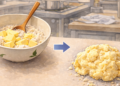
That simple instruction to “cream butter and sugar until light and fluffy” is doing more work than you might think.
Almost every classic cake recipe begins the same way. Add softened butter and sugar to a bowl, then beat until light and fluffy.
It sounds straightforward. But how soft should the butter be? How long should you beat it? And what does “light and fluffy” actually look like?
These details matter because creaming is more than mixing two ingredients together. It’s a technique that helps create the texture of your finished cake or cookies.
Once you understand what happens inside the mixing bowl, you’ll find it much easier to recognise when you’ve got it right.
What Does Creaming Butter and Sugar Mean?
Creaming is a baking technique in which softened butter and sugar are beaten together until the mixture becomes lighter in colour, increases in volume, and develops a fluffy texture.
As the sugar crystals move through the butter, they help create tiny air pockets. Beating distributes these pockets throughout the mixture.
During baking, the trapped air expands, while steam and gases from leavening agents can contribute further to the rise.
This helps produce a lighter texture in many butter cakes and cookies.
However, creaming isn’t suitable for every recipe. Brownies, muffins, and certain cakes use different mixing methods because they’re designed to produce different textures.
Why Butter Temperature Matters
Butter that’s too cold is difficult to beat and won’t incorporate air efficiently. Butter that’s too warm becomes greasy and struggles to hold the tiny air pockets created during mixing.
For many creaming recipes, butter around 18–21°C (65–70°F) is a useful starting point, although the ideal temperature depends on the recipe and room conditions.
Properly softened butter should yield when gently pressed with a finger while still holding its shape.
It shouldn’t look shiny, oily, or partially melted.
If your butter is straight from the refrigerator, cut it into small cubes and allow it to soften at room temperature. This is generally better than microwaving it, which can melt some areas while leaving others cold.
How to Cream Butter and Sugar Step by Step
You can use a stand mixer, electric hand mixer, or wooden spoon. Electric mixers make the process quicker, but the basic principle remains the same.
Step 1: Start With Softened Butter
Place the softened butter in a clean mixing bowl.
If you’re using a stand mixer, fit it with the paddle attachment. A hand mixer with standard beaters also works well.
Beat the butter briefly to make it smooth and evenly softened.
Step 2: Add the Sugar
Add the quantity of sugar specified in your recipe.
Granulated or caster sugar works well for creaming because the crystals help create air pockets in the butter.
Caster sugar has smaller crystals and often incorporates more quickly.
Step 3: Beat Until Light and Fluffy
Mix at medium speed, scraping down the sides of the bowl occasionally.
With an electric mixer, creaming commonly takes around 3–5 minutes, although the exact time varies with the equipment, batch size, butter temperature, and recipe.
The mixture should gradually become paler, softer, and noticeably more voluminous.
Don’t rely on the clock alone. Watch how the texture changes.
Step 4: Check the Consistency
Properly creamed butter and sugar should look fluffy and hold soft ridges when lifted with a spoon or spatula.
It may still feel slightly grainy because the sugar hasn’t completely dissolved. That’s normal.
If the mixture looks dense and heavy, it may need more beating. If it appears oily or begins separating, the butter may have become too warm.
Once the mixture reaches the right consistency, continue with the recipe, usually by adding eggs gradually.
How Long Should You Cream Butter and Sugar?
There’s no single mixing time that works for every recipe.
| Mixing stage | What you’ll notice |
|---|---|
| Just combined | Dense, yellow, grainy mixture |
| Partially creamed | Slightly paler and softer |
| Properly creamed | Light, fluffy, increased volume |
| Overworked or too warm | Greasy, overly soft, possibly separated |
These are visual guides rather than exact stages determined by time.
A stand mixer may cream butter more efficiently than a wooden spoon, and a warm kitchen can change how quickly the mixture softens.
For cookies, some recipes deliberately use shorter creaming times to limit aeration and control spreading. Always consider the texture the recipe is trying to achieve.
Common Mistakes When Creaming Butter and Sugar
Using melted butter is one of the most common mistakes. Melted butter cannot trap air in the same way as softened, solid butter, so it may produce a denser result.
Another mistake is using butter that’s too cold. The mixture may remain heavy and uneven even after several minutes of beating.
Not scraping the bowl can also cause problems. Butter and sugar often collect along the sides or beneath the mixing attachment, leaving parts of the mixture insufficiently combined.
Finally, avoid assuming that longer mixing is always better. Excessive beating, especially in a warm kitchen, can raise the butter’s temperature and reduce its ability to retain air.
Can You Cream Butter and Sugar by Hand?
Yes, although it requires more effort.
Use a sturdy wooden spoon and a mixing bowl that won’t slide across the countertop.
Press the softened butter and sugar against the sides of the bowl, then beat vigorously until the mixture becomes lighter and fluffier.
It may take considerably longer than using an electric mixer, particularly with larger quantities.
For small batches, however, hand creaming is perfectly practical.
Does Brown Sugar Work for Creaming?
Brown sugar can also be creamed with butter, and it’s commonly used in cookie recipes.
Because brown sugar contains molasses, it adds moisture, flavour, and a darker colour to baked goods.
The finished mixture may not become as pale as one made with white sugar, so judge it by its texture and increased volume rather than colour alone.
Many chocolate chip cookie recipes combine white and brown sugars to balance sweetness, moisture, spread, and texture.
Why Creaming Matters in Baking
Creaming is one of those techniques that demonstrates why baking instructions are worth paying attention to.
Two cakes can contain exactly the same ingredients but develop different textures because the butter and sugar were mixed differently.
When done correctly, creaming helps establish the structure and aeration needed for many tender cakes and cookies.
The next time a recipe asks you to beat butter and sugar until light and fluffy, take a moment to observe the mixture instead of simply setting a timer.
Watch it become paler, notice the change in volume, and feel how the texture softens.
Those small details will tell you far more than the clock ever could.