Almost everyone has burnt garlic, oversalted a curry, or wondered why their beautifully planned dinner turned into a soggy mess. Many of these issues are actually common beginner cooking mistakes. The interesting part is that most of these mistakes have surprisingly simple explanations.
I think one of the most frustrating things about learning to cook is following a recipe carefully and still ending up with something completely different from the photograph. The potatoes refuse to become crispy, the vegetables release enough water to make a soup, and the chicken looks beautifully browned until you discover that the centre hasn’t cooked properly. You begin questioning the recipe, the ingredients, and eventually your ability to cook.
But cooking is full of small details that recipes don’t always explain. The temperature of your pan, the size of your ingredients, the amount of moisture in your vegetables, and even the order in which you add things can change the result. Once you understand these details, many common beginner cooking mistakes become much easier to prevent.
The good news is that you don’t need expensive equipment or years of experience to improve. Often, a small change in technique is enough to turn a disappointing dish into something worth making again.
1. Starting Before Reading the Entire Recipe
We’ve all done this. You find a recipe that looks simple, gather a few ingredients, and start cooking. Halfway through, you discover that the dough needs an hour to rest, the chicken should have been marinated overnight, or the oven was supposed to be preheated twenty minutes ago. Suddenly, the quick dinner you imagined is taking considerably longer than expected.
This happens because recipes contain more than a list of instructions. They also include preparation requirements, equipment, resting periods, and steps that need to happen before cooking begins. Missing one of these details can interrupt the entire process, particularly when you’re preparing several components of a meal.
How to fix it: Read the recipe from beginning to end before touching an ingredient. Check the total preparation time, identify anything that needs to be chopped or measured, and look for instructions involving chilling, marinating, or resting. Preparing your ingredients before cooking, a practice known as mise en place, makes the process much more manageable.
2. Cooking Everything on High Heat
When you’re hungry, turning the stove to its highest setting feels like a reasonable shortcut. Unfortunately, food doesn’t always cook faster in the way you expect. Garlic burns before the onions soften, pancakes develop dark surfaces while remaining wet inside, and thick pieces of food can brown long before their centres are ready.
The problem is that heat takes time to move through food. High temperatures can rapidly cook the surface without giving the interior enough time to catch up. Some ingredients also contain delicate compounds that burn or develop unpleasant flavours when exposed to excessive heat.
How to fix it: Match the temperature to the cooking technique. Use low heat for delicate foods and gentle cooking, medium heat for everyday sautéing and pancakes, and higher heat when you specifically want rapid browning or searing. Watch the food rather than relying entirely on the stove dial. If something is browning too quickly, lower the heat or briefly move the pan away from the burner.
3. Overcrowding the Frying Pan
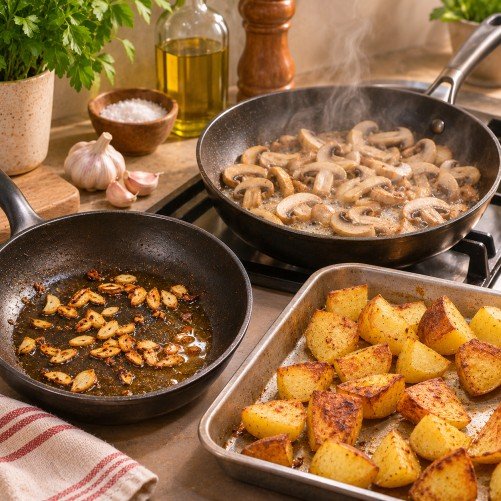
You want to roast potatoes, so you spread an entire batch across a small baking tray. Or perhaps you’re cooking mushrooms and decide to add everything at once rather than working in batches. The result is often disappointing: instead of developing a golden crust, the food becomes soft, wet, and strangely pale.
When ingredients cook, they release moisture. If the pan is overcrowded, that moisture cannot evaporate quickly enough. The temperature of the cooking surface may also drop when too much food is added at once. Instead of browning effectively, the ingredients begin steaming in the moisture surrounding them.
How to fix it: Give ingredients enough room for moisture to escape. Spread vegetables in a single layer when roasting, and avoid piling them on top of one another. When sautéing mushrooms or searing meat, cook smaller batches if necessary. A little extra space can make a remarkable difference to colour, flavour, and texture.
4. Adding Garlic Too Early
Garlic is one of those ingredients that can make an ordinary dish smell wonderful within seconds. It’s also surprisingly easy to burn. Many beginners add garlic and onions to the pan together, then wonder why the garlic becomes dark and bitter before the onions have softened.
The explanation is simple. Finely chopped garlic has a much smaller size and greater exposed surface area than sliced onions, so it can cook and brown much more quickly. Once garlic burns, its bitter flavour can spread throughout the dish.
How to fix it: When a recipe calls for softened onions and garlic, cook the onions first and add the garlic closer to the end of that stage. Garlic often needs only a short time to become fragrant, depending on the heat and how finely it’s chopped. If it begins browning too quickly, reduce the temperature or add another ingredient to slow the cooking. The exact order depends on the dish, but garlic rarely benefits from being left unattended in a hot pan.
5. Not Drying Ingredients Before Cooking
Have you ever tried to sear mushrooms or fry potatoes and wondered why they wouldn’t become crispy? Sometimes the problem isn’t the oil or the temperature. It’s the moisture sitting on the surface of the food.
When wet ingredients enter a hot pan, some of the heat is used to evaporate that water. Until enough surface moisture has disappeared, browning is limited. This is particularly noticeable with potatoes, mushrooms, and foods that have been washed immediately before cooking.
How to fix it: Drain ingredients thoroughly and remove excess surface moisture before frying or roasting. Pat washed vegetables dry when appropriate, and allow boiled potatoes to release steam before roasting them. For foods that require a crisp exterior, a dry surface often makes browning easier. Be especially careful when frying in deep oil, because water can cause dangerous splattering.
6. Adding Too Much Salt at Once
There’s a particular kind of disappointment that comes from tasting a nearly finished dish and realising it’s far too salty. It often happens when we season generously at the beginning without considering that other ingredients may already contain salt.
Stock cubes, soy sauce, cheese, salted butter, canned foods, and prepared sauces can all contribute significant amounts. Salt also becomes more concentrated when a sauce reduces because water evaporates while much of the dissolved salt remains.
How to fix it: Season gradually and taste whenever it’s safe to do so. If you’re using salty ingredients, add less salt initially and adjust near the end. If a dish becomes oversalted, increasing its volume with suitable unsalted ingredients can sometimes help. Adding water may reduce the salt concentration, although it can also dilute the flavour and texture. The popular trick of dropping a potato into salty soup isn’t a reliable way to selectively remove salt.
7. Stirring Food Constantly
When you’re new to cooking, leaving food alone can feel uncomfortable. You worry that something might stick or burn, so you keep moving it around the pan. Unfortunately, constant stirring can prevent the very browning you’re trying to achieve.
When food remains in contact with a hot cooking surface, its exterior has time to lose moisture and develop colour. Moving it continuously interrupts that contact. This is particularly noticeable when cooking mushrooms, potatoes, and foods that benefit from a browned crust.
How to fix it: Learn which dishes need frequent stirring and which benefit from being left alone. Sauces, porridge, and certain delicate mixtures may need regular attention, while mushrooms and roasted vegetables often benefit from uninterrupted contact with heat. Let the food develop colour before turning it, but continue watching for signs of burning.
8. Measuring Ingredients by Guesswork
A little extra cumin in a curry might be harmless, but guessing measurements becomes more troublesome when baking. Adding too much flour can make a cake dense, while using the wrong amount of baking powder can affect how it rises.
Cooking and baking respond differently to measurement errors. Many savoury dishes allow some flexibility because ingredients can be adjusted during preparation. Baking often depends on more precise relationships between flour, fat, sugar, liquid, and leavening agents.
How to fix it: Follow measurements carefully when learning a recipe, particularly when baking. A digital kitchen scale is useful because measuring ingredients by weight is generally more consistent than using cups. Pay attention to instructions such as softened butter, packed brown sugar, or sifted flour, because preparation methods can influence the final result. Once you understand a recipe, you’ll have a better sense of which quantities can be adjusted.
9. Using the Wrong Pan for the Job
A pan might seem like a simple container for food, but its size, shape, and material influence how cooking happens. A small frying pan filled with too many ingredients encourages steaming, while a thin pan may develop hot spots that burn food unevenly. A saucepan that is too small can cause liquids to boil over.
Different materials also behave differently. Cast iron retains heat well, stainless steel is useful for browning, and non-stick cookware makes delicate foods easier to handle. No single pan is perfect for every task.
How to fix it: Choose cookware according to what you’re preparing. Use a sufficiently large frying pan for sautéing, a deep saucepan for liquids, and a sturdy baking tray for roasting. You don’t need an enormous cookware collection, but understanding the strengths of your existing equipment will help you use it more effectively.
10. Trusting the Timer More Than the Food
Recipes often give cooking times that sound reassuringly precise. Boil for ten minutes, roast for twenty, or bake for thirty-five. But the same ingredient can cook differently depending on its size, starting temperature, and the equipment you’re using.
A thick potato takes longer to soften than a small one, while a cake may bake differently in a dark metal tin compared with a lighter one. Even ovens set to the same temperature can behave differently.
How to fix it: Treat cooking times as estimates and learn to recognise signs of doneness. Test potatoes with a fork, taste pasta to check its texture, and use the appropriate doneness test for the type of cake you’re baking. For meat, poultry, and seafood, appearance alone cannot reliably confirm food safety, so use a food thermometer to check the internal temperature.
11. Forgetting to Taste While Cooking
One of the easiest ways to end up with a disappointing meal is to wait until everything is finished before tasting it. By then, the sauce may have reduced too far, the seasoning may be unbalanced, or the dish may need an ingredient you no longer have time to add properly.
Ingredients naturally vary. Tomatoes can be sweeter or more acidic depending on their variety and ripeness. Chilli powders differ in strength, and prepared stocks can contain different amounts of salt. Even when you follow a recipe exactly, the finished flavour may need adjustment.
How to fix it: Taste at suitable stages of cooking and make small adjustments. A flat-tasting soup might need salt, while a heavy sauce may benefit from a little acidity. If a dish is too sharp, a small amount of sweetness or fat may help balance it, depending on the recipe. Always use a clean tasting spoon and never taste raw meat, raw poultry, or other ingredients that are unsafe to eat uncooked.
12. Not Letting Food Rest
When something comes out of the oven looking delicious, waiting can feel unnecessary. You want to cut the cake, slice the bread, or serve the meat immediately. But resting is sometimes part of the cooking process rather than an optional delay.
Freshly baked bread continues to change as it cools, and slicing it too early can leave the crumb gummy. Cakes need time to set and cool before decorating. Resting meat allows its temperature and internal moisture distribution to change after cooking, although the effects vary by cut and cooking method.
How to fix it: Follow resting instructions when they’re included in a recipe. Let cakes cool sufficiently before frosting, allow bread to cool before slicing when appropriate, and rest cooked meat according to the recipe while observing safe handling practices. A few extra minutes can improve the finished texture considerably.
13. Making Too Many Changes to a New Recipe
There’s nothing wrong with experimenting in the kitchen, but changing several ingredients and techniques the first time you try a recipe makes it difficult to understand what went wrong.
Imagine making a cake while reducing the sugar, replacing the butter, changing the flour, and adjusting the oven temperature. If the cake turns out dense, you won’t know which change caused the problem. The same thing happens in savoury cooking when several substitutions alter the flavour, moisture, and cooking time simultaneously.
How to fix it: Follow unfamiliar recipes reasonably closely the first time, especially when baking. Once you understand the expected texture and flavour, begin experimenting with one change at a time. This makes it easier to learn how ingredients behave and helps you develop your own versions with greater confidence.
14. Leaving Everything to Clean Until the End
One of the less glamorous beginner cooking mistakes is allowing the kitchen to become a disaster while preparing a meal. By the time dinner is ready, the sink is full, the countertop is covered in ingredients, and every utensil seems to have been used at least twice.
A cluttered kitchen can also make cooking more difficult. You lose track of ingredients, run out of preparation space, and spend time searching for equipment when you need it.
How to fix it: Clean small things during natural breaks in cooking. While water heats or vegetables roast, wash a used bowl, wipe the counter, or put ingredients away. Keep a designated place for scraps and packaging so they don’t spread across the workspace. Never leave active cooking unattended simply to wash dishes, and always prioritise safe food handling.
15. Trying to Cook Complicated Meals Too Soon
It’s tempting to begin your cooking journey with something impressive. A complicated restaurant-style dish looks exciting, and following a long recipe can feel like a challenge worth taking. But when several unfamiliar techniques appear in the same dish, small mistakes become harder to recognise.
You might be learning how to sauté vegetables, prepare a sauce, cook meat, and coordinate several cooking times all at once. If something goes wrong, it’s difficult to know which skill needs improvement.
How to fix it: Begin with dishes that teach one or two techniques at a time. Learn to make rice properly, cook eggs to your preferred texture, roast vegetables, and prepare a simple tomato sauce. Once these skills become familiar, combining them into more complicated meals feels much easier. Repeating a few reliable recipes is often more educational than attempting something completely new every day.
What to Do When a Dish Goes Wrong
Sometimes, despite your best efforts, dinner still doesn’t turn out as planned. The sauce is too thin, the vegetables are overcooked, or the seasoning tastes completely different from what you expected. The most useful response is to identify the problem before trying to correct it.
If a sauce is too watery, gentle reduction may help, provided the flavours won’t become overly concentrated, vegetables are softer than intended, you may be able to turn them into a soup or purée. If a dish tastes bland, check whether it needs salt, acidity, or another flavour adjustment before adding random spices.
Not every mistake can be repaired. Burnt flavours can be difficult to remove, and food that has been handled or cooked unsafely shouldn’t be rescued simply by changing its appearance. Sometimes the best solution is to start again with a better understanding of what happened.
Keeping a few notes after cooking can be surprisingly useful. Write down whether the heat was too high, the pan was too crowded, or the recipe needed more time. These observations help you avoid repeating the same mistakes.
The Best Way to Become a Better Cook Is to Notice What Changes
There’s a point in learning to cook when mistakes begin to feel less mysterious. You recognise that the potatoes didn’t brown because they were too wet, the garlic became bitter because the pan was too hot, or the cake turned dense because the ingredients were measured incorrectly.
That understanding is far more valuable than memorising hundreds of recipes.
Cooking becomes easier when you begin noticing how ingredients respond to heat, moisture, time, and seasoning. A good recipe gives you directions, but experience helps you recognise when those directions need small adjustments.
The next time something goes wrong in your kitchen, resist the urge to dismiss the entire attempt as a failure. Think about what changed, what you expected to happen, and what you might do differently next time.
You may still burn the occasional piece of toast or forget to preheat the oven. Most people do. But with every meal, you’ll become a little better at understanding why food behaves the way it does.
And eventually, the dishes that once seemed difficult will become the ones you can cook without thinking twice.