The best part of cooking dinner is sitting down to eat. The worst part is turning around and seeing what you’ve done to the kitchen. That’s why learning how to clean as you cook can make the whole process much more enjoyable.
There’s a particular kind of disappointment that comes after making a really good meal. You’ve spent an hour chopping vegetables, stirring sauces, and getting everything just right. Dinner tastes wonderful, and for a few minutes, you’re feeling rather pleased with yourself. Then you walk back into the kitchen and discover a mountain of dirty dishes, a sticky countertop, and three pans that look as though they’ve been through something terrible.
I’ve always thought the most exhausting part of cooking isn’t necessarily the cooking itself. It’s knowing that once you’ve finished eating, there’s another job waiting for you.
That’s where learning how to clean as you cook makes a difference. It’s a simple kitchen habit that keeps the mess manageable while you’re preparing food. You don’t need to become obsessively tidy or wash every spoon the moment you use it. The idea is to make use of the little gaps that naturally appear during cooking, so the kitchen doesn’t become a disaster by the time dinner is ready.
Start With a Clean Kitchen
It sounds almost too obvious to mention, but beginning with a clean workspace makes everything that follows easier. If the sink is already full of breakfast dishes and the countertop is covered in yesterday’s shopping, preparing dinner becomes unnecessarily complicated. You end up moving things around just to find enough room to chop an onion.
Before cooking, spend a couple of minutes clearing your main preparation area. Put away anything that doesn’t belong there, empty the sink if necessary, and make sure your chopping board, knife, and other equipment are clean. You don’t need to deep-clean the kitchen. You simply need enough space to work comfortably.
This small preparation also helps with food safety. Clean work surfaces reduce the chance of transferring unwanted bacteria or allergens to ingredients, particularly when you’re preparing foods that won’t be cooked before serving.
Keep a Bowl for Vegetable Scraps
One of the simplest changes you can make is keeping a small bowl beside your chopping board. As you peel onions, trim carrots, or remove vegetable stems, drop the scraps directly into the bowl instead of scattering them across the counter.
It might seem like a tiny detail, but it prevents the familiar situation where onion skins stick to wet countertops and vegetable peels somehow end up on the floor. Once you’ve finished preparing the ingredients, empty the bowl into the appropriate waste or compost container.
If you’re working with raw meat or poultry, keep their packaging and trimmings separate from vegetable scraps. Dispose of them carefully, and clean any surfaces or utensils that have come into contact with raw juices. A tidy workspace is useful, but preventing cross-contamination matters more than making the kitchen look organised.
Wash Small Things While You Wait
Cooking contains more waiting than we sometimes realise. Water takes time to boil, onions need a few minutes to soften, and vegetables spend much longer roasting than they do being prepared. These small pauses are useful opportunities to deal with the mess you’ve already made.
If a pot of rice is simmering safely and doesn’t need immediate attention, you might have time to rinse a mixing bowl or put away the ingredients you no longer need. While a cake bakes, you can wash measuring cups and wipe flour from the countertop.
The important part is knowing when it’s safe to step away from a task. Deep-frying, searing, and other active cooking methods require close attention, so don’t leave them unattended simply to wash a few dishes. Cleaning should fit around cooking, not distract you from it.
You’ll be surprised how much less work remains when you deal with two or three small things during each natural break.
Put Ingredients Away After Using Them
A kitchen counter can become crowded remarkably quickly. You take out the flour, sugar, salt, spices, oil, and a few sauces, and before long there’s barely enough space left for the cutting board.
Try returning ingredients to their proper places once you’ve finished using them. Close spice jars, put flour back in the cupboard, and refrigerate perishable foods promptly rather than leaving them beside the stove.
This is particularly important for ingredients such as milk, cream, eggs, raw meat, and other foods that require temperature control. As a general food-safety rule, perishable foods shouldn’t remain at room temperature for more than two hours, or more than one hour when the surrounding temperature exceeds 32°C (90°F).
Putting ingredients away also makes it easier to see what you’ve already added to a recipe. When the countertop isn’t crowded with open packets and bottles, there’s less chance of accidentally seasoning something twice.
Deal With Spills Before They Become Stubborn
A little tomato sauce splashes onto the stove. Some flour falls beside the mixing bowl. A few drops of oil land on the countertop. None of these seems particularly important while you’re cooking, so it’s tempting to leave them until later.
The problem is that some spills become much harder to remove once they dry or are repeatedly exposed to heat. Tomato sauce can leave sticky residue, sugar syrups can harden, and grease can spread across nearby surfaces.
Keep a clean cloth or suitable kitchen towel nearby and wipe up minor spills when it’s safe to do so. Use appropriate cleaning products for the surface, and keep cleaning chemicals away from food and ingredients. If something spills onto a hot burner, wait until the area is safe to clean rather than risking a burn.
Pay special attention to spills on the floor. Water and oil can make kitchen floors slippery, and dealing with them promptly helps prevent accidents.
Learn the Difference Between Rinsing and Cleaning
It’s easy to assume that a quick rinse under the tap makes a utensil clean. Sometimes rinsing removes visible food, but it doesn’t necessarily remove grease, allergens, or harmful microorganisms.
Equipment that has touched raw meat, poultry, seafood, or eggs needs proper cleaning with detergent and water before being used for other foods. Where appropriate, sanitising food-contact surfaces provides an additional level of protection.
Avoid washing raw poultry, since splashing water can spread bacteria around the sink and surrounding surfaces. Instead, focus on cooking it to the recommended safe temperature and properly cleaning anything that comes into contact with it.
Use separate cleaning cloths or suitable disposable towels for different tasks, and wash reusable cloths regularly. A cloth that has been used to wipe up raw meat juices shouldn’t then be used to clean the dining table.
Cleaning as you cook works best when cleanliness and food safety are treated as part of the same habit.
Soak Stubborn Pans Instead of Scrubbing Immediately
Some cookware is much easier to clean after a short soak. If you’ve cooked a thick sauce, porridge, or a starchy mixture, the residue may begin sticking to the bottom as the pan cools.
Once the cookware is cool enough to handle safely, add warm water and a little dishwashing liquid, if suitable for the material. Let it sit while you finish the remaining kitchen tasks. The softened residue is often easier to remove later.
Be careful with very hot pans. Pouring cold water into hot cookware can cause thermal shock, potentially warping or damaging certain materials. Non-stick pans also need gentle cleaning tools to protect their coatings.
Not every pan should be soaked. Cast iron, for example, benefits from prompt cleaning and thorough drying rather than prolonged soaking. Follow the care instructions for your cookware.
Use Fewer Utensils When You Can
Sometimes a messy kitchen isn’t the result of a complicated meal. It’s the result of using far more equipment than necessary.
You might use three different spoons to stir the same sauce, several bowls for ingredients that could have been combined, or a fresh chopping board for every vegetable. By the time dinner is ready, you’ve created a pile of dishes that didn’t really need to exist.
Try planning your preparation a little more carefully. Chop vegetables that don’t present cross-contamination concerns on the same clean board, and reuse suitable utensils when doing so is safe. Measure dry ingredients before wet ingredients when practical, so measuring tools are easier to reuse.
This doesn’t mean sacrificing hygiene to save washing. Utensils that have touched raw meat or allergens need proper cleaning before reuse. The aim is simply to avoid creating unnecessary dishes in the first place.
Keep the Sink Manageable
A sink full of dirty dishes makes even a reasonably clean kitchen feel chaotic. It also makes ordinary tasks, such as washing vegetables or filling a pot with water, more inconvenient.
If you have a dishwasher, load suitable items as you finish using them. If you’re washing by hand, keep dirty utensils organised rather than allowing everything to pile up randomly. Wash a few items during safe breaks in cooking, and leave heavily soiled cookware to soak when appropriate.
It’s useful to keep the sink available for washing hands and cleaning equipment. However, remember that the sink itself can become contaminated, particularly after handling raw ingredients. Clean it regularly and avoid placing ready-to-eat food directly into an unclean sink.
A manageable sink doesn’t need to be completely empty throughout dinner preparation. It simply shouldn’t become another obstacle while you’re trying to cook.
Build Cleaning Into Your Cooking Routine
One reason cleaning as you cook feels difficult at first is that it seems like an additional task. You’re already concentrating on the recipe, so remembering to wash dishes and clear surfaces can feel like too much.
The trick is to connect cleaning to things you’re already doing. After chopping vegetables, clear the scraps. After measuring ingredients, close the containers and put them away. After transferring food from a mixing bowl, wash or rinse it when safe. When something goes into the oven, check whether the preparation area needs attention.
After repeating these actions a few times, they begin to feel like part of the cooking process rather than a separate chore.
You don’t have to do everything perfectly. Some meals create more mess than others, and there will be evenings when you simply don’t have the energy to keep up. The goal is to make the routine easier over time.
What About Cooking Several Dishes at Once?
Preparing a complete meal can make cleaning more challenging because different dishes need attention at different times. Perhaps rice is simmering, vegetables are roasting, and a curry is cooking on another burner. Meanwhile, the counter is covered in ingredients waiting to be used.
This is where planning becomes particularly helpful. Before starting, work out which dish takes the longest and which requires the most attention. Prepare ingredients for quick-cooking dishes in advance, and identify the stages when you can safely clean or put things away.
For example, you might prepare vegetables first, put them in the oven, and then begin cooking rice. While both cook, you can clear the chopping board and organise the remaining ingredients. When you start a dish that needs constant stirring or close attention, leave the cleaning until that stage is finished.
The more familiar you become with timing meals, the easier it is to fit small cleaning tasks into the process.
A Simple Clean-As-You-Cook Routine
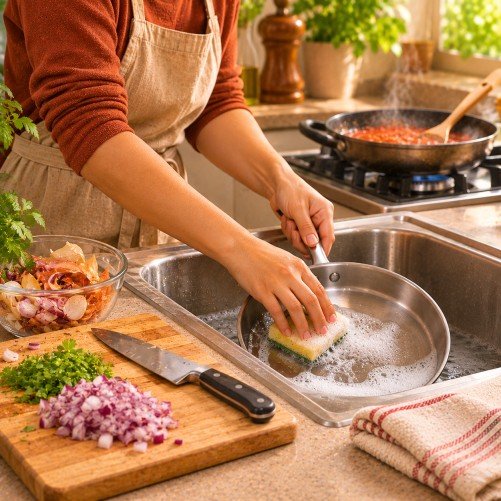
If you’re trying to build this habit, start with an ordinary dinner rather than an elaborate recipe. Imagine making pasta with a simple tomato sauce. Before cooking, clear the counter and take out the ingredients and equipment you need. As you chop onions and garlic, collect the scraps in a small bowl. Once the vegetables are prepared, put away anything you no longer need.
While the sauce simmers, wash the chopping board and knife, provided the cooking doesn’t need your immediate attention. Return the tomato cans, oil, and seasonings to their places. When the pasta is ready, drain it safely and combine it with the sauce. Transfer dinner to plates or serving dishes, then deal with any remaining cookware when it’s safe to handle.
By the time you sit down, the kitchen may not be spotless, but the biggest part of the mess is already gone. You might still have a saucepan, a frying pan, and a few plates to wash, which feels much more manageable than facing every utensil you’ve used throughout the evening.
A Clean Kitchen Makes Cooking More Enjoyable
There’s something satisfying about finishing dinner and finding that the kitchen is still reasonably tidy. You can sit down, enjoy your food, and know that you won’t have to spend another half-hour dealing with everything you left behind.
But the benefits go beyond saving time. A cleaner workspace gives you more room to prepare ingredients, makes equipment easier to find, and helps reduce the risk of cross-contamination. It also makes cooking feel less overwhelming, especially when you’re still learning.
You don’t need to wash every utensil immediately or keep the countertop looking like a professional kitchen. Just begin with a clear workspace, deal with small messes when it’s safe, and put things away as you finish using them.
After a while, cleaning becomes another natural part of preparing a meal, much like chopping vegetables or heating a pan.
And perhaps the nicest part is what happens after dinner. Instead of walking back into the kitchen and wondering where to begin, you realise there’s hardly anything left to do.