
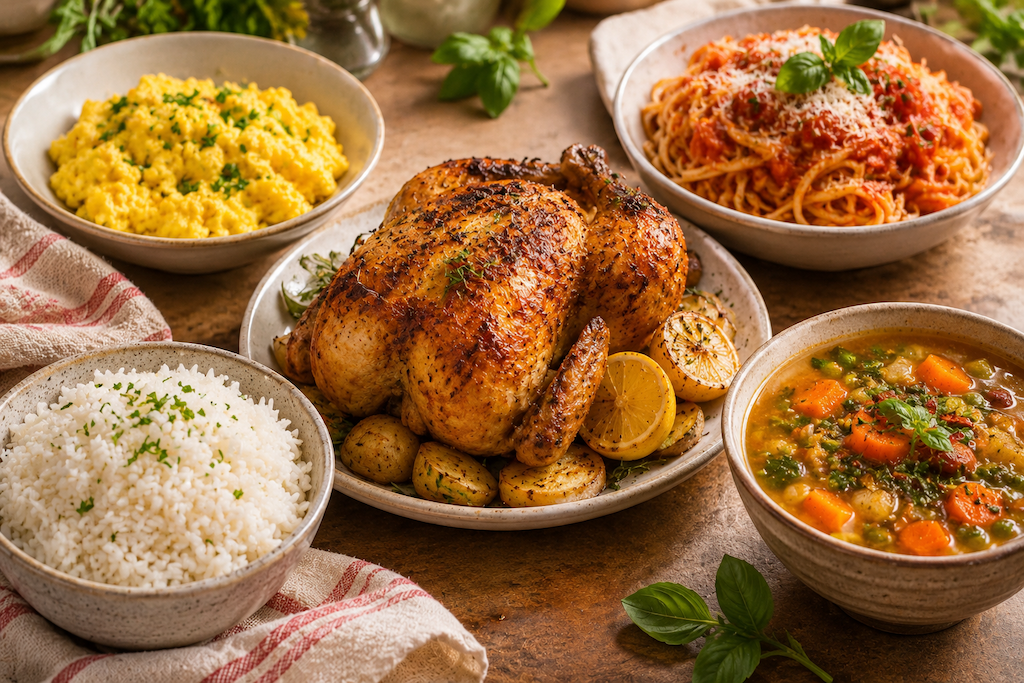
Learning to cook can feel more complicated than it needs to be. Spend ten minutes watching cooking videos and you can easily come away thinking you need to master handmade pasta, sourdough, steak, curry, and French pastry before you can call yourself a decent cook. Real kitchens rarely work that way. Most people become comfortable by making ordinary food again and again, noticing what went wrong, and doing it slightly better next time. These five dishes to master give you that kind of practice. They are not chosen because they look impressive on a plate. They are useful because eggs, pasta, rice, soup, and roast chicken teach the basic habits that make almost everything else easier.
1. Eggs: One of the Essential Dishes to Learn
Eggs are a good first lesson because they tell you very quickly when your heat is wrong. Leave scrambled eggs in a scorching pan and they can go from soft to dry before you have time to find a plate. Cook them more gently and the difference is obvious. Beat two or three eggs with a pinch of salt, melt a little butter in a pan over medium-low heat, and add the eggs. Stir gently as they begin to form soft curds, paying attention to what you see rather than watching a timer. Take them from the heat while they still look slightly softer than you want because the warmth left in the pan will continue cooking them for a moment.
Eggs belong among the five dishes to master because they make you notice heat instead of simply turning the stove to high and hoping for the best. Once scrambled eggs feel easy, try fried eggs and then an omelet. You will begin noticing how quickly butter changes color, how different pans hold heat, and when food needs more heat or less. Those observations may seem small, but they follow you into almost everything else you cook.
2. Pasta: A Beginner Cooking Dish Worth Repeating
A bowl of pasta with tomato sauce does not sound particularly ambitious, which makes it ideal for learning. You have two things happening at once, and both need to meet at roughly the right moment. Start a simple sauce by gently cooking garlic in olive oil, then add tomatoes and salt and let it simmer. Meanwhile, cook your pasta in salted water. Start tasting it shortly before the suggested cooking time is up. You want it cooked through but still pleasantly firm rather than soft and bloated.
Before draining the pasta, scoop out a little of its cloudy cooking water. Transfer the pasta directly into the sauce and toss the two together over the heat, adding a splash of that reserved water if the sauce needs loosening. The starch in the water helps the sauce coat the pasta instead of collecting at the bottom of the bowl. Among these five dishes to master, pasta is where you begin learning coordination. You are seasoning, tasting, watching texture, and bringing two pans together at the right time. After a few attempts, the whole process starts to feel less like following instructions and more like cooking.
3. Rice: One of the Five Dishes to Master With Patience
Rice has a funny way of making beginners nervous. You put the lid on, wait for a few minutes, wonder what is happening underneath, lift the lid, stir everything, replace the lid, and then check again. Unfortunately, all that attention can make matters worse. Different varieties of rice need different amounts of liquid and different cooking times, so begin by following the instructions for the rice you actually have. Once you have measured properly and adjusted the heat, give it a chance to cook without constant interference.
When the rice is ready, leave it covered for a few minutes before gently fluffing it. That short rest helps the moisture settle more evenly and can improve the texture. Rice earns its place among the essential dishes to learn because it teaches restraint. Some foods want constant movement and attention; others simply need the right amount of heat, moisture, and time. Knowing when not to interfere is a surprisingly useful cooking skill.
4. Vegetable Soup: A Beginner Cooking Dish That Teaches Tasting
A simple vegetable soup is where you can start loosening your grip on the recipe. Cook some onion in a little oil, add sturdy vegetables such as carrots or celery, then add garlic, stock or water, and whatever other vegetables you have available. Let everything simmer until tender. It does not matter if your carrots are not cut exactly like the photograph or if you have courgette instead of celery. Soup is flexible enough to accommodate the contents of a normal fridge.
What matters is that you taste it while it cooks. This is why soup belongs among the five dishes to master. If it tastes flat, it may need salt. If everything seems heavy, a small squeeze of lemon or splash of vinegar might bring it back to life. Sometimes the seasoning is fine and the soup simply needs another ten minutes for the flavors to come together. Taste, adjust, and taste again. That habit is far more valuable than memorizing an exact quantity of salt because ingredients change, quantities change, and your own preferences matter too.
5. Roast Chicken: One of the Dishes Every Beginner Should Master
A whole roast chicken feels like a significant jump from eggs or rice. Perhaps that is part of its charm. The first time you pull a browned chicken from the oven and realize you cooked it properly, dinner suddenly feels like an accomplishment. Fortunately, the basic method is not complicated. Pat the chicken dry, season it well, and roast it until safely cooked. A food thermometer makes this far easier because you do not have to rely on guesswork. Chicken should reach a safe internal temperature of 165°F or 74°C at the appropriate thickest point.
Once the chicken leaves the oven, give it some time to rest before carving. Use those few minutes to finish the vegetables, set the table, or clean the counter that somehow became messy despite your best intentions. Roast chicken is one of the dishes every beginner should master because one meal teaches seasoning, browning, oven control, temperature, food safety, resting, and carving. The leftovers are useful too. Tomorrow’s chicken can become sandwiches, salads, pasta, or soup, which is another useful lesson: good home cooking is often about knowing what to do with what you already have.
Why These Five Dishes to Master Matter
These five dishes to master are really five lessons disguised as dinner. Eggs teach you to control heat. Pasta teaches timing and coordination. Rice teaches patience. Soup teaches tasting and adjustment. Roast chicken teaches you to become comfortable with the oven. None requires restaurant-level technique, expensive equipment, or an enormous collection of ingredients, but together they cover a surprising amount of what happens in an everyday kitchen.
The important thing is to make these beginner cooking dishes more than once. Your third omelet will teach you something your first did not. After cooking rice several times, you will probably stop feeling the urge to lift the lid every few minutes. Your tomato sauce will gradually become your tomato sauce because you will know whether you like more garlic, a little chilli, or a longer simmer. You might add beans to yesterday’s vegetable soup or season your roast chicken differently because there is rosemary sitting in the fridge.
That is the real value of having five dishes to master when you are learning to cook. Eventually, you stop treating every recipe as a strict set of instructions and start noticing what the food itself is telling you. You know when the pan is too hot. You taste a sauce and realize it needs salt. You open the fridge, see a few ordinary ingredients, and can imagine dinner without immediately reaching for your phone.
That quiet confidence, more than any complicated recipe, is when you start feeling like a cook.


