
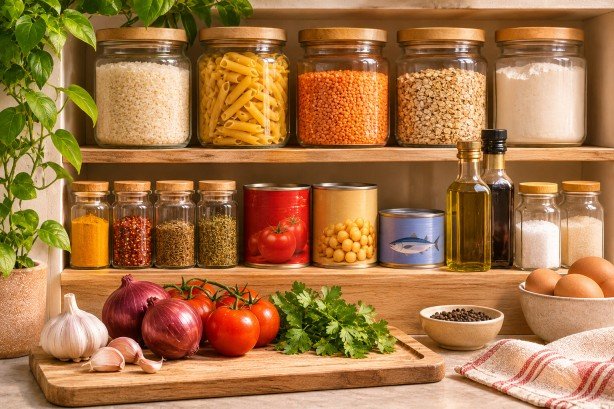
Stocking a Beginner’s Pantry
The first time I tried to properly stock a kitchen, I made the classic mistake of thinking more ingredients meant more possibilities. Suddenly there were jars of spices I barely recognized, three kinds of vinegar, dried beans I had no plan for, and sauces bought for one recipe that quietly moved to the back of the cupboard. If you’re just starting out, focusing on the Beginner’s Pantry can help you avoid these common pitfalls. Months later, the ingredients I actually reached for were surprisingly ordinary: rice, pasta, canned tomatoes, lentils, oil, salt, and a small collection of spices.
That is the best way to think about a beginner’s pantry. You are not trying to recreate a supermarket at home. You are building a small collection of ingredients that can rescue dinner when the fridge looks empty and ordering food feels unnecessary.
Start Your Beginner’s Pantry With Food You Already Eat
Before buying anything, think about what you genuinely cook. If you eat rice several times a week, keep rice. If pasta is your usual emergency dinner, buy a couple of packets. There is little value in filling shelves with quinoa, specialty grains, or six varieties of beans simply because somebody’s “perfect pantry” says you should.
For most people, a few carbohydrates form the backbone of their pantry basics. Rice, pasta, oats, flour, and perhaps noodles are useful starting points. You do not necessarily need all of them. Choose ingredients that fit the way you eat, because a modest pantry that gets used is far better than an impressive one full of forgotten packets.
Canned Foods Are Pantry Essentials for Beginners
Canned tomatoes are one of those ingredients I hate running out of. With onion, garlic, and a little olive oil, they can become pasta sauce, the beginning of a soup, a base for beans, or part of a quick stew. Keeping two or three cans around gives you an easy starting point when you have no real dinner plan.
Beans and chickpeas are equally useful pantry essentials for beginners. They are already cooked, so there is no soaking or lengthy preparation to think about. Add chickpeas to a salad, stir beans into soup, or cook them with tomatoes and spices for a simple meal. Canned tuna is another practical option if you eat fish. None of these foods is glamorous, but that is precisely why they work so well in an everyday kitchen.
Oil, Vinegar, Salt and Sugar Do More Than You Think
A beginner’s pantry does not need five cooking oils. One dependable everyday oil and, if you use it regularly, a bottle of extra-virgin olive oil will cover a great deal of cooking. Add a vinegar you actually enjoy using, and you already have the beginning of salad dressings, marinades, and quick sauces.
Then there are the ingredients so basic that we barely think of them as ingredients: salt and sugar. Salt is probably the seasoning you will use most often, while sugar is useful beyond baking. Even a small amount can help balance an overly acidic tomato sauce or dressing. Learning how these basic ingredients affect food is more useful than owning twenty condiments.
Keep Your Spice Collection Small at First
The spice aisle is where beginner pantries often get out of control. Tiny jars look inexpensive individually, so it is easy to come home with cumin, coriander, paprika, turmeric, oregano, cinnamon, chilli flakes, cloves, cardamom, and several spice blends. Six months later, half of them remain almost untouched.
Build your collection around the meals you make. Black pepper, chilli flakes, cumin, paprika, oregano, and perhaps cinnamon can cover plenty of everyday cooking, but your choices should reflect your own food. If you regularly cook Indian dishes, turmeric, cumin, coriander, chilli powder, and garam masala may deserve permanent space. The best kitchen staples are the ones that regularly leave the cupboard.
Remember That the Fridge Is Part of the Pantry
Some of the ingredients that make pantry food taste like an actual meal do not live in the cupboard. I nearly always think of onions and garlic as pantry ingredients even though their storage depends on the kitchen and climate. Eggs, butter, lemons, cheese, and a few dependable condiments can also turn dry staples into something much more interesting.
Think about rice with an egg and chilli, pasta with garlic and cheese, or chickpeas cooked with onion, tomato, and spices. None requires an elaborate shopping trip. The useful part of a beginner’s pantry is not any single ingredient but the number of simple combinations you can make from what you already have.
Build Your Beginner’s Pantry Slowly
You do not need to buy everything on your first supermarket trip. In fact, I would avoid doing that. Start with ingredients for three or four meals you genuinely enjoy, then notice what you keep wishing you had. If you repeatedly need soy sauce, buy it. If mustard keeps appearing in recipes you like, give it a place in the fridge. If a jar sits unopened for a year, perhaps it never belonged in your kitchen.
A good beginner’s pantry grows around your habits. After a few months, your shelves will probably look different from somebody else’s, and that is exactly how they should look. The goal is not to own every ingredient a recipe might ask for. It is to open the cupboard on a tired Tuesday evening and realize that, with a little rice, a can of tomatoes, some spices, and whatever is left in the fridge, you already have the beginning of dinner.


