
Discover the history, traditions, regional customs, and enduring importance of Lunch, the cherished weekly gathering where family, food, and conversation create one of Italy’s most meaningful cultural rituals.
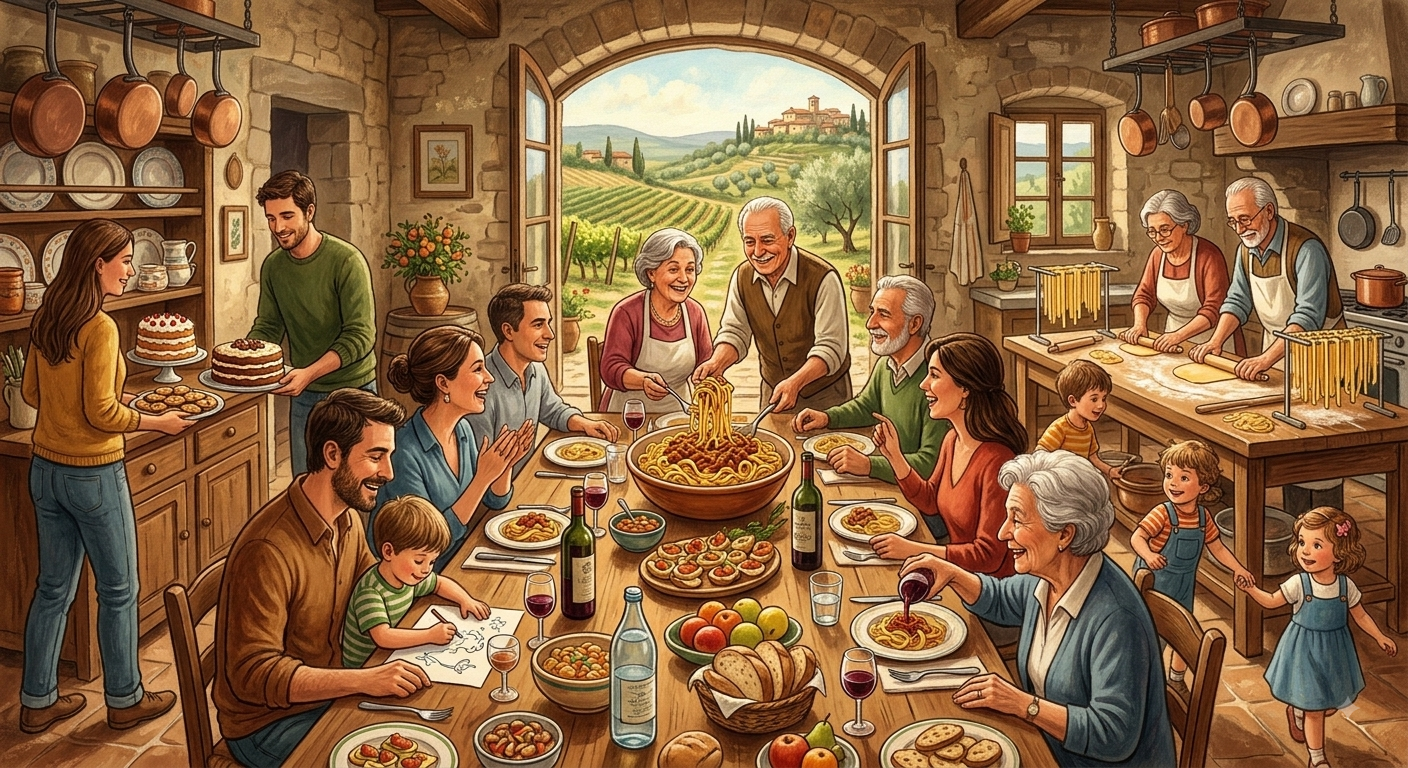
The first time I was invited to an Italian Sunday Lunch, I expected a leisurely meal that would last an hour or two. Instead, I found myself sitting at the table for most of the afternoon. Grandparents prepared fresh pasta in the kitchen, children played between courses, relatives arrived carrying homemade desserts, and conversations flowed as easily as the wine. Nobody seemed eager to leave. The meal wasn’t simply about eating—it was about being together.
That afternoon helped me understand that The Italian Sunday Lunch is much more than a weekly tradition. It is a celebration of family, regional cooking, and the simple pleasure of sharing time around the table.
What Is The Italian Sunday Lunch?
The Italian Sunday Lunch is a traditional family meal held on Sunday, usually bringing together several generations for a relaxed feast prepared with homemade, seasonal ingredients.
Unlike weekday meals, Sunday lunch is often longer, more elaborate, and deeply rooted in regional customs. Families gather not only to enjoy food but also to celebrate birthdays, holidays, milestones, and the simple joy of spending time together.
Across Italy, recipes may differ from one region to another, but the purpose remains the same: strengthening family bonds through shared meals.
The History of The Italian Sunday Lunch
The tradition of gathering for Sunday lunch dates back centuries.
In rural Italy, families worked long hours throughout the week in fields, vineyards, workshops, and fishing communities. Sunday offered a rare opportunity to rest, attend church, and enjoy a generous meal together.
As Italy became more urban during the 19th and 20th centuries, many customs changed, but Sunday lunch remained remarkably consistent. Even today, many families travel across towns and cities to eat together every weekend.
The tradition continues to symbolize hospitality, continuity, and family unity.
Why Sunday Matters
Sunday has long held special significance in Italian culture.
Traditionally, the day includes:
- Family gatherings
- Religious observance
- Relaxation
- Homemade cooking
- Long conversations
- Shared celebrations
Rather than rushing through the meal, families often spend several hours at the table, enjoying each course at a leisurely pace.
The Traditional Menu
Although every family has its own recipes, The Italian Sunday Lunch often follows the classic Italian meal structure.
Antipasti
Meals may begin with:
- Cured meats
- Regional cheeses
- Marinated vegetables
- Bruschetta
- Olives
Primi
The first course frequently features:
- Fresh pasta
- Lasagna
- Risotto
- Gnocchi
- Soup
Secondi
The main course often includes:
- Roast chicken
- Beef
- Lamb
- Pork
- Fish, depending on the region
Contorni
Side dishes may include:
- Roasted potatoes
- Seasonal vegetables
- Green salads
Dolci
Desserts often feature:
- Tiramisu
- Crostata
- Cannoli
- Panna cotta
- Fresh fruit
Coffee and a small digestif frequently conclude the meal.
Regional Variations
Every region celebrates Sunday lunch in its own way.
Emilia-Romagna
Families often prepare:
- Handmade tortellini
- Lasagna
- Ragù alla Bolognese
Tuscany
Traditional favorites include:
- Pappardelle al Cinghiale
- Roast meats
- Ribollita
Campania
Sunday meals commonly feature:
- Slow-cooked tomato ragù
- Fresh pasta
- Meatballs
Sicily
Tables may include:
- Pasta al Forno
- Caponata
- Cannoli
These regional specialties reflect local ingredients and family traditions passed down through generations.
Homemade Food at the Center
Preparing Sunday lunch is often a family activity.
Relatives may work together to:
- Knead pasta dough
- Roll fresh pasta
- Roast meats
- Bake bread
- Prepare desserts
Recipes are frequently handwritten, remembered from experience, or passed orally between generations.
Cooking together becomes just as meaningful as eating together.
More Than a Meal
The Italian Sunday Lunch serves many purposes beyond nourishment.
It strengthens:
- Family relationships
- Cultural identity
- Regional traditions
- Culinary knowledge
- Intergenerational connections
Children learn recipes by watching grandparents cook, while older generations pass along stories, techniques, and family history.
The Modern Italian Sunday Lunch
Modern life has changed many family routines, yet Sunday lunch remains remarkably resilient.
Some families now meet less frequently because of work or distance, while others adapt traditional recipes to contemporary tastes. Restaurants also offer special Sunday menus inspired by home cooking, allowing people to continue the tradition even when they cannot gather at home.
Despite these changes, the values behind the meal remain unchanged: generosity, hospitality, and togetherness.
Whenever I think about Italian Sunday lunches, I remember that nobody seemed concerned about the time. Phones stayed off the table, conversations wandered naturally from family stories to recipes, and every course arrived only when everyone was ready. That relaxed rhythm made the meal feel as nourishing as the food itself.
Why The Italian Sunday Lunch Still Matters
In an increasingly fast-paced world, The Italian Sunday Lunch reminds us of the importance of slowing down and making time for the people we care about.
The tradition celebrates homemade food, seasonal ingredients, and recipes that connect generations. More importantly, it recognizes that meals create memories, preserve culture, and strengthen communities.
Whether enjoyed in a farmhouse in Tuscany, an apartment in Rome, or an Italian family’s home abroad, Sunday lunch continues to represent one of Italy’s most cherished cultural rituals—a weekly celebration of family, hospitality, and the enduring power of sharing a table.
Classic Italian Sunday Lasagna Recipe
Ingredients
- 12 lasagna sheets
- 500 g beef mince
- 250 g pork mince
- 2 tablespoons extra virgin olive oil
- 1 onion, finely chopped
- 1 carrot, finely chopped
- 1 celery stalk, finely chopped
- 700 ml tomato passata
- 500 ml Besciamella
- 200 g grated Parmigiano Reggiano
- 250 g mozzarella, sliced
- Salt and freshly ground black pepper
Instructions
- Heat the olive oil and cook the onion, carrot, and celery until softened.
- Add the beef and pork, browning them thoroughly.
- Stir in the passata and simmer for about 90 minutes.
- Spread a thin layer of ragù in a baking dish.
- Layer lasagna sheets, ragù, Besciamella, mozzarella, and Parmesan.
- Repeat the layers until all the ingredients are used.
- Finish with Besciamella and Parmesan.
- Bake at 180°C (350°F) for about 40 minutes.
- Let the lasagna rest for 15 minutes before serving.
Serving Suggestions
Serve lasagna with a fresh green salad, crusty Italian bread, and a glass of Chianti, Montepulciano d’Abruzzo, or Sangiovese. Finish the meal with espresso, seasonal fruit, and homemade tiramisu or crostata to recreate the atmosphere of a traditional Italian Sunday lunch.
Preparation Time: 40 minutes
Cooking Time: 2 hours 10 minutes (including ragù)
Servings: 6–8


