
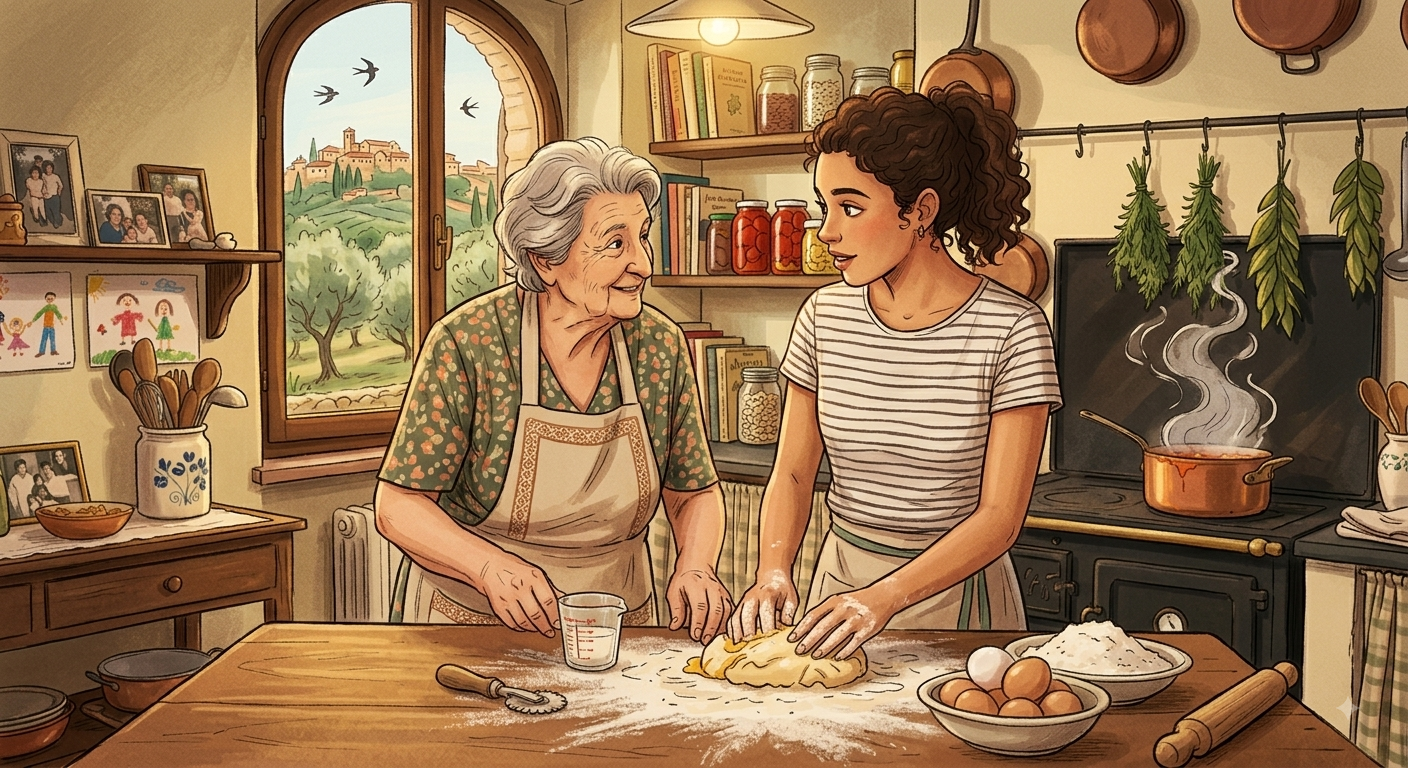
Discover the timeless role of The Nonna, the beloved Italian grandmother who preserves family recipes, teaches traditional cooking techniques, and keeps Italy’s rich culinary heritage alive across generations.
The first time I watched an Italian Nonna make fresh pasta, I reached for a measuring cup to follow along. She smiled, gently pushed it aside, and continued mixing flour and eggs with her hands. Instead of measuring every ingredient, she relied on experience, adjusting the dough by touch until it felt just right. As we cooked together, I realized she wasn’t simply preparing lunch—she was passing on generations of knowledge that had never been written down.
That afternoon taught me that The Nonna is far more than the family’s cook. She is a teacher, storyteller, and guardian of traditions that connect the past with the present through every meal she prepares.
Who Is The Nonna?
The Nonna, meaning grandmother in Italian, holds a special place in Italian family life and food culture. She is often the keeper of treasured recipes, traditional cooking methods, and family customs that have been passed from one generation to the next.
Although every family is different, the image of the Nonna has become a cherished symbol of homemade food, hospitality, patience, and unconditional love throughout Italy.
Her kitchen is often where children first learn to knead dough, roll pasta, stir sauces, and appreciate the importance of seasonal ingredients.
The History of The Nonna in Italian Culture
For centuries, Italian families lived in multigenerational households where grandparents played an active role in daily life.
While men often worked in agriculture, fishing, or trades, women managed the household, prepared meals, preserved seasonal produce, and taught younger generations essential cooking skills.
As daughters became mothers and eventually grandmothers themselves, family recipes continued to pass from one generation to the next.
Long before cookbooks became common, much of Italy’s culinary heritage survived through this oral tradition.
Today, The Nonna remains one of the country’s most respected cultural figures.
The Kitchen as a Classroom
For many Italian families, the kitchen is where learning begins.
Under the guidance of a Nonna, children often discover how to:
- Knead pasta dough
- Shape gnocchi
- Roll fresh pasta
- Make tomato sauce
- Bake bread
- Prepare desserts
Lessons are rarely formal. Instead, they unfold naturally through observation, conversation, and repetition.
Cooking becomes a shared family experience rather than simply a household task.
Recipes Without Measurements
One of the most famous characteristics of many Italian grandmothers is their instinctive approach to cooking.
Rather than relying on scales or measuring spoons, many Nonnas cook using:
- Sight
- Touch
- Aroma
- Taste
- Experience
Expressions such as “quanto basta” (q.b.), meaning “as much as needed,” perfectly capture this philosophy.
The result is cooking that feels flexible, intuitive, and deeply personal.
Regional Knowledge
Every Nonna reflects the traditions of her home region.
For example:
Emilia-Romagna
She may prepare:
- Tortellini
- Tagliatelle
- Lasagna
Tuscany
Her specialties might include:
- Ribollita
- Pappa al Pomodoro
- Cantucci
Sicily
She may serve:
- Arancini
- Pasta alla Norma
- Cannoli
Campania
Favorites often include:
- Neapolitan ragù
- Gnocchi alla Sorrentina
- Pastiera
These regional recipes preserve Italy’s remarkable culinary diversity.
Preserving Seasonal Traditions
Many Nonnas continue practices that have supported Italian families for generations.
They prepare:
- Tomato passata in late summer
- Homemade jams
- Pickled vegetables
- Olive preserves
- Cured meats
- Holiday pastries
These seasonal rituals connect families to local agriculture and reduce food waste while preserving traditional techniques.
More Than Cooking
The influence of The Nonna extends far beyond the kitchen.
She often teaches:
- Family history
- Hospitality
- Patience
- Respect for ingredients
- Sharing meals
- Cultural traditions
Every recipe carries memories of celebrations, holidays, and family gatherings that strengthen relationships across generations.
The Nonna in Modern Italy
Modern Italian families have changed considerably, yet the role of the Nonna remains deeply valued.
Many grandparents now share recipes through video calls, family gatherings, handwritten notebooks, or social media. Some have even become celebrated cookbook authors and television personalities, inspiring younger generations to preserve traditional cooking.
Although lifestyles continue to evolve, homemade food remains one of the strongest connections between generations.
Whenever I make fresh pasta, I often think about the Italian grandmothers who learned these techniques from their own mothers and grandmothers. Every folded tortellino or rolled strand of tagliatelle reflects years of practice, patience, and quiet knowledge passed from one pair of hands to another.
Why The Nonna Still Inspires the World
The story of The Nonna reminds us that recipes are much more than lists of ingredients. They carry family memories, regional traditions, and cultural identity.
By preserving homemade cooking, seasonal ingredients, and the joy of gathering around the table, the Nonna has helped shape Italy’s culinary reputation across the globe.
Whether preparing Sunday lunch, teaching a child to roll pasta, or sharing a handwritten recipe, The Nonna continues to protect one of Italy’s greatest treasures—its living food traditions.
Classic Tagliatelle al Ragù Recipe
Ingredients
- 400 g fresh tagliatelle
- 500 g beef mince
- 2 tablespoons extra virgin olive oil
- 1 onion, finely chopped
- 1 carrot, finely chopped
- 1 celery stalk, finely chopped
- 150 ml dry red wine
- 500 ml tomato passata
- 2 tablespoons tomato paste
- 60 ml whole milk
- 70 g freshly grated Parmigiano Reggiano
- Salt and freshly ground black pepper
Instructions
- Heat the olive oil in a heavy saucepan.
- Cook the onion, carrot, and celery until softened.
- Add the beef and brown it thoroughly.
- Stir in the tomato paste and cook for about 2 minutes.
- Pour in the red wine and allow it to reduce.
- Add the passata and simmer gently for about 90 minutes.
- Stir in the milk during the final 15 minutes of cooking.
- Cook the tagliatelle until al dente.
- Toss the pasta with the ragù and finish with Parmigiano Reggiano before serving.
Serving Suggestions
Serve Tagliatelle al Ragù with crusty Italian bread, a crisp green salad, and a glass of Sangiovese or Barbera. Complete the meal with espresso and homemade biscotti or crostata to recreate the warmth of a traditional Nonna’s kitchen.
Preparation Time: 25 minutes
Cooking Time: 2 hours
Servings: 4


