
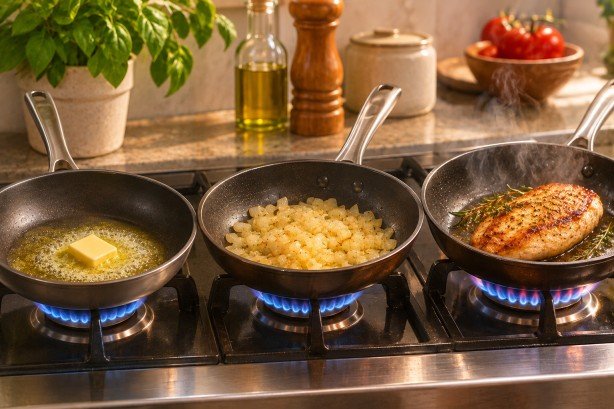
The difference between a beautifully cooked meal and a burnt one often comes down to a small turn of the stove knob. Understanding heat is essential for mastering your cooking skills.
I remember how confusing heat settings seemed when I first started paying attention to cooking. Recipes would casually say things like “cook over medium heat” or “reduce to a gentle simmer,” as though everyone knew exactly what those instructions meant. But what is medium heat, really? Is it the number five on a stove dial? Should the oil be bubbling? And why does the same setting sometimes cook onions beautifully and burn garlic within seconds? In truth, understanding heat and how to adjust it comes from experience—with practice, you’ll know exactly what your pan needs.
Heat is one of the most important things to understand in cooking, yet it’s rarely explained properly. We spend so much time worrying about ingredients, measurements, and recipes that we forget how much the temperature of a pan affects the finished dish. Learning to control heat makes cooking easier because you begin to understand what’s happening to your food instead of simply waiting for a timer to go off. With time, a cook gains a fundamental understanding of heat, which is more valuable than memorizing any single recipe.
What Do Low, Medium, and High Heat Actually Mean?
The first thing worth knowing is that the numbers on your stove don’t represent exact temperatures. A medium setting on one stove might produce considerably more heat than the same setting on another. Gas burners respond quickly when you turn the flame up or down, while some electric cooktops take longer to heat and cool. Induction cooktops behave differently again, and even the material of your frying pan changes how heat reaches the food. The variation makes understanding heat a little tricky but very important.
This is why recipes usually describe heat as low, medium, or high instead of telling you to set your stove to a particular number. These terms describe the intensity of heating needed for a cooking technique. Low heat is generally used for gentle cooking, medium heat provides a balance between cooking speed and control, and high heat is useful when you want rapid browning or vigorous boiling. Becoming familiar with these differences means you’re truly understanding heat while you cook.
The important thing is to watch what happens in the pan. A gentle sizzle, a few small bubbles, or a rapidly browning surface can tell you much more about the temperature than the position of the stove knob. So, as you observe, you are actively developing your understanding of heat in the kitchen.
Low Heat: When Patience Makes Food Better
Low heat is useful when food needs to cook gently without becoming too hot too quickly. Think about melting chocolate, warming milk, preparing delicate sauces, or making soft scrambled eggs. These are situations where a sudden increase in temperature can change the texture before you have time to react. The success of these dishes often depends on understanding heat and adjusting with care.
Scrambled eggs are a particularly good example. When cooked over gentle heat and stirred regularly, the eggs set gradually, giving you more control over their consistency. Increase the temperature too much, and the proteins can firm up quickly, leaving you with dry, rubbery eggs. The ingredients haven’t changed, but the cooking experience and final texture are completely different—yet another reason to focus on understanding heat as you cook.
Low heat is also useful when you want onions to soften without developing much colour. Instead of browning rapidly, they gradually release moisture and become tender. However, low heat doesn’t mean you can forget about the pan. Milk can still scorch, sauces can stick, and chocolate can overheat if left unattended. Gentle cooking simply gives you a little more time to notice what’s happening. Paying close attention is essential for properly understanding heat, especially at lower settings.
Medium Heat: The Setting You’ll Probably Use Most
If low heat is about patience, medium heat is about balance. It’s often the most practical setting for everyday cooking because it provides enough energy to cook food steadily without causing the surface to brown too quickly. Sautéing vegetables, making pancakes, cooking omelettes, and preparing many simple dinners can all begin over medium heat. This middle setting showcases the real value in understanding heat applied to various ingredients.
Imagine adding chopped onions to a frying pan with a little oil. If the temperature is suitable, you’ll hear a steady, gentle sizzle as the onions begin to soften. They should cook gradually, giving you enough time to stir them and observe how their appearance changes. If they start turning dark almost immediately, the pan is probably hotter than you need. If there’s barely any sound or movement, the temperature may be too low. By noticing these clues, you’re deepening your understanding of heat every time you cook.
Pancakes offer another useful lesson. A pan that’s too hot can produce a dark exterior while the batter inside


