DOWNLOAD IOS
DOWNLOAD ANDROID
  • About
    Us
  • Home
    Cooks
  • Pro-Chefs &
    Enthusiasts
  • Food
    Historians
  • Sustainability
    Advocates
  • Curious
    Learners
  • Science
    Nerds
No Result
View All Result
  • About
    Us
  • Home
    Cooks
  • Pro-Chefs &
    Enthusiasts
  • Food
    Historians
  • Sustainability
    Advocates
  • Curious
    Learners
  • Science
    Nerds
No Result
View All Result
cookdom.blog
No Result
View All Result
Home Uncategorized

Tagliatelle al Burro e Salvia

by Som Dasgupta
February 4, 2026
in Uncategorized
Reading Time: 3 mins read
3
0
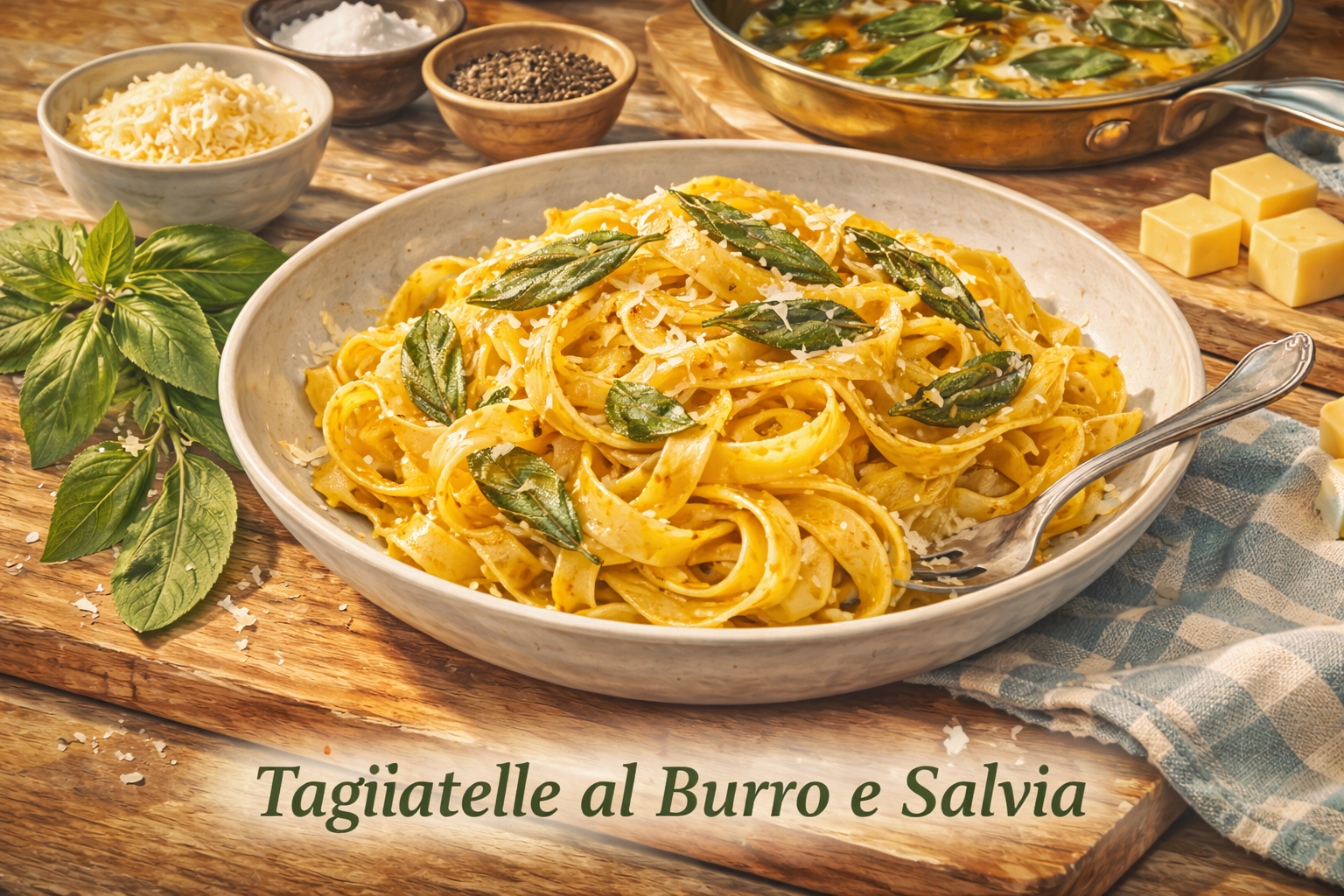
Tagliatelle al Burro e Salvia
5
SHARES
26
VIEWS
Share on FacebookShare on TwitterShare on Reddit

If Ragù is the voice of Emilia-Romagna — rich, talkative, and communal — Tagliatelle al burro e salvia is its whisper. This is not a dish of spectacle, but of intimacy: butter, sage, and fresh pasta working together with almost devotional restraint.

In Bologna and the surrounding plains, fresh egg pasta has always been central to home cooking. Before tomatoes became widespread, and long before modern restaurant trends, families relied on what they had in abundance: eggs, flour, dairy, and garden herbs. Butter-and-sage is one of the oldest sauces in this repertoire — a dressing that lets the pasta itself remain the protagonist.

The cultural significance of this dish lies in its timing. It is most often cooked in autumn, when sage is lush, aromatic, and slightly resinous. In country kitchens, bundles of sage hang from beams; a few leaves are all that is needed to transform melted butter into something nutty, floral, and deeply comforting.

Technically, this dish is about controlled browning. Butter is melted gently until it foams and turns nocciola (hazelnut-coloured). It must never burn; the line between aromatic and bitter is thin. Sage is added at just the right moment so it crisps lightly, releasing its fragrance into the fat.

Equally important is the pasta. In Emilia, this dish is traditionally served with fresh tagliatelle — broad, silky ribbons made with eggs and soft wheat flour. Their porous texture absorbs the butter rather than repelling it, creating a glossy, tender coating.

Unlike Roman pasta traditions, there is no pecorino here. The cheese is Parmigiano Reggiano, grated finely and added sparingly, so it deepens flavour without dominating. The overall effect should be gentle, not aggressive.

In trattorias, this is often a primi piatto before roast meats or braised dishes. At home, it can stand alone — a bowl of golden noodles that feels both humble and luxurious.

What makes this recipe timeless is its honesty. There is nowhere to hide: mediocre butter, dull sage, or poor pasta will be obvious. But when each element is right, the result is transcendent.

Recipe — Tagliatelle al Burro e Salvia (serves 4)

Ingredients

  • 400g fresh tagliatelle
  • 120g unsalted butter
  • 12–15 fresh sage leaves
  • Fine salt
  • 60g Parmigiano Reggiano, finely grated
  • Optional: a little pasta cooking water

Method

  1. Bring a large pot of salted water to a rolling boil.
  2. Cook tagliatelle for 2–3 minutes until just tender. Reserve a cup of pasta water.
  3. In a wide pan, melt butter slowly over medium-low heat until foaming and lightly nutty in aroma.
  4. Add sage leaves and let them crisp gently for 30–40 seconds.
  5. Transfer pasta straight into the butter with a splash of cooking water.
  6. Toss vigorously so the sauce emulsifies and coats every strand.
  7. Off the heat, fold in Parmigiano. Adjust with a little more water if needed.

Previous Post

Ragù alla Bolognese

Next Post

Pesto alla Genovese

Som Dasgupta

Som Dasgupta

Related Topics

What is Idli Rice and Why It’s Used in South Indian Recipes

What is Idli Rice and Why It’s Used in South Indian Recipes

July 10, 2025
257
Dosa Recipe: Learn to Make Crispy South Indian Dosai

Dosa Recipe: Learn to Make Crispy South Indian Dosai

February 3, 2026
256
Kebabs: Techniques, Types, and Tradition

Kebabs: Techniques, Types, and Tradition

July 22, 2026
250
Why Preheat the Oven?

Why Preheat the Oven?

April 9, 2025
213
Making a Green Oil: Mastering the Technique

Making a Green Oil: Mastering the Technique

March 24, 2025
205
Napoleonic Wars and Canned Food Invention.

Napoleonic Wars and Canned Food Invention.

February 2, 2026
175
Floating Island (Île Flottante): A Classic French Dessert

Floating Island (Île Flottante): A Classic French Dessert

February 3, 2026
163
An Introduction to French Cooking

An Introduction to French Cooking

June 7, 2026
155
Next Post
Pesto alla Genovese

Pesto alla Genovese

Leave a Reply Cancel reply

Your email address will not be published. Required fields are marked *

Newsletter

Cookdom App

Popular

  • How to Break Down a Whole Chicken: A Step-by-Step Guide

    1 shares
    Share 0 Tweet 0
  • Honing With a Steel: How to Keep Your Kitchen Knife Sharp

    1 shares
    Share 0 Tweet 0
  • How to Sharpen a Knife: A Beginner’s Guide to a Razor-Sharp Edge

    1 shares
    Share 0 Tweet 0
  • Slicing vs. Chopping vs. Mincing: What’s the Difference?

    1 shares
    Share 0 Tweet 0
  • How to Chiffonade Herbs: The Secret to Perfectly Thin Ribbons

    1 shares
    Share 0 Tweet 0
  • An Introduction to Indian Cooking

    22 shares
    Share 9 Tweet 6

About Us

  • Mission
  • Platform
  • Methodology
  • FAQs
  • Contact Us

Cooking

  • Courses
  • French
  • Indian
  • Italian
  • Spanish

Privacy

  • Policy
  • Terms and Conditions
  • Community Guidenlines

Community

  • Facebook
  • X
  • Instagram
  • TikTok
  • Reddit
  • Linkedin
  • Pinterest
  • © Cookdom, Inc.
  • Terms of Service
  • Privacy Policy

Welcome Back!

Login to your account below

Forgotten Password?

Retrieve your password

Please enter your username or email address to reset your password.

Log In
No Result
View All Result
  • About Us
  • Home Cooks
  • Pro-Chefs &
    Enthusiasts
  • Sustainability
    Advocates
  • Science Nerds
  • Food
    Historians
  • Curious
    Learners
  • DOWNLOAD IOS
  • DOWNLOAD ANDROID
  • Login