Ever wondered why a dish can have all the right ingredients and still taste like something is missing? The answer might have nothing to do with the recipe, but instead with understanding The Four Pillars of Good Cooking.
There’s a moment in cooking that I find particularly interesting. You’ve followed the recipe, measured the spices, cooked everything for the recommended time, and tasted the finished dish. Nothing is obviously wrong, but something isn’t quite right either. The flavours seem flat, the sauce feels heavy, or the food simply doesn’t taste as good as you expected.
Your first instinct might be to add another spice. Perhaps more cumin, a little chilli, or an extra spoonful of garam masala. Sometimes that works, but often the problem lies somewhere else entirely. The dish might need a pinch of salt, a squeeze of lemon, a little fat, or a different approach to cooking.
Of course, great cooking involves more than four things. Aroma, texture, sweetness, bitterness, ingredients, and cultural traditions all matter. But salt, fat, acid, and heat give beginners four useful places to start when something isn’t working.
Salt: The Ingredient That Makes Other Flavours Noticeable
Salt is probably the most familiar seasoning in the kitchen, yet it’s also one of the easiest to misunderstand. We often think of salt as something that makes food salty, but its role is much more interesting. Used in suitable amounts, salt can enhance existing flavours, reduce the perception of bitterness, and change how we experience sweetness and other tastes.
Think about a simple tomato sauce. You might have good tomatoes, fresh garlic, olive oil, and basil, but without enough salt, the sauce can taste strangely dull. Add a small pinch, stir, and taste again. Suddenly, the tomatoes seem more flavourful, and the garlic becomes more noticeable. You haven’t added a new flavour so much as changed how the existing ones are perceived.
Salt also affects food before it reaches your tongue. When used to season meat in advance, it can influence how proteins retain moisture during cooking. In bread, salt contributes to flavour and affects dough development and fermentation. When preparing vegetables, it can draw out moisture through osmosis, which is useful in dishes such as salted cucumbers or aubergines.
One of the most useful habits is learning to season gradually. Instead of adding all the salt at the end, consider how the ingredients and cooking process will affect the final result. A soup that reduces significantly may become saltier as water evaporates, while ingredients such as soy sauce, cheese, and stock can contribute considerable amounts of salt on their own.
The goal isn’t to use more salt. It’s to use an appropriate amount and understand when it will make the greatest difference.
Fat: Why Some Foods Taste Richer and More Satisfying
Imagine eating a slice of bread on its own, then eating another with a little butter. The difference isn’t simply that butter has its own flavour. The fat changes the texture, mouthfeel, and overall eating experience.
Fat plays several important roles in cooking. It helps transfer heat during frying and sautéing, contributes richness, and carries many aroma compounds that are more soluble in fat than in water. This is one reason spices often become especially fragrant when heated gently in oil or ghee.
Consider making a simple Indian dal. You can cook lentils with water, turmeric, and salt, and the result may already be pleasant. But when you finish the dish with a tadka of cumin, garlic, and chilli heated in ghee or oil, the aroma changes dramatically. The hot fat helps extract and distribute flavour compounds from the spices, while also adding richness to the lentils.
Different fats also bring different characteristics. Butter contributes a creamy flavour and contains milk solids that can brown. Olive oil adds its own aroma and can be useful in dressings, sauces, and cooking. Ghee has a distinctive nutty character, while neutral oils are useful when you want other ingredients to remain the focus.
Fat also influences texture. It helps create flaky pastry, tender cakes, crisp fried foods, and smooth emulsified sauces. In baking, the amount and type of fat can significantly affect the final structure.
But more fat doesn’t automatically mean better food. Too much can make a dish feel greasy or heavy. The useful skill is understanding how much richness the food needs and whether that richness is balanced by the other ingredients.
Acid: The Secret Behind Food That Tastes Fresh and Balanced
Have you ever tasted a curry or soup that seemed rich and well-seasoned but still felt strangely flat? Then you added a squeeze of lemon, and the whole dish suddenly seemed brighter.
That’s one of the most satisfying examples of acidity in cooking.
Acidic ingredients such as lemon juice, lime juice, vinegar, tamarind, tomatoes, and yoghurt contribute sourness, but their effect goes beyond making food taste sour. They can provide contrast to rich ingredients and change the overall balance of a dish.
Think about fried fish served with lemon. The fish may already be properly seasoned and cooked, but a little lemon juice provides a sharp contrast to the richness of the fried coating. The same principle explains why pickled onions work so well with rich kebabs, why vinegar can improve certain sauces, and why tamarind is important in many South Indian dishes.
Acidity also affects the physical behaviour of ingredients. Lemon juice can slow enzymatic browning in cut apples, acidic marinades can alter proteins near the surface of meat, and vinegar can influence the texture of vegetables during pickling.
However, acidity needs restraint. Too much lemon can overwhelm delicate flavours, and adding excessive vinegar to a sauce can make it unpleasantly sharp. Start with a small amount, stir, and taste before adding more.
One important distinction is that acid doesn’t replace salt. A dish can be adequately salted but need acidity, or it can contain plenty of lemon juice and still taste underseasoned. Learning to recognise the difference is one of the most useful skills you can develop.
Heat: The Element That Transforms Ingredients
Salt, fat, and acid influence flavour and texture, but heat changes the physical and chemical structure of food in ways that make cooking possible.
Think about a raw potato. It’s firm, starchy, and not particularly enjoyable to eat. Boil it, and its starch gelatinises while its structure softens. Roast it, and the surface can become golden and crisp while the inside turns tender. Fry it, and you can create an entirely different combination of textures.
The ingredient is the same, but the cooking method changes the result.
Heat causes proteins to denature and coagulate, starches to gelatinise, moisture to evaporate, and browning reactions to develop. The Maillard reaction, for example, contributes to the flavour and colour of toasted bread, seared meat, and roasted vegetables.
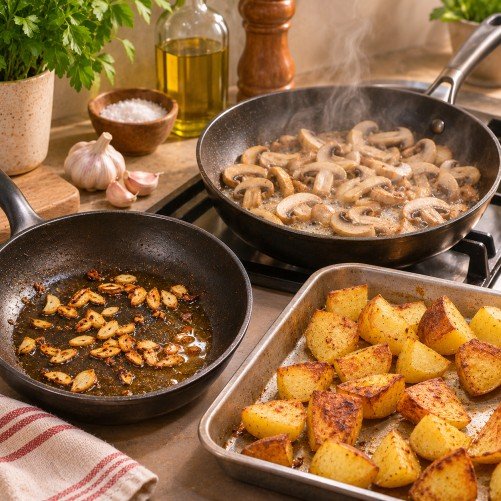
Understanding heat also means knowing when not to use too much of it. Eggs cooked gently can remain soft and creamy, while excessive heat can make them firm and rubbery. Garlic becomes fragrant quickly but can turn bitter when burnt. A thick piece of food may brown on the outside before its centre is properly cooked.
This is why low, medium, and high heat aren’t simply different speeds. They produce different results. Low heat is useful for gentle cooking, medium heat handles many everyday tasks, and higher heat can encourage rapid browning when the technique requires it.
Once you begin recognising these differences, you can make better decisions about how to cook an ingredient rather than automatically following the stove setting written in a recipe.
How Salt, Fat, Acid, and Heat Work Together
The most interesting part of this framework is that the four elements rarely work independently. A well-prepared dish often uses several of them in different ways, and changing one can affect how you experience the others.
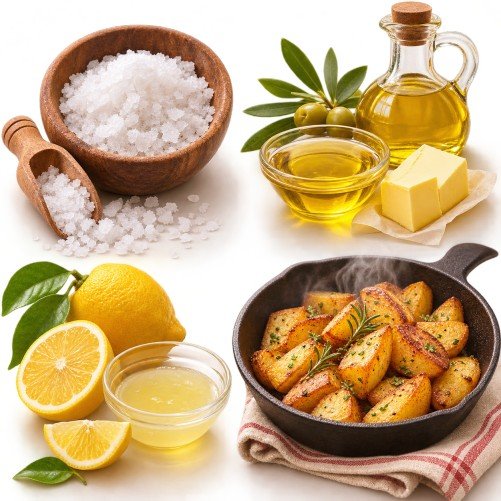
Take something as simple as roasted potatoes. Salt seasons the potatoes and enhances their flavour. Fat helps transfer heat and encourages an appealing surface texture. Heat softens the interior and develops browning on the outside. A little acidity, perhaps from a lemon-based dressing or a tangy sauce served alongside, can provide contrast to the richness.
Now think about a bowl of tomato pasta. Salt seasons the pasta water and sauce. Olive oil contributes richness and helps carry the aroma of garlic and herbs. Tomatoes provide acidity, while heat softens the ingredients, reduces the sauce, and develops flavour.
Neither dish needs all four elements in equal amounts. Some foods naturally contain more acidity or fat than others. The goal is to understand what each element contributes and adjust it according to the dish.
This is especially helpful when you’re cooking without a strict recipe. Instead of wondering which random ingredient to add, you can begin asking more useful questions about flavour, richness, acidity, and cooking technique.
How to Tell What Your Dish Is Missing
Imagine you’ve prepared a vegetable soup. The ingredients are cooked, the consistency looks right, and the aroma is pleasant, but the flavour seems disappointing.
Before reaching for another spice, taste a small spoonful and think about what’s actually missing.
If the soup tastes dull and the individual ingredients seem difficult to distinguish, it may need a little salt. Add a small pinch, stir thoroughly, and taste again. If the soup tastes well-seasoned but lacks brightness, a small amount of lemon juice or another suitable acidic ingredient might help.
If the soup seems thin in flavour and mouthfeel, a little fat may add richness, although this depends on the style of soup. If the vegetables taste underdeveloped, the problem may be related to how they were cooked. Perhaps the onions needed more time to soften, or the mushrooms would have benefited from browning before the liquid was added.
These aren’t universal rules, and some dishes need sweetness, bitterness, aroma, or texture adjustments instead. But thinking through salt, fat, acid, and heat gives you a practical starting point.
The important habit is to make one small change at a time. If you add salt, lemon, butter, and several spices together, you won’t know which adjustment actually improved the food.
A Simple Exercise to Understand the Four Elements
One of the easiest ways to experience this framework is with a plain boiled potato.
Boil a potato until tender, allow it to cool enough to handle, and divide it into several small pieces. Taste the first piece without adding anything. Notice its natural flavour and texture.
Add a tiny pinch of salt to the second piece and taste it. You’ll probably notice that the potato’s flavour becomes more pronounced. On the third piece, add a little butter or olive oil along with suitable seasoning. The texture and mouthfeel will change, making it seem richer.
For the fourth piece, add a small squeeze of lemon juice to the seasoned potato. Notice how the acidity changes the overall impression, particularly when combined with fat.
Finally, compare these pieces with a properly roasted potato. The browned exterior and contrasting texture demonstrate what a different application of heat can achieve.
This simple experiment won’t teach you everything about cooking, but it makes the roles of salt, fat, acid, and heat much easier to recognise.
Common Mistakes When Balancing the Four Elements
One common mistake is assuming that a dish needs more spices whenever it tastes bland. Sometimes the seasoning is already sufficient, but the food needs salt or acidity to make its flavours more noticeable.
Another mistake is adding acid too early without considering the cooking process. In some dishes, prolonged cooking softens the fresh, sharp character of lemon juice or vinegar. Adding a little near the end can create a brighter result, although other recipes deliberately cook acidic ingredients for longer to develop their flavours.
Using too much fat is another problem. Fat can improve richness and texture, but excessive amounts may make food feel greasy. A suitable acidic accompaniment can sometimes balance that sensation, but it won’t remove the excess fat.
Heat is equally important. Trying to speed up every recipe by increasing the temperature can burn the surface of food before the inside cooks. Conversely, using insufficient heat when browning is required may leave ingredients pale and lacking the flavour development you expected.
The solution is to pay attention to the intended result rather than assuming that more salt, more oil, more lemon, or more heat will always make a dish better.
Can You Cook Without a Recipe Using These Four Principles?
One of the most useful things about understanding salt, fat, acid, and heat is that it gives you a way to make decisions when you’re not following a recipe exactly.
Suppose you have rice, a few vegetables, garlic, and some leftover cooked beans. You could begin by heating a little oil in a pan, adding garlic and vegetables, and cooking them until tender and lightly browned. Stir in the beans and rice, season gradually, and finish with a little lemon juice if the dish would benefit from brightness.
You haven’t followed a complicated formula, but you’ve used the same principles that appear in countless recipes.
The fat helps cook the ingredients and distribute flavour. Heat changes their texture and develops browning. Salt brings the flavours into focus, while acidity can provide contrast.
Of course, you still need to understand basic food safety, cooking times, and how individual ingredients behave. These four elements aren’t a substitute for every cooking skill, but they provide a useful foundation for making more confident decisions.
The Real Skill Is Learning to Taste
It’s easy to imagine that experienced cooks have some special ability to know exactly how much salt or lemon juice a dish needs. In reality, much of that judgement comes from repeated tasting and paying attention to the results.
The more often you cook, the easier it becomes to recognise when something is underseasoned, too rich, overly acidic, or cooked at the wrong temperature. You begin noticing patterns between ingredients and techniques.
A tomato sauce that once seemed confusing becomes easier to adjust. You understand why a little salt improves its flavour, why olive oil contributes richness, and why simmering changes its consistency. You also begin recognising when the tomatoes already provide enough acidity and don’t need additional lemon juice.
That’s the real value of learning these principles. They encourage you to think about what is happening in the food rather than treating recipes as instructions that must be followed without question.