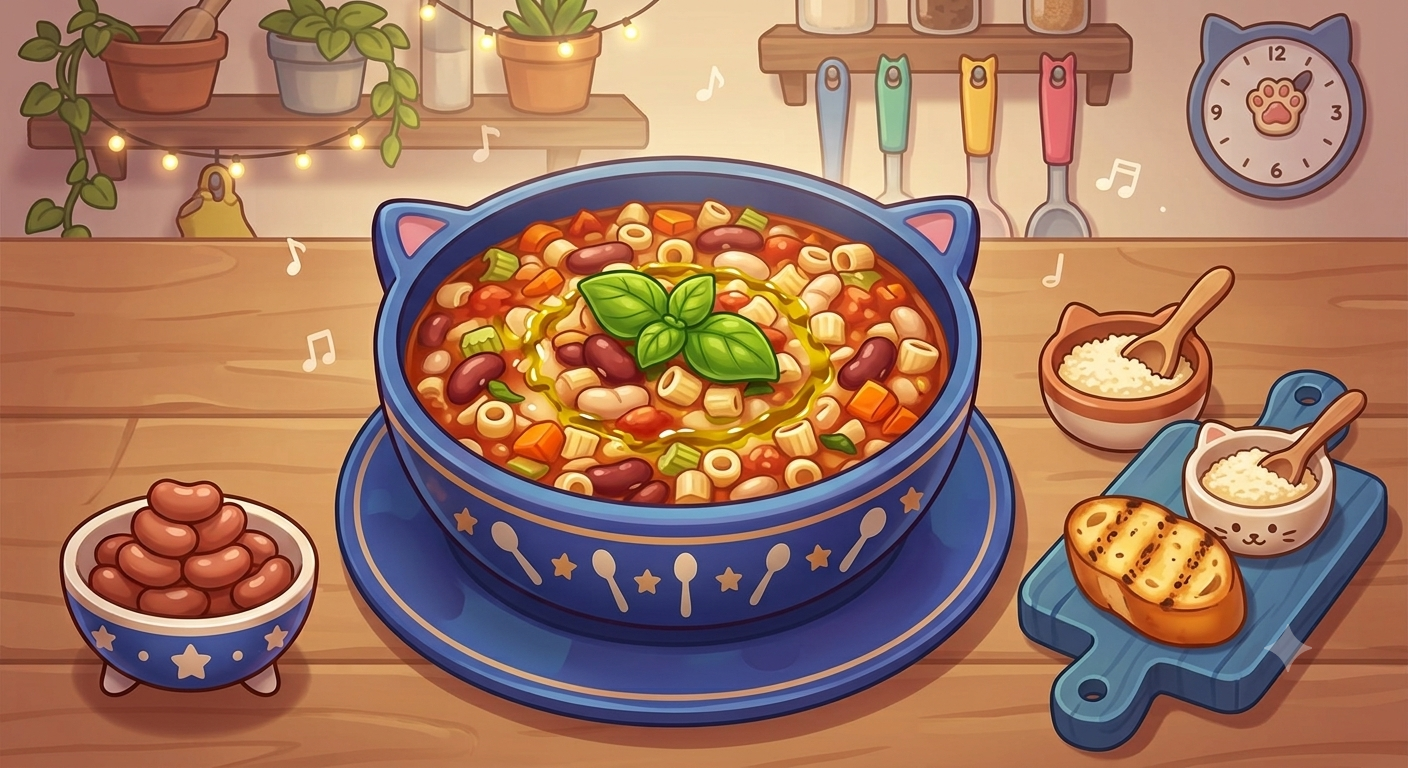
Some dishes are designed to impress. Pasta e fagioli was designed to feed people, cheaply, reliably, and well, using little more than pasta, beans, and whatever vegetables were on hand. It has no pretension and needs none — this is the dish Italian grandmothers have been quietly perfecting for generations. It is also one of the easiest, most satisfying one-pot meals to bring into a modern kitchen.
A Dish Born of Necessity
Pasta e fagioli, literally “pasta and beans,” is a cucina povera dish — part of Italy’s rich tradition of peasant cooking, where resourcefulness turned humble, inexpensive ingredients into deeply satisfying meals. Beans provided cheap, filling protein. Meanwhile, pasta scraps — odd shapes, broken pieces, the bits too small to sell or serve on their own — were put to use rather than wasted. Together, cooked slowly in a well-seasoned broth, they became something far more comforting than either ingredient managed alone.
As with many regional Italian dishes, there is no single definitive version. In Naples, it often includes a splash of tomato and a hint of chilli. In Veneto, it leans thicker and starchier, closer to a bean soup with pasta stirred through than a broth with pasta floating in it. Some versions include pancetta or a Parmesan rind simmered in for depth. Others stay entirely vegetarian, relying on the beans and a good soffritto for flavour. What unites them all is the same basic idea: a humble, hearty dish that turns pantry staples into something greater than the sum of its parts.
Why It Belongs in Regular Rotation
Pasta e fagioli is about as forgiving a dish as Italian cooking offers. It needs one pot, no exotic ingredients, and no real technical skill beyond patience during a few key stages. It also scales beautifully and keeps well in the fridge for days. In fact, it often tastes even better the next day once the flavours have had time to settle — making it a genuinely practical weeknight dish rather than an occasional indulgence.
The Technique That Matters
Building a proper soffritto. Nearly every good Italian soup starts here: finely diced onion, carrot, and celery, cooked slowly in olive oil until soft and fragrant, without browning. This base, cooked gently for eight to ten minutes, forms the flavour foundation the entire dish is built on. Rushing it with high heat produces a flatter, less rounded broth.
Mashing some of the beans. This is the single technique that separates a good pasta e fagioli from a great one. Once the beans have simmered in the broth, remove a cup or so and mash them roughly before returning them to the pot. This thickens the broth naturally, giving it body without needing cream or flour. It also deepens the bean flavour throughout the dish, rather than leaving it isolated to whole beans floating in a thin liquid.
Cooking the pasta directly in the broth. Unlike most pasta dishes, where pasta is boiled separately, pasta e fagioli traditionally has the pasta cook directly in the soup itself. This allows the starch released by the pasta to further thicken the broth, binding everything together. The trade-off is timing: pasta cooked this way continues to absorb liquid even after the pot is removed from heat. Therefore, it is best added towards the end and the dish served fairly promptly. Otherwise, keep extra stock on hand to loosen leftovers.
Choosing the right pasta shape. Small, sturdy shapes work best — ditalini, small shells, or broken spaghetti, echoing the dish’s origins in using up pasta odds and ends. Larger or more delicate shapes tend to overwhelm the dish or turn mushy in the broth.
Finishing with fat and acid. A generous drizzle of good olive oil and a grating of Parmesan just before serving lifts the whole dish. This adds richness and a final layer of savoury depth that the broth alone cannot provide.
A Cousin, Not a Copy, of Minestrone
People often mistake pasta e fagioli for a variation of minestrone, but the two are distinct. Minestrone is a broader vegetable soup, often including a wider variety of vegetables and sometimes pasta as merely one ingredient among many. Pasta e fagioli, by contrast, keeps its focus narrow and deliberate: beans and pasta are the stars. Vegetables play a supporting role in the soffritto, rather than headlining the dish.
Classic Pasta e Fagioli
Serves 4–6
Ingredients
- 3 tbsp olive oil, plus extra to serve
- 1 onion, finely diced
- 2 carrots, finely diced
- 2 celery stalks, finely diced
- 2 garlic cloves, minced
- 1 Parmesan rind (optional)
- 2 x 400g tins cannellini or borlotti beans, drained and rinsed
- 1 litre vegetable or chicken stock
- 1 x 400g tin chopped tomatoes
- 1 bay leaf
- ½ tsp dried chilli flakes (optional)
- 150g ditalini or small pasta shapes
- Salt and freshly ground black pepper
- Grated Parmesan, to serve
Method
- Heat the olive oil in a large pot over medium-low heat. Add the onion, carrot, and celery, and cook gently for 8–10 minutes until soft, stirring occasionally.
- Add the garlic and cook for 1 minute more.
- Add the beans, stock, tomatoes, Parmesan rind, bay leaf, and chilli flakes. Simmer for 15 minutes.
- Remove about a cup of the beans, mash roughly, and stir back into the pot to thicken the broth.
- Add the pasta and cook directly in the broth for 8–10 minutes, until al dente, stirring occasionally to prevent sticking.
- Remove the Parmesan rind and bay leaf. Season to taste with salt and pepper.
- Ladle into bowls, drizzle with olive oil, and top generously with grated Parmesan.