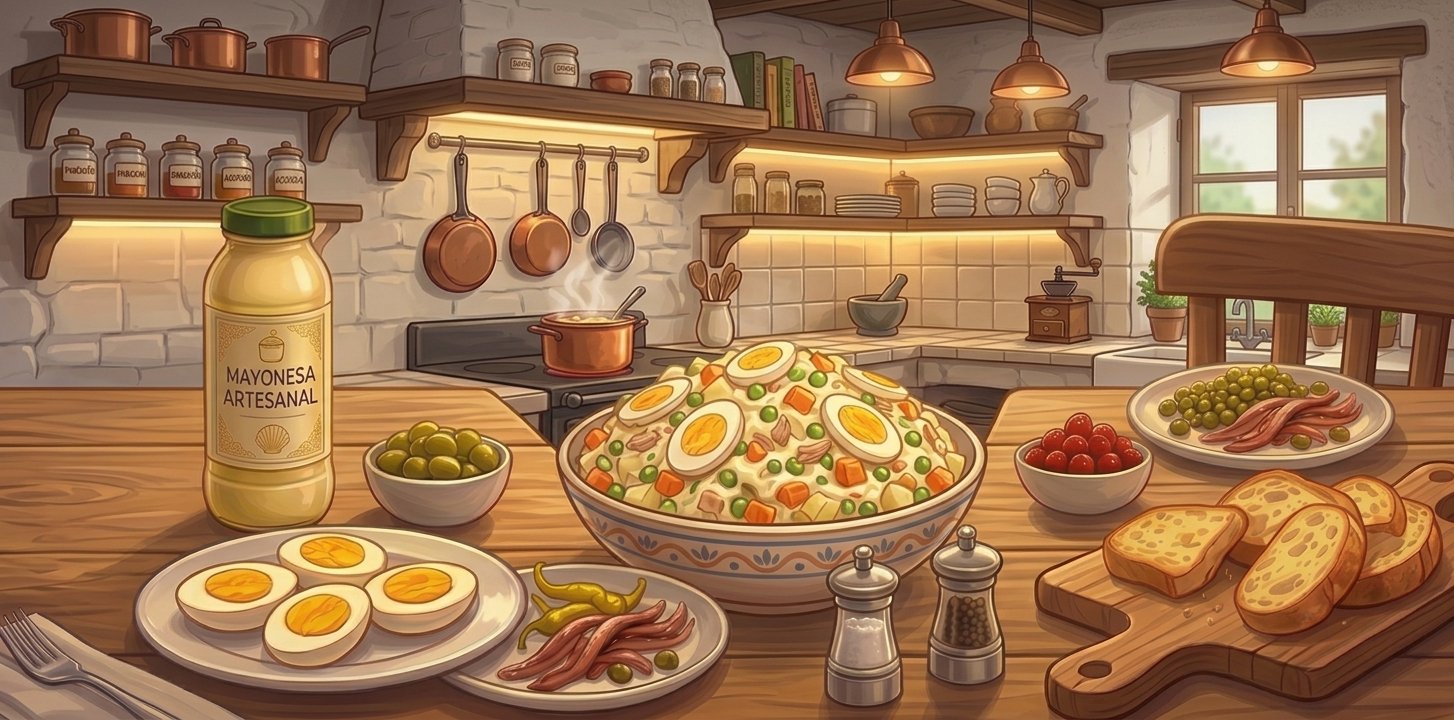
Ensaladilla Rusa is one of Spain’s most familiar and comforting potato salads, combining tender potatoes, vegetables, mayonnaise, and often tuna into a creamy dish found everywhere from family tables to busy tapas bars. Although its name literally means “Russian salad,” the version loved across Spain has developed a character of its own. In fact, its journey from a luxurious 19th-century restaurant dish to an everyday Spanish favorite tells a fascinating story about how recipes travel, change, and eventually become part of another country’s food culture.
Cold, creamy, savory, and endlessly adaptable, Ensaladilla Rusa may appear simple. However, behind that spoonful of potato and mayonnaise lies considerably more history than its humble appearance suggests.
What Is Ensaladilla Rusa?
Ensaladilla Rusa is the Spanish interpretation of a broader family of dishes commonly known as Russian or Olivier salad.
Potatoes usually form its foundation. Cooks then add ingredients such as carrots, peas, tuna, hard-boiled eggs, olives, or roasted peppers before binding everything with mayonnaise.
However, recipes vary widely.
One tapas bar might prepare a remarkably smooth version dominated by potato and mayonnaise. Meanwhile, another may load it with tuna, vegetables, eggs, and olives.
Texture also matters. The best versions avoid turning the potatoes into complete mash. Instead, they remain tender enough to blend with the mayonnaise while still giving the salad some structure.
The result is rich yet refreshing, which makes it particularly suitable for Spain’s tapas culture.
The Surprising Russian Origins of Ensaladilla Rusa
Despite becoming a Spanish bar classic, Ensaladilla Rusa has roots far from Spain.
Its history is commonly connected with Lucien Olivier, a chef at Moscow’s famous Hermitage restaurant during the 19th century. Olivier created an elaborate cold salad that became one of the restaurant’s signature dishes.
However, the original preparation looked quite different from the inexpensive potato salad people recognize today.
Historical accounts describe a luxurious mixture that could include expensive meats, game, seafood, vegetables, and a carefully guarded dressing. Therefore, Olivier’s salad originally represented sophisticated restaurant dining rather than economical home cooking.
Afterward, variations spread across Europe and beyond. As the recipe traveled, cooks adapted it to ingredients they could easily obtain.
Potatoes, carrots, peas, eggs, and mayonnaise gradually became common components.
Spain eventually embraced its own version, calling it ensaladilla rusa—literally, “little Russian salad.”
How Did Russian Salad Become a Spanish Favorite?
Recipes rarely travel unchanged, and Ensaladilla Rusa provides an excellent example.
As Russian salad spread internationally, expensive ingredients disappeared from many versions. Instead, cooks turned toward affordable vegetables and pantry staples.
Spain followed the same pattern but gave the salad a distinctly local personality.
For example, tuna preserved in oil became a particularly common addition. Spanish cooks also incorporated olives, eggs, peppers, and other familiar ingredients.
Moreover, mayonnaise suited the mild flavor of boiled potatoes while helping bind everything into a dish that could easily be prepared in larger quantities.
Consequently, what began as an elite restaurant creation evolved into accessible food for ordinary households and bars.
Today, many Spaniards would recognize Ensaladilla Rusa immediately, even though individual recipes can differ dramatically.
What Goes Into Spanish Ensaladilla Rusa?
The foundation of Ensaladilla Rusa usually begins with potatoes.
Potatoes provide a mild, starchy base that absorbs flavor without overwhelming the other ingredients. Carrots add gentle sweetness, while peas contribute freshness and color.
Tuna introduces saltiness and savory depth. Meanwhile, hard-boiled eggs provide richness and additional texture.
Mayonnaise ties everything together.
Other additions might include green olives, roasted red peppers, pickles, or even seafood.
However, adding more ingredients does not automatically produce better ensaladilla. The goal is balance.
Too much mayonnaise can make the salad heavy, while too little leaves it dry. Similarly, overcooked potatoes can collapse into paste.
A successful version should feel creamy without losing its texture.
Why Mayonnaise Matters
Mayonnaise plays a much larger role in Ensaladilla Rusa than simply making it creamy.
Because potatoes have a relatively mild flavor, mayonnaise carries seasoning throughout the salad. Its fat also rounds out salty ingredients such as tuna and olives.
However, balance remains important.
A good ensaladilla should not taste like vegetables swimming in mayonnaise. Instead, the dressing should coat and connect the ingredients.
Some cooks mix mayonnaise into the potatoes while they remain slightly warm. Others cool everything first. Each approach can produce a somewhat different texture.
Furthermore, the quality and flavor of the mayonnaise can noticeably change the final dish because it appears in such a generous quantity.
Traditional Ensaladilla Rusa Recipe
There is no single official recipe for Ensaladilla Rusa, but this classic combination captures the character of the version commonly associated with Spanish home and tapas cooking.
Ingredients
- 500 g potatoes
- 2 medium carrots
- 100 g peas
- 150 g tuna in olive oil, drained
- 2 hard-boiled eggs
- 150–200 g mayonnaise
- 50 g green olives, sliced
- Salt, to taste
- Roasted red pepper for garnish, optional
How to Prepare Ensaladilla Rusa
1. Cook the Vegetables
First, cook the potatoes and carrots until tender.
Avoid overcooking them because they still need enough structure to hold their shape after mixing.
Meanwhile, cook the peas briefly until tender.
2. Prepare the Remaining Ingredients
Once the vegetables have cooled enough to handle, cut the potatoes and carrots into small pieces.
Next, chop the hard-boiled eggs and slice the olives.
Drain the tuna well so excess oil does not make the salad greasy.
3. Combine Everything
Place the potatoes, carrots, peas, tuna, eggs, and olives in a large bowl.
Then add the mayonnaise gradually.
Fold everything together gently rather than stirring aggressively. This approach helps keep some texture in the potatoes.
Finally, taste and adjust the salt if necessary.
4. Chill Before Serving
Cover the salad and refrigerate it until properly chilled.
Before serving, add a thin layer of mayonnaise on top if desired. You can also decorate it with sliced olives, grated egg, tuna, or strips of roasted red pepper.
Keep the salad properly refrigerated because mayonnaise-based dishes and cooked ingredients require careful temperature control.
Ensaladilla Rusa as a Spanish Tapa
Walk into tapas bars across Spain and there is a good chance you will encounter Ensaladilla Rusa.
Usually, bars serve it as a small mound or scoop on a plate. Some add breadsticks or crusty bread, while others decorate the top with tuna, olives, egg, peppers, or anchovies.
Its cold temperature creates a pleasant contrast with hot tapas such as croquetas, fried seafood, or patatas bravas.
Moreover, its creamy texture works particularly well alongside cold beer, vermouth, or wine.
Because cooks can prepare it ahead of service, ensaladilla also makes practical sense for busy bars.
However, its popularity goes beyond convenience. For many people, it represents familiar, uncomplicated comfort food.
How Ensaladilla Rusa Changes Across Spain
One reason Ensaladilla Rusa remains interesting is that cooks continue to reinterpret it.
Some versions emphasize tuna, while others focus almost entirely on potatoes and mayonnaise. Coastal areas may incorporate prawns or other seafood.
In addition, modern chefs sometimes produce highly refined versions with homemade mayonnaise, premium tuna, delicate seafood, or carefully selected olive oil.
Despite these variations, the basic identity remains recognizable.
There is usually a soft potato foundation, creamy dressing, and a mixture of savory ingredients.
Therefore, ensaladilla demonstrates how traditional food can evolve without losing its essential character.
Is Ensaladilla Rusa Really Russian?
The answer is both yes and no.
Ensaladilla Rusa belongs to the international family of salads descended from Russian or Olivier salad. Therefore, its name and historical inspiration genuinely connect it with Russia.
However, the Spanish version developed through generations of local adaptation.
Tuna, olives, peppers, Spanish serving traditions, and its strong association with tapas culture have given it an identity that differs considerably from its 19th-century ancestor.
Food often works this way.
Recipes cross borders, encounter new ingredients, adapt to different budgets, and eventually become embedded in another culinary culture.
Ensaladilla Rusa provides a particularly delicious example.
Why Ensaladilla Rusa Remains So Popular
Ensaladilla Rusa has survived because it combines practicality with comfort.
Its main ingredients are relatively simple. Cooks can prepare it in advance, adjust it according to what they have available, and serve it either as a small tapa or part of a larger meal.
At the same time, the dish offers an appealing combination of textures and flavors. Potatoes provide softness, vegetables add sweetness and freshness, tuna contributes savory depth, and mayonnaise brings everything together.
Yet its history makes the dish even more fascinating.
What began as an extravagant restaurant salad in 19th-century Moscow traveled across borders, lost some ingredients, gained others, and found an entirely new home in Spanish food culture.
Today, Ensaladilla Rusa is much more than Spain’s version of a foreign potato salad. It shows how recipes can travel thousands of kilometers, transform over generations, and eventually feel completely at home on a local table.