Ever wondered why restaurant vegetable sticks look so perfectly uniform while yours come out in every possible shape?
I used to cut carrots into sticks by slicing them lengthwise and hoping for the best. Some pieces were thick enough to be fries, others were barely wider than matchsticks, and a few had strange triangular shapes that made them difficult to cook evenly.
Then I learned that professional cooks approach the process differently. They don’t start by cutting random strips. They first create a stable shape, divide it into even slices, and turn those slices into uniform sticks.
It’s a simple technique, but it makes a noticeable difference when preparing vegetables for roasting, frying, or serving raw.
What Is a Baton Cut?
A baton is a long, rectangular piece of food, usually cut from a vegetable such as a potato, carrot, cucumber, or zucchini.
In classical French knife skills, the best-known version is the batonnet, which typically measures around 6 mm thick and 5–6 cm long.
The word batonnet means “little stick” in French, which describes the shape rather well.
You’ll recognise this cut in vegetable sticks served with dips, neatly prepared stir-fry vegetables, and certain styles of French fries.
The purpose isn’t just appearance. When vegetables are cut to similar dimensions, they generally cook at a more consistent rate and produce a more uniform texture.
How to Cut Even Vegetable Batons
The easiest way to learn the technique is with a firm vegetable such as a carrot or potato.
Step 1: Cut the Vegetable Into Sections
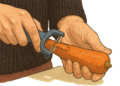
Wash the vegetable and peel it if necessary.
Trim the ends, then cut it into sections approximately 5–6 cm long. These sections determine the length of your finished batons.
Try to make each section similar in length, especially if you’re preparing vegetables that will be served together.
Step 2: Create a Flat Surface
Round vegetables can roll while you’re cutting, making them difficult to control.
Carefully slice a thin piece from one side of the vegetable to create a flat surface. Place that side against your cutting board.
For greater precision, you can square off the remaining sides to create a rectangular block. This produces more uniform sticks, although it also creates extra trimmings.
Don’t throw those pieces away. They can be chopped for soups, stocks, or other dishes.
Step 3: Cut Into Even Slices
Hold the vegetable securely using a claw grip, with your fingertips curled away from the cutting edge.
Cut lengthwise into slices approximately 6 mm thick.
Try to keep your knife straight and maintain the same thickness from one slice to the next.
There’s no need to rush. Consistent slices are the foundation of evenly cut batons.
Step 4: Turn the Slices Into Sticks
Place one or two slices flat on the cutting board.
Cut them lengthwise into strips approximately 6 mm wide.
You should now have neat rectangular sticks measuring roughly 6 mm by 6 mm in cross-section.
Repeat with the remaining slices, keeping your stacks low and stable.
And that’s the basic batonnet technique: sections, slices, sticks.
Batonnet vs. Julienne: What’s the Difference?
Batonnet and julienne are closely related knife cuts. Both produce long, narrow strips, but their thickness is different.
| Knife cut | Approximate dimensions | Common uses |
|---|---|---|
| Julienne | 3 × 3 × 50 mm | Salads, garnishes, stir-fries |
| Batonnet | 6 × 6 × 50–60 mm | Vegetable sticks, fries, crudités |
| Fine julienne | 1–2 mm thick | Delicate garnishes, fine salads |
A julienne resembles a thin matchstick, while a batonnet is closer to a small French fry.
The measurements are traditional guidelines rather than strict requirements for everyday home cooking. What’s more important is keeping the pieces consistent within the same dish.
Which Vegetables Are Best for Baton Cuts?
Potatoes are one of the easiest ingredients for practising this technique. Their firm texture makes them straightforward to cut, and the resulting sticks are useful for preparing fries.
Carrots are another excellent choice, especially for vegetable platters and stir-fries. Larger carrots are usually easier to work with than thin ones.
Cucumbers can be cut into batons for salads, lunchboxes, and dips. If the centre is particularly watery, you can remove some of the seeds to keep the sticks crisp.
Zucchini also works well, although its softer texture requires gentler knife pressure.
For bell peppers, remove the seeds and membranes, flatten the pepper sections, and cut them into even strips. Their curved shape means they won’t always produce perfectly square batons, and that’s fine.
Why Does Uniform Cutting Matter?
Imagine roasting a tray of carrot sticks where some pieces are twice as thick as others.
By the time the larger pieces become tender, the thinner ones may already be overcooked.
Uniform cutting helps reduce this problem because pieces of similar thickness tend to cook at similar rates.
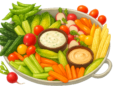
It also improves presentation. Evenly cut vegetable sticks look more appealing on a platter, particularly when served with hummus, yoghurt dips, or other accompaniments.
And when you’re making fries, consistent thickness helps the potatoes cook more evenly, giving you better control over the final texture.
Common Mistakes When Cutting Batons
One of the most common mistakes is trying to cut a round vegetable without creating a flat surface first. A rolling carrot or potato can make the knife slip unexpectedly.
Another is cutting uneven slices at the beginning. If the slices have different thicknesses, the finished sticks will be inconsistent regardless of how carefully you make the final cuts.
Stacking too many slices can also cause problems. Tall stacks may shift under the knife, making it difficult to maintain straight cuts.
Finally, don’t force the blade through firm vegetables. Use a sharp knife, keep the cutting board stable, and make controlled movements.
If a piece becomes too small to hold safely, stop and set it aside rather than trying to cut every last bit into a perfect baton.
Try It With Homemade Potato Fries
One of the most satisfying ways to practise batonnet cutting is by making homemade fries.
Start with two medium potatoes. Peel them if you prefer, then cut them into sections and create flat surfaces.
Slice each potato into approximately 6 mm thick slabs, then cut those slabs into evenly sized sticks.
Rinse the cut potatoes in cold water to remove some surface starch, then drain and dry them thoroughly.
Toss with a little oil and salt, spread them in a single layer on a baking tray, and roast at 220°C (425°F) until golden and cooked through, turning occasionally.
The exact cooking time will depend on the potato variety and thickness, but the even cuts will help the fries cook more consistently.
Good Knife Skills Begin With Consistency
Cutting even batons might seem like a small detail, especially when you’re simply preparing vegetables for dinner.
But it’s one of those techniques that teaches you to work more carefully with a knife. You begin noticing the thickness of each slice, the angle of the blade, and how the shape of an ingredient affects the way you cut it.
Your first few attempts probably won’t produce perfectly identical sticks. Some will be thicker, others thinner, and a few might look slightly crooked.
That’s normal. With practice, the movements become easier and your cuts more consistent.
And the next time you prepare a plate of vegetable sticks or a tray of homemade fries, you’ll appreciate how much difference a little precision can make.