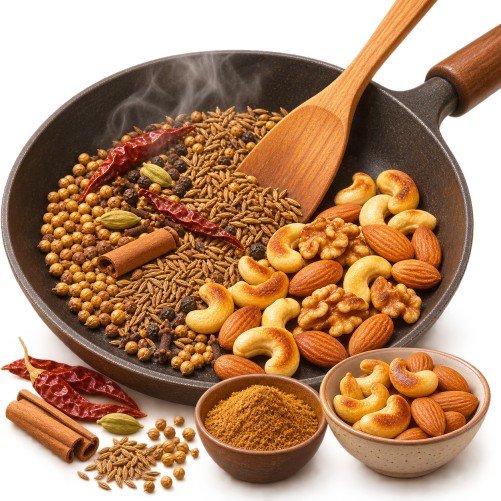
Sometimes, all it takes is a hot pan and two minutes to make an ordinary ingredient taste extraordinary.
Have you ever wondered why the cumin in a restaurant curry smells so much stronger than the cumin sitting in your spice jar? Or why toasted almonds taste richer and more satisfying than raw ones? The answer often comes down to one small cooking technique: toasting.
I used to think toasting was an unnecessary step. If a recipe called for toasted sesame seeds or roasted cumin, I’d occasionally skip it, assuming the difference couldn’t be that significant. But once you taste freshly toasted cumin or bite into a warm, golden cashew, you realise how much flavour was hiding in those ingredients.
The best part is that you don’t need an oven, special equipment, or much time. A frying pan and a little attention are usually enough.
Why Does Toasting Make Such a Difference?
Spices and nuts contain natural oils and flavour compounds that respond to heat. When you toast them, some of these compounds become more aromatic, while browning reactions create additional flavours.
Take cumin seeds, for example. Straight from the jar, they have an earthy, slightly sharp aroma. After a short time in a warm pan, their fragrance becomes more pronounced, with a deeper, nuttier character.
Nuts undergo an even more noticeable transformation. Almonds, cashews, and walnuts develop richer roasted flavours as their surfaces brown. Their texture can also become crisper as some moisture evaporates.
The interesting thing is that the same heat responsible for these delicious changes can quickly ruin them. A few extra seconds may turn fragrant spices bitter or golden nuts unpleasantly burnt.
How to Toast Whole Spices in a Pan
Whole spices are among the easiest ingredients to toast, but they require your full attention.
Start with a clean, dry frying pan over low to medium heat. Add your whole spices in a thin, even layer. You don’t need oil for dry-toasting.
Gently shake the pan or stir the spices so they heat evenly. Within a minute or two, depending on the spice and quantity, you’ll begin noticing a stronger aroma.
Cumin seeds may deepen slightly in colour, coriander seeds develop a warm citrusy fragrance, and fennel seeds become noticeably more aromatic.
As soon as the spices smell fragrant, transfer them to a cool plate. Leaving them in the hot pan can cause them to continue cooking and eventually burn.
Once cooled, you can grind them into a fresh spice powder or use them whole.
Toasting Ground Spices Is a Little Different
Ground spices are more delicate because their smaller particles expose more surface area to heat. They can scorch much faster than whole seeds.
If you’re making a curry or sauce, it’s often better to briefly cook ground spices in oil or another fat over controlled heat, rather than dry-toast them aggressively.
For example, when preparing a tomato-based curry, you might add ground cumin, coriander, or turmeric after the onions have softened. Stir briefly until fragrant, then add tomatoes or another liquid before the spices burn.
If a recipe specifically asks for dry-toasted ground spices, use very low heat, stir constantly, and remove them as soon as their aroma develops.
Burnt spices rarely improve with additional cooking, so it’s worth being cautious.
How to Toast Nuts Until Golden
Nuts need a slightly different approach because they’re larger and contain more fat.
For small quantities, a frying pan works beautifully. Place almonds, cashews, walnuts, or other nuts in a dry skillet over medium-low heat. Stir or toss them regularly so they brown evenly.
You’ll notice their aroma becoming richer as they warm. Cashews may develop golden patches, while sliced almonds can change colour quite quickly.
The important thing is to remove them before they become too dark. Nuts continue cooking briefly from their retained heat, so transfer them to a plate as soon as they’re ready.
For larger batches, an oven can be more convenient. Spread the nuts in a single layer on a baking tray and toast at approximately 160–175°C (320–350°F), checking and stirring regularly. Many nuts take around 5–12 minutes, depending on their size and type.
Watch them closely, especially toward the end.
Different Ingredients Need Different Timing
One mistake beginners make is treating all spices and nuts as though they toast at the same speed.
Sesame seeds are tiny and can turn golden very quickly. Whole coriander seeds generally need longer than finely ground coriander. Thinly sliced almonds brown faster than whole almonds, while large walnuts require more time to heat through.
If you’re toasting several spices together, try combining ingredients of similar size and cooking time. Otherwise, toast them separately and mix them afterward.
This is especially useful when preparing homemade spice blends, where one burnt ingredient can affect the flavour of the entire mixture.
Should You Toast Spices Before Grinding?
If you’re making a homemade spice blend, toasting whole spices before grinding can make a noticeable difference.
Think about freshly prepared garam masala or roasted cumin powder. Toasting can develop deeper aromas, while grinding releases flavour compounds that are more noticeable when the powder is fresh.
Allow the spices to cool before grinding. Warm spices can release moisture and oils inside the grinder, sometimes causing the powder to clump.
It’s also worth remembering that toasting isn’t necessary for every recipe. Some dishes rely on the brighter, fresher flavour of untoasted spices. Follow the intended flavour profile rather than automatically roasting everything.
Common Toasting Mistakes to Avoid
The biggest mistake is using too much heat. Spices and nuts can go from perfectly toasted to burnt surprisingly quickly, particularly in a thin frying pan.
Another is walking away. Toasting often takes only a few minutes, which makes it tempting to do something else while the pan heats. Unfortunately, that brief distraction can be enough to ruin a batch.
Avoid overcrowding the pan, and keep the ingredients moving when necessary. Transfer them to a cool plate immediately after toasting rather than leaving them in the hot cookware.
Finally, don’t toast more than you need without a plan for storage. Freshly toasted spices gradually lose their aroma, especially after grinding. Store cooled spices in airtight containers away from heat, moisture, and direct sunlight.
A Small Technique Worth Remembering
The next time you’re preparing a curry, try toasting a teaspoon of cumin seeds before grinding them. Or sprinkle freshly toasted sesame seeds over noodles, salads, or roasted vegetables. Even a handful of golden almonds can make a simple bowl of oats feel more interesting.
What I like most about this technique is how little effort it requires. You’re not adding expensive ingredients or spending hours preparing something complicated. You’re simply giving ingredients a little heat and allowing their natural flavours to develop.
And once you’ve experienced the smell of freshly toasted spices filling your kitchen, it’s difficult to go back to treating them as just another ingredient in the cupboard.