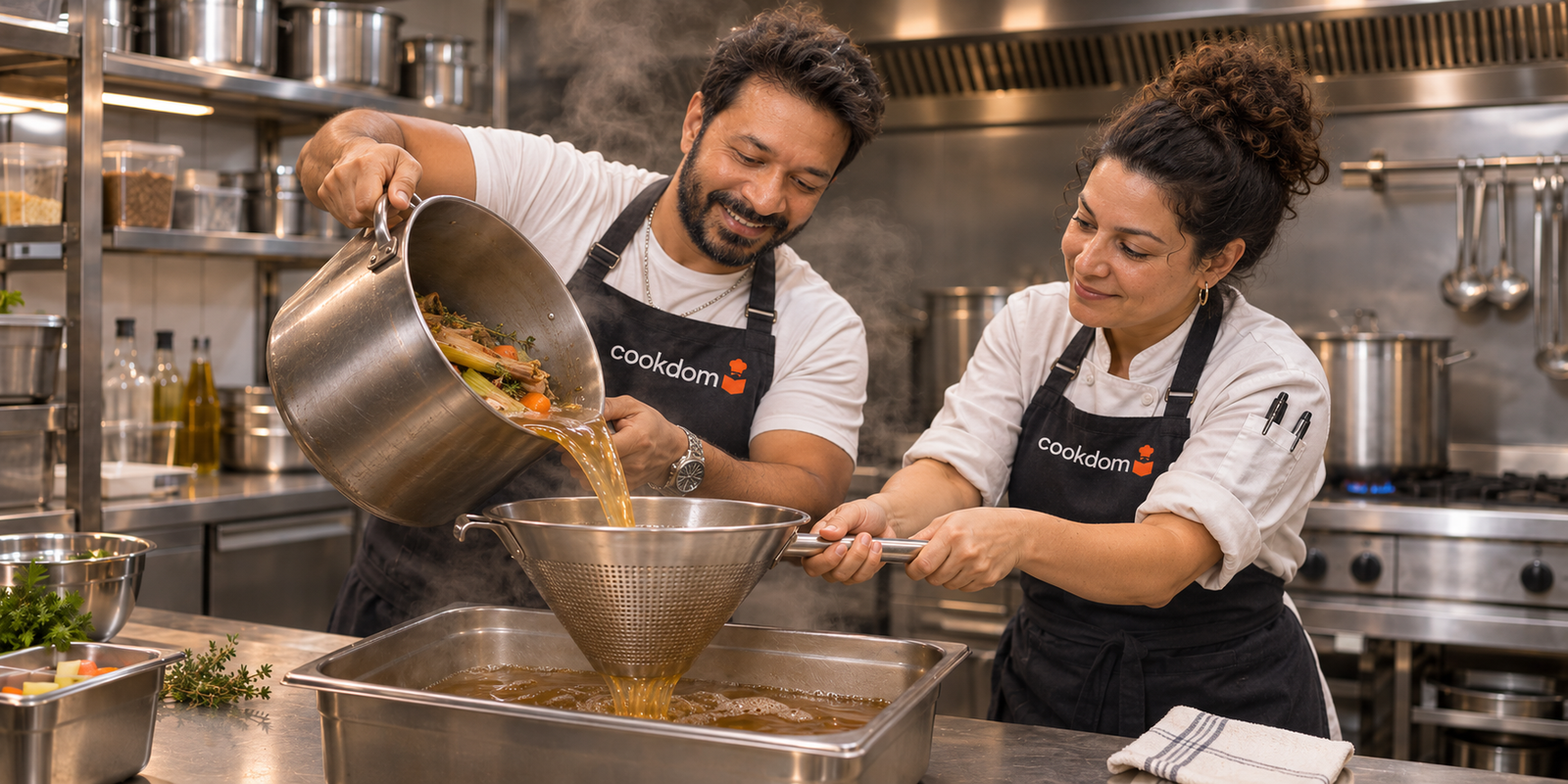
If I had to name the exact moment I understood the difference between a home cook and a chef, it was the first time I tasted a properly made stock at Le Cordon Bleu. Not a cube dissolved in hot water — the real thing, bones and vegetables coaxed for hours into something golden and deep and quietly savoury. I remember thinking: this is the secret. Not a spice, not a gadget, not a rare ingredient. Just time, bones, and patience turned into pure flavour. In finance I’d have called it compounding — a small, boring, consistent input that quietly builds into something disproportionately valuable. Stock is the kitchen’s compound interest. Almost every great soup, sauce, risotto, and braise I’ve ever made sits on top of it, and it costs next to nothing but the hours.
This is the most underrated chapter in all of home cooking. Learn to make stock and you’ve unlocked an entire category of food: soups that taste like they came from a restaurant, sauces with real depth, and a way to turn scraps and bones you’d have thrown away into gold. It’s also the most forgiving thing in the kitchen — hard to ruin, cheap to make, and endlessly useful. Here’s everything, from the foundation up.
Start with the Foundation: Making Stock
Everything in this chapter rests on one skill, and it’s the one I’d master first: How to Make Chicken Stock from Scratch, the most useful liquid in all of cooking and the backbone of countless dishes. From there the family widens — the deeper, richer Beef Stock and Bone Broth Basics, the quick and clean Fish Stock and Fumet Explained that underpins seafood cookery, and the thrifty Vegetable Stock Without Waste, made from the trimmings most people bin. Before you start, it helps to know The Difference Between Stock and Broth, because the two words get used interchangeably and they genuinely aren’t the same thing.
Getting the Most from Your Stock
Once you can make it, you learn to handle it like a professional. How to Store and Freeze Stock is the habit that changed my kitchen — I freeze it in portions and always have liquid gold on hand — and Reducing Stock to Glace concentrates it into an intense, syrupy flavour bomb that lifts any sauce. For the elegant end of the spectrum, How to Make a Clear Broth and the classical art of How to Clarify a Consommé turn humble stock into something crystalline and refined — a genuinely satisfying piece of technique the first time you pull it off.
The Soul of Soup
Stock is the means; soup is the reward, and soup is where cooking becomes generous. The most liberating lesson here is Building a Great Soup from Any Vegetable — once you grasp the template, you never need a recipe again, just whatever’s in the fridge. The technical questions that stump beginners all have good answers: How to Thicken Soups Naturally without reaching for cornflour, Pureeing Soups Safely (hot liquid in a blender is a genuine hazard until you know the trick), and the luxurious Cream Soups and the Art of the Velouté for when you want silk in a bowl. And because everyone makes the same early errors, Common Soup Mistakes to Avoid will save you a few sad, watery pots.
Soups from Around the World
Every culture has turned broth into comfort, and borrowing from them widens your whole repertoire. Noodle Soups Around the World covers the great slurpable bowls from ramen to pho, How to Make Miso Soup is a five-minute everyday marvel once you understand it, and Bean and Legume Soups are the hearty, cheap, protein-rich pots that have fed families for centuries. For the warmer months, Cold Soups: Gazpacho and Beyond proves that soup isn’t only a winter food — the chilled, blended soups of Spain taught me that lesson in a hot Andalusian courtyard, and I’ve made them every summer since.
Finishing Touches and Thrift
Two final ideas take your soups from good to memorable. Garnishing Soups for Impact is the small, high-leverage move — a swirl of oil, a scatter of herbs, a handful of croutons — that makes a humble bowl look and taste considered. And the one closest to my frugal heart: Turning Leftovers into Soup, the near-magical ability to transform the sad ends of the week into something warm and whole. It’s the most honest kind of cooking there is, and the most sustainable.
The Cheapest Luxury in the Kitchen
Here’s what I most want you to take from this. Stock and soup are where the gap between home cooking and real cooking is widest, and also where it’s easiest to close. There’s no expensive equipment, no rare ingredient, no trick you can’t learn in an afternoon — just bones, scraps, water, and the willingness to let time do the work. The pot simmering quietly on the back of the stove while I get on with my day is still, years into this career, one of my favourite things about cooking. It asks almost nothing of you and gives back more than anything else in the kitchen. Make a stock this weekend. Freeze half. You’ll never look at a bag of chicken bones the same way again.