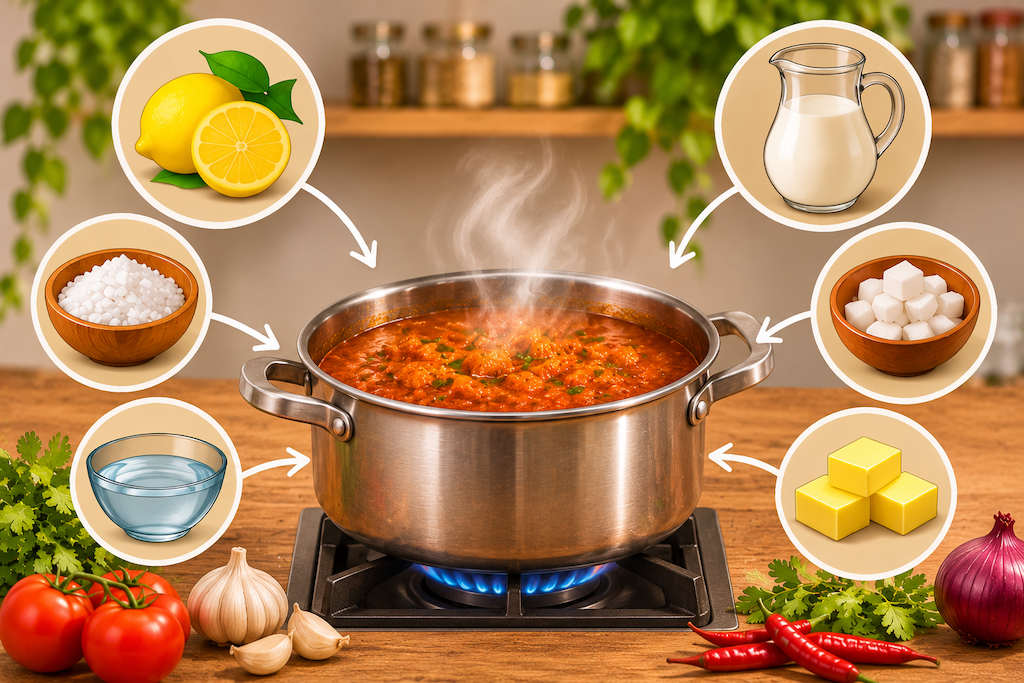
Learning how to Fix a Dish That Went Wrong is almost as important as learning how to cook it correctly in the first place. Every home cook eventually oversalts a soup, burns the bottom of a sauce, makes something far too spicy, or leaves dinner in the oven longer than intended. I have had meals where the first taste produced that horrible little moment of silence when you realize something has gone very wrong. The temptation is to throw everything away and start again, but quite a few cooking mistakes are more recoverable than they first appear.
The first thing I have learned is not to panic and start adding random ingredients. Taste the food properly and decide what the actual problem is. Too salty and too acidic are different problems. A watery sauce needs something completely different from a bland one. If you can identify what went wrong, you have a much better chance of fixing it.
Fix a Dish That Went Wrong by Tasting First
Before trying to rescue a dish, take a clean spoon and taste it carefully. Ask yourself what stands out. Is there too much salt? Is the chilli overwhelming everything else? Does the food taste flat even though you followed the recipe? Is the sauce watery, or has it reduced so much that it has become too intense?
Make one change at a time. This matters because adding salt, sugar, lemon, cream, and spices all at once may change the dish, but you will have no idea which adjustment actually helped. Small corrections give you much more control.
What to Do When Food Is Too Salty
Oversalting is one of the most frustrating cooking mistakes because you cannot simply remove the salt once it has dissolved. The familiar advice about dropping a raw potato into salty soup is not a magic salt-removal trick. A better approach is usually dilution.
If a soup, curry, or stew is too salty, add more unsalted liquid or more of the main ingredients when the recipe allows it. A salty tomato sauce, for example, may improve with additional unsalted tomatoes. A salty soup may need more unsalted stock, water, vegetables, or beans.
Fat or acidity can sometimes make saltiness feel less aggressive, depending on the dish, but they do not actually remove the salt. When trying to fix cooking mistakes, it helps to distinguish between balancing a flavor and physically reducing its concentration.
Rescue a Dish That Is Too Spicy
There is a point when pleasant heat becomes the only thing you can taste. If you have been too enthusiastic with chilli, think about dilution first. Increasing the amount of the non-spicy ingredients spreads that heat across a larger quantity of food.
Depending on the dish, dairy or another suitable source of fat can also soften the experience of chilli. Yoghurt works naturally with many curries, while sour cream may suit chilli or Mexican-inspired dishes. Coconut milk can help in recipes where its flavor belongs.
A little sweetness may provide balance in some dishes, but be careful. You are trying to rescue a dish, not turn a spicy dinner into a sweet one.
How to Fix Bland Food
Bland food is often easier to repair because nothing has necessarily gone wrong. Something is simply missing. Start with salt. Take a small portion, add a little salt, and taste it. If the flavor suddenly becomes clearer, you have found at least part of the problem.
If the dish already contains enough salt but still feels lifeless, try acidity. A squeeze of lemon or a small splash of vinegar can wake up soups, beans, stews, vegetables, and sauces. Sometimes richness is missing instead. A little butter, olive oil, yoghurt, or another appropriate fat can round out the flavor.
When you correct cooking mistakes, do not assume another handful of spices is always the answer. Sometimes the smallest adjustment makes the biggest difference.
Fix Cooking Mistakes With Watery Sauces
A watery sauce can make an otherwise good dinner feel unfinished. Fortunately, this is often one of the easier problems to solve. If the ingredients can tolerate more cooking, simmer the sauce uncovered so excess water evaporates. As it reduces, however, remember that salt and other flavors become more concentrated, so keep tasting.
Some sauces can also be thickened with starch, flour, puréed vegetables, cream, or other ingredients, depending on what you are making. Do not automatically add flour to every thin sauce. Choose a thickening method that makes sense for the dish.
The goal when you fix cooking mistakes is not simply to make a sauce thicker. You want to improve its texture without making the flavor muddy or heavy.
What If Something Is Burnt?
This is where knowing when to stop becomes important. If the bottom of a sauce, stew, or pot of rice has burnt, do not scrape it. Carefully transfer the unburnt portion into a clean pan, leaving the scorched layer behind. Scraping the bottom can distribute the bitter burnt flavor through food that might otherwise have been saved.
Then taste what you transferred. If the burnt flavor has already spread strongly throughout the dish, there may not be a convincing way back.
Part of learning to Fix a Dish That Went Wrong is accepting that not every mistake can or should be rescued.
Save Dry or Overcooked Food
Overcooked meat cannot be returned to its original tenderness, but that does not always mean it belongs in the bin. Dry chicken can be sliced or shredded and served with a sauce, folded into a sandwich, added to soup, or used in a dish where moisture comes from other ingredients.
Overcooked vegetables can sometimes become soup, purée, sauce, or mash. Rice that has become softer than intended might find a second life in another preparation rather than being served as plain rice.
This is less about reversing the mistake and more about changing the plan. Often, the best way to save a ruined dish is to stop trying to make it become what you originally intended.
Knowing When Not to Rescue a Dish
There is an important difference between food that tastes disappointing and food that may be unsafe. No amount of seasoning can rescue spoiled ingredients or food that has been stored unsafely. If there is a genuine food-safety concern, throwing it away is the correct decision.
The same principle applies to extreme cooking mistakes. A completely burnt sauce will not become delicious because you added cream. Sometimes starting again is faster and produces a better meal than spending half an hour trying to repair something beyond saving.
Fix a Dish That Went Wrong Without Losing Confidence
Every cook makes mistakes. The useful part is learning to diagnose them. When you Fix a Dish That Went Wrong, you begin understanding what salt, acid, fat, heat, water, and time actually do to food. That knowledge stays with you long after the disappointing dinner has been forgotten.
Taste first. Identify the problem. Make one small adjustment and taste again. Dilute excessive salt or heat when possible, brighten bland food with seasoning or acidity, reduce watery sauces carefully, and repurpose food when you cannot reverse what happened.
Some meals will still be beyond rescue, and that is fine. Cooking confidence does not come from never making mistakes. It comes from looking into a troublesome pot, understanding what happened, and knowing what is worth trying next.