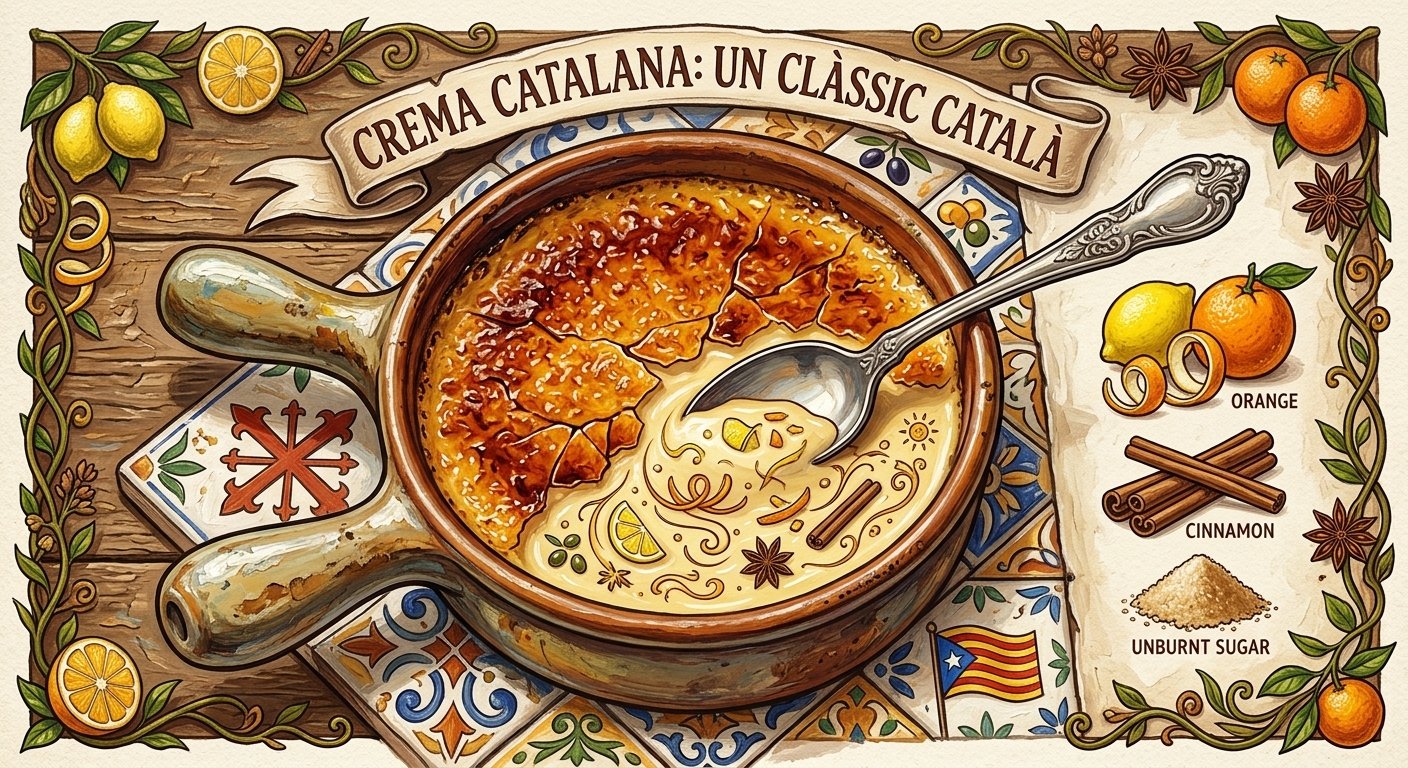
The spoon cracks through the thin caramelised crust, and underneath sits a cool, silky custard scented with citrus and spice. Crema Catalana looks deceptively simple, but that contrast between brittle sugar and creamy custard is exactly what makes this Catalan dessert so memorable.
Often compared with crème brûlée, Crema Catalana has its own personality. Traditionally flavoured with lemon or orange peel and cinnamon, it carries a distinctly Mediterranean character. It is also one of the best-known desserts of Catalan cuisine, appearing on tables across Catalonia for generations.
A Dessert With Deep Catalan Roots
Crema Catalana is traditionally associated with Catalonia, where it is also known as crema cremada, meaning “burnt cream.” It has become particularly linked with Sant Josep, or Saint Joseph’s Day, celebrated on 19 March. The dessert is traditionally prepared for the occasion, although you can now find it throughout the year.
Its history reaches back centuries. Catalan cookbooks from the Middle Ages contain recipes for preparations based on milk, egg yolks, sugar, and flavourings, although the modern dessert developed over time rather than appearing in exactly its present form overnight.
The Custard Starts With Simple Ingredients
The base of Crema Catalana contains ingredients you probably already know: milk, egg yolks, sugar, and a thickening agent such as cornstarch. What gives it its distinctive character, however, comes from the aromatics.
Cinnamon and citrus peel gently infuse the milk, creating a fragrance that feels warm and fresh at the same time. Lemon peel is traditional, while some versions also use orange. The key is to infuse the milk long enough for those flavours to emerge without letting the citrus become bitter.
Once the milk is infused, the egg yolks and sugar create the rich custard base. Add the hot milk gradually while whisking, then return the mixture to gentle heat and stir until it thickens.
Getting That Silky Texture
The custard needs careful attention while it cooks. Too much heat can scramble the egg yolks, leaving you with little pieces of cooked egg instead of a smooth cream. Keep the temperature moderate and stir continuously as the mixture thickens.
Once it coats the back of a spoon, remove it from the heat. Strain the custard if necessary, then divide it between shallow dishes. The wider surface gives you more room for the most exciting part of the dessert: the caramelised sugar.
Let the custard cool and set completely before adding the sugar. A properly chilled base creates a wonderful contrast with the warm, crisp topping.
The Burnt Sugar Makes the Dessert
The defining moment comes when you cover the surface with a thin layer of sugar and caramelise it. Traditionally, cooks use a crema catalana iron, a heated metal tool that burns the sugar directly. A kitchen torch offers a convenient modern alternative.
Move the heat across the surface rather than holding it in one spot. The sugar should melt, bubble, and turn a deep golden brown without becoming bitter. Give it a moment to harden, then crack through the crust with a spoon.
That first break is half the pleasure. The crisp sugar gives way immediately to the cool custard underneath, creating the contrast that defines the dessert.
Crema Catalana vs Crème Brûlée
The two desserts look similar, but Crema Catalana and crème brûlée are not quite the same. Crema Catalana traditionally uses milk and cornstarch, while crème brûlée generally relies more heavily on cream and sets through its egg content.
Their flavour profiles also differ. Crema Catalana traditionally uses cinnamon and citrus, giving it a lighter, more aromatic character. Crème brûlée tends to focus on the rich combination of cream and vanilla.
The caramelised topping connects the two, but the custard underneath tells you which dessert you are eating.
Serve It Cold and Crack the Crust
Crema Catalana works best when you preserve its contrasts. Keep the custard chilled, caramelise the sugar shortly before serving, and avoid covering the finished dessert for too long, as moisture can soften the crust.
Serve it in individual shallow dishes so every spoonful gets some of that golden sugar. You do not need elaborate decoration. The cinnamon-scented custard and glassy caramel crust already provide everything the dessert needs.
Crema Catalana Recipe
Ingredients
- 500 ml whole milk
- 4 egg yolks
- 100 g sugar
- 20 g cornstarch
- 1 cinnamon stick
- Peel of 1 lemon
- Peel of ½ orange, optional
- 4 tbsp extra sugar, for caramelising
Method
- Infuse the milk: Place the milk, cinnamon stick, lemon peel, and orange peel in a saucepan. Heat gently until steaming, then remove from the heat and let it infuse for 10 to 15 minutes.
- Prepare the yolks: Whisk the egg yolks, sugar, and cornstarch in a bowl until smooth and pale.
- Combine: Remove the aromatics from the milk. Gradually whisk the warm milk into the egg mixture to prevent the yolks from cooking too quickly.
- Thicken: Return the mixture to the saucepan. Cook over low to medium heat, stirring constantly, until the custard thickens enough to coat the back of a spoon. Do not let it boil.
- Chill: Pour the custard into shallow dishes. Cover the surface and refrigerate for at least 2 hours, until completely chilled and set.
- Caramelise: Sprinkle a thin, even layer of sugar over each custard. Use a kitchen torch or heated crema catalana iron to caramelise the sugar until golden and crisp.
- Serve: Let the caramel harden for a minute or two, then serve immediately.