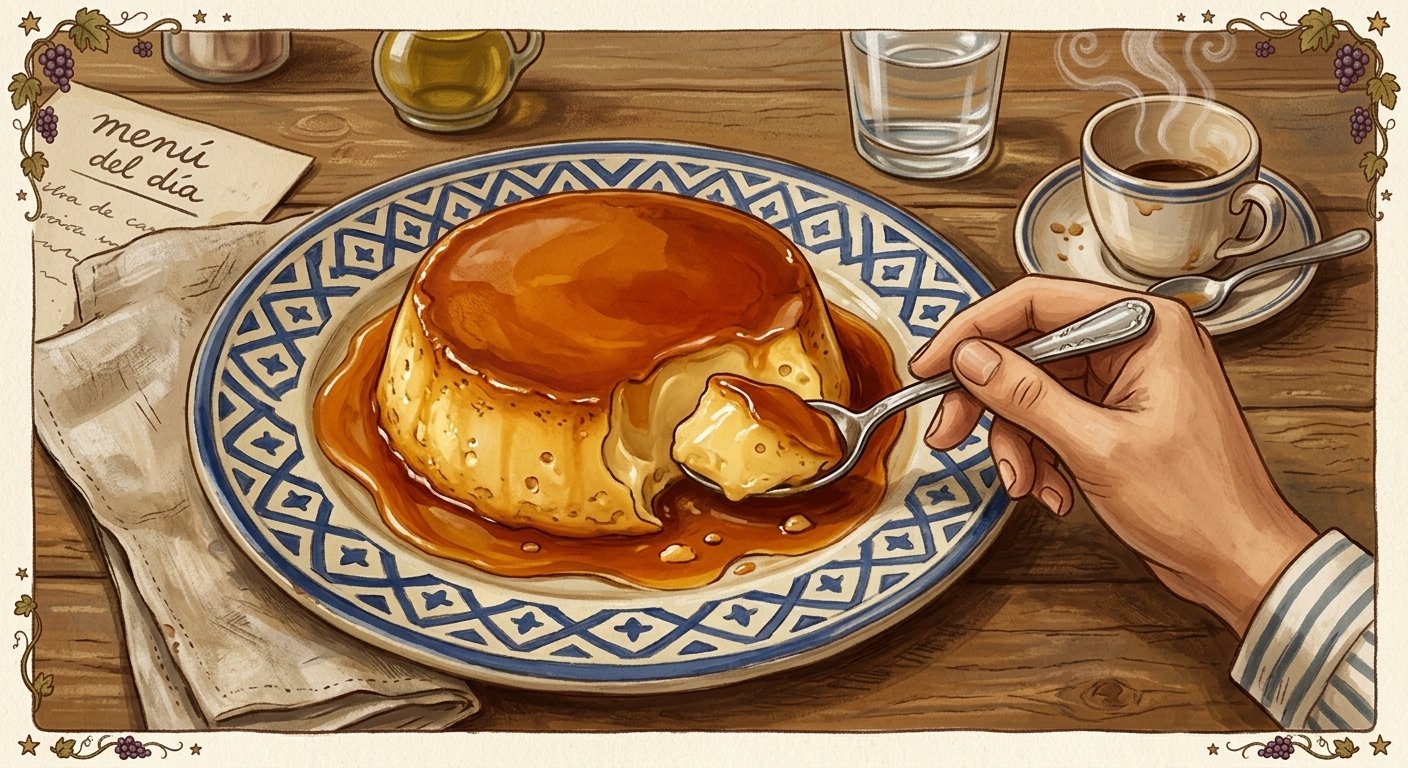
A spoon slips easily through the golden surface of Spanish flan, and you find a custard so soft it almost trembles on the plate. Caramel sauce gathers around the edges, bringing a slightly bitter sweetness that balances the gentle richness of the eggs and milk. There is nothing extravagant about flan, and that is exactly why it has become such a familiar dessert across Spain.
Served cold and often made ahead, flan fits effortlessly into the Spanish table. You might find it after a weekday menú del día, on a family lunch table, or alongside coffee at the end of a long meal. Its ingredients are modest, but the finished dessert feels complete.
A Custard With a Long History
Flan has a history that stretches well beyond modern Spain. Versions of egg custards existed in ancient Rome, and the dish evolved through European cooking over many centuries. Spain developed its own familiar style, built around eggs, milk, sugar, and caramel.
The simplicity helped flan become an everyday favourite. Unlike elaborate pastries that require specialised techniques, flan depends on ingredients that many households could keep in the kitchen. Over time, regional and family recipes introduced small differences, but the basic combination remained wonderfully consistent.
The Caramel Comes First
The defining feature of Spanish flan begins at the bottom of the mould. Sugar is heated until it melts and turns golden brown, then poured into the mould before the custard mixture goes in.
Getting the caramel right requires attention. Pale caramel lacks depth, while sugar that becomes too dark can taste bitter. Aim for a warm amber colour and remove it from the heat before it continues cooking too far. As it cools, the caramel hardens against the mould. During baking, the custard’s moisture softens it again, creating the glossy sauce that eventually flows over the flan when you turn it out.
Keep the Custard Silky
The custard itself needs very little: eggs, milk, and sugar. Some recipes add vanilla or citrus peel, but the classic preparation allows the eggs and caramel to remain at the centre.
Whisk the eggs and sugar gently rather than beating them vigorously. Too much air creates bubbles, which can leave the finished flan full of holes. Add the milk gradually and mix until everything combines smoothly. For an especially refined texture, strain the mixture before pouring it into the caramel-lined mould.
Gentle Heat Does the Work
The secret to a smooth flan custard lies in gentle cooking. Place the filled mould in a water bath, or bain-marie, before putting it into the oven. The surrounding water protects the custard from direct, intense heat and allows the eggs to set gradually.
Bake until the edges have set while the centre still has a slight wobble. Do not wait for the entire surface to become completely firm in the oven. The residual heat will continue cooking the custard as it cools.
Once the flan reaches room temperature, refrigerate it thoroughly. Chilling gives the custard time to firm up and allows the caramel to turn into a smooth sauce.
The Moment You Turn It Out
This is where patience pays off. Run a thin knife carefully around the edge of the mould, place a serving plate on top, and turn everything over in one confident movement.
The flan should slide onto the plate with the caramel pooling around its base. The custard should hold its shape while remaining soft enough for a spoon to glide through it. If the caramel has softened properly, it will run down the sides and create a glossy finish without any extra sauce.
Flan and Crema Catalana Are Not the Same
Spain has several famous custard desserts, and flan and Crema Catalana often get grouped together. They share eggs, sugar, and a creamy texture, but their preparation and character differ.
Flan sets into a smooth, moulded custard and gets its sauce from the caramel cooked into the mould. Crema Catalana usually cooks in a shallow dish and receives its signature crisp sugar crust after the custard has chilled. Crema Catalana also traditionally features cinnamon and citrus, while flan often keeps its flavour profile much simpler.
An Everyday Dessert Worth Knowing
Perhaps flan’s greatest strength is its familiarity. It does not need a special occasion or an impressive presentation. A small portion after lunch is enough to finish the meal on a sweet note.
The combination is wonderfully balanced: cool custard, gentle egg richness, and caramel with just enough bitterness to keep the sweetness interesting. Spanish flan proves that an everyday dessert does not need complicated ingredients to become a classic.