
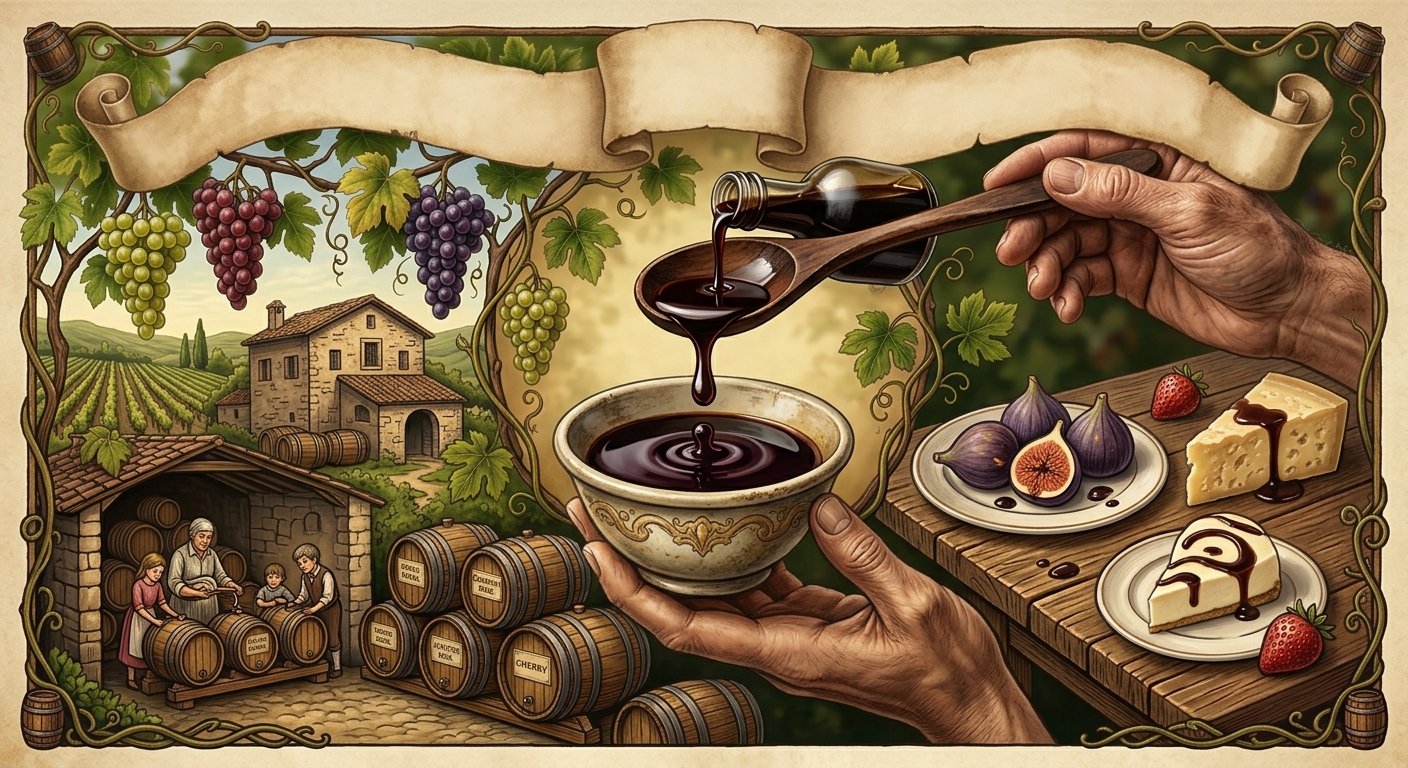
Discover the history, production, varieties, and culinary uses of The black Gold of Modena, the legendary Italian condiment whose rich, sweet-tart flavor has earned it the nickname “Black Gold.”
The first time I tasted authentic Traditional Balsamic Vinegar of Modena, I expected something similar to the bottled balsamic vinegar I kept in my kitchen. Instead, the server placed a tiny spoon in front of me with just a few glossy drops of dark syrup. The flavor was astonishing—sweet, tangy, fruity, woody, and incredibly complex all at once. It lingered on my palate long after the spoon was empty, proving that this was far more than an ordinary vinegar. It’s easy to understand why this extraordinary condiment is often called The Black Gold of Modena.
That experience changed the way I viewed balsamic vinegar. I realized that the finest versions are not simply salad dressings but carefully crafted condiments that represent centuries of Italian tradition, patience, and craftsmanship.
What Is Balsamic Vinegar?
Balsamic Vinegar The Black Gold of Modena is a dark, aromatic vinegar produced primarily in Modena and Reggio Emilia, two historic provinces in Italy’s Emilia-Romagna region.
Unlike ordinary wine vinegar, authentic balsamic vinegar begins with cooked grape must—freshly pressed grape juice that is slowly simmered until concentrated. The vinegar then matures in wooden barrels for years, gradually developing its signature sweetness, acidity, and complexity.
Depending on the production method, balsamic vinegar may range from a fresh everyday condiment to an exceptionally rare product aged for decades.
The History of Balsamic Vinegar
The story of balsamic vinegar dates back nearly a thousand years.
Historical records from the 11th century describe prized vinegars produced in Modena and presented as valuable gifts to noble families. During the Renaissance, the noble Este family carefully guarded their private vinegar lofts, known as acetaie, where barrels aged quietly beneath the rooftops of their palaces.
For centuries, traditional balsamic vinegar remained a luxury reserved for aristocrats and special occasions. Families often passed aging barrels from one generation to the next, treating them as treasured heirlooms.
Today, balsamic vinegar remains one of Italy’s most respected artisanal products.
How Traditional Balsamic Vinegar Is Made
Authentic Traditional Balsamic Vinegar (Aceto Balsamico Tradizionale) follows a strict production process.
The steps include:
- Harvest ripe local grapes.
- Press the grapes to produce fresh must.
- Slowly cook the grape must.
- Transfer the concentrated liquid into wooden barrels.
- Age the vinegar through a series of progressively smaller barrels.
- Allow natural fermentation and slow evaporation.
- Bottle only after the required aging period.
During aging, the vinegar moves through barrels made from woods such as oak, chestnut, cherry, mulberry, juniper, and ash. Each wood contributes subtle aromas and complexity.
Traditional vs. Balsamic Vinegar of Modena
Many shoppers are surprised to learn that not all balsamic vinegar is the same.
Traditional Balsamic Vinegar (DOP)
Traditional balsamic vinegar:
- Uses only cooked grape must
- Ages for at least 12 years
- Follows strict DOP regulations
- Has a thick, syrupy texture
- Is produced only in Modena or Reggio Emilia
Balsamic Vinegar of Modena (IGP)
Balsamic Vinegar of Modena IGP:
- Combines cooked grape must with wine vinegar
- Ages for a shorter period
- Is more widely available
- Offers excellent everyday value
- Is ideal for cooking and dressings
Both products are authentic but serve different culinary purposes.
Why It Is Called “Black Gold”
Balsamic vinegar earned the nickname “Black Gold” because of its remarkable value and craftsmanship.
Several factors contribute to its prestige:
- Long aging process
- Limited production
- Exceptional flavor
- Skilled craftsmanship
- Strict quality standards
Traditional balsamic vinegar may spend 12, 25, or even more than 50 years aging before bottling, making every drop incredibly precious.
Culinary Uses
Authentic balsamic vinegar enhances many dishes.
It pairs beautifully with:
- Parmigiano Reggiano
- Strawberries
- Grilled vegetables
- Risotto
- Roasted meats
- Fresh figs
- Vanilla ice cream
- Caprese salad
Traditional balsamic vinegar is often used sparingly, with only a few drops needed to transform a dish.
Reading the Label
Choosing quality balsamic vinegar begins with understanding the label.
Look for:
- Aceto Balsamico Tradizionale di Modena DOP
- Aceto Balsamico Tradizionale di Reggio Emilia DOP
- Aceto Balsamico di Modena IGP
Avoid assuming that every bottle labeled “balsamic” follows traditional Italian production methods. Genuine DOP and IGP certifications guarantee specific standards of quality and origin.
Nutritional Benefits
Balsamic vinegar contributes more than flavor.
It naturally contains:
- Antioxidants
- Polyphenols
- Trace minerals
- Organic acids
Because traditional balsamic vinegar is used in very small quantities, it enhances dishes without adding significant fat.
Whenever I serve Parmigiano Reggiano to guests, I add just a few drops of aged balsamic vinegar on top. The sweet acidity highlights the cheese’s nutty flavor so beautifully that many people are surprised by how such a small amount can completely transform the tasting experience.
Balsamic Vinegar in Modern Italian Cuisine
Today’s chefs continue to honor centuries-old traditions while exploring new culinary possibilities.
Traditional balsamic vinegar appears in tasting menus, gourmet desserts, seafood dishes, and artisan cheese boards. Meanwhile, Balsamic Vinegar of Modena IGP remains a staple in everyday Italian kitchens for vinaigrettes, marinades, and sauces.
This balance between heritage and versatility has helped balsamic vinegar become one of Italy’s most celebrated exports.
Why Balsamic Vinegar Defines Modena
Few products represent a region as completely as balsamic vinegar.
Its production depends on local grapes, generations of family knowledge, patient aging, and strict quality standards. Every bottle reflects years—sometimes decades—of craftsmanship that cannot be hurried.
Whether drizzled over Parmigiano Reggiano, fresh fruit, roasted vegetables, or simply enjoyed by the spoonful, authentic balsamic vinegar offers a remarkable taste of Emilia-Romagna’s culinary heritage.
Classic Balsamic Glaze for Vegetables and Meat
Ingredients
- 250 ml Balsamic Vinegar of Modena IGP
- 1 tablespoon honey (optional)
- Freshly ground black pepper
Instructions
- Pour the balsamic vinegar into a small saucepan.
- Add the honey if a slightly sweeter glaze is desired.
- Bring the vinegar to a gentle simmer over medium-low heat.
- Cook for 10–15 minutes until the liquid reduces by about half.
- Remove from the heat and allow the glaze to cool slightly.
- Season with a small amount of freshly ground black pepper if desired.
- Drizzle over grilled meats, roasted vegetables, or fresh cheese.
Serving Suggestions
Use the balsamic glaze over grilled steak, roasted chicken, asparagus, Brussels sprouts, strawberries, Parmigiano Reggiano, or Caprese salad. It also pairs beautifully with roasted figs, pears, and vanilla gelato for a classic Italian-inspired dessert.
Preparation Time: 5 minutes
Cooking Time: 15 minutes
Servings: Makes approximately 120 ml


