
Introduction: Simplicity with Deep Roots
Pisto manchego is a dish that speaks softly yet leaves a lasting impression. At first glance, it resembles many vegetable stews found across the Mediterranean, but its identity is firmly tied to the plains of La Mancha. I first encountered pisto not in a restaurant, but in a family kitchen where it simmered slowly while conversations unfolded around it. The aroma of olive oil and vegetables filled the room, and it became clear that pisto manchego is much more than another stew—it offers a comforting embrace unique to its origins.
Historical Origins and Rural Influence of Pisto Manchego
Pisto manchego developed in a region shaped by agriculture rather than abundance. La Mancha’s harsh climate and vast farmlands encouraged cooking that relied on what was readily available. Seasonal vegetables such as tomatoes, peppers, and zucchini formed the foundation, cooked gently to bring out their natural sweetness. The dish evolved as a way to use surplus produce, reinforcing its status as practical, everyday food that eventually became emblematic of regional identity—a tradition deeply rooted in the making of pisto manchego.
The Role of Ingredients and Seasonality
The strength of pisto manchego lies in its respect for ingredients. Ripe tomatoes are essential, providing body and acidity, while green and red peppers add complexity. Zucchini brings softness, and onions create sweetness as they melt into the base. Olive oil ties everything together, giving depth and richness without overpowering the vegetables. In La Mancha, pisto manchego changes slightly depending on the season, reflecting the land’s rhythms rather than rigid recipes.
Technique: Slow Cooking and Attention
Preparing pisto requires patience rather than precision. Vegetables are cooked slowly, often separately, then combined to avoid muddiness. This method preserves texture and allows each flavor to develop fully. I once watched a cook insist on waiting before adding tomatoes, explaining that rushing would “flatten” the dish. In every step, careful attention is the secret behind the remarkable flavors of pisto manchego.
Texture, Flavor, and Versatility
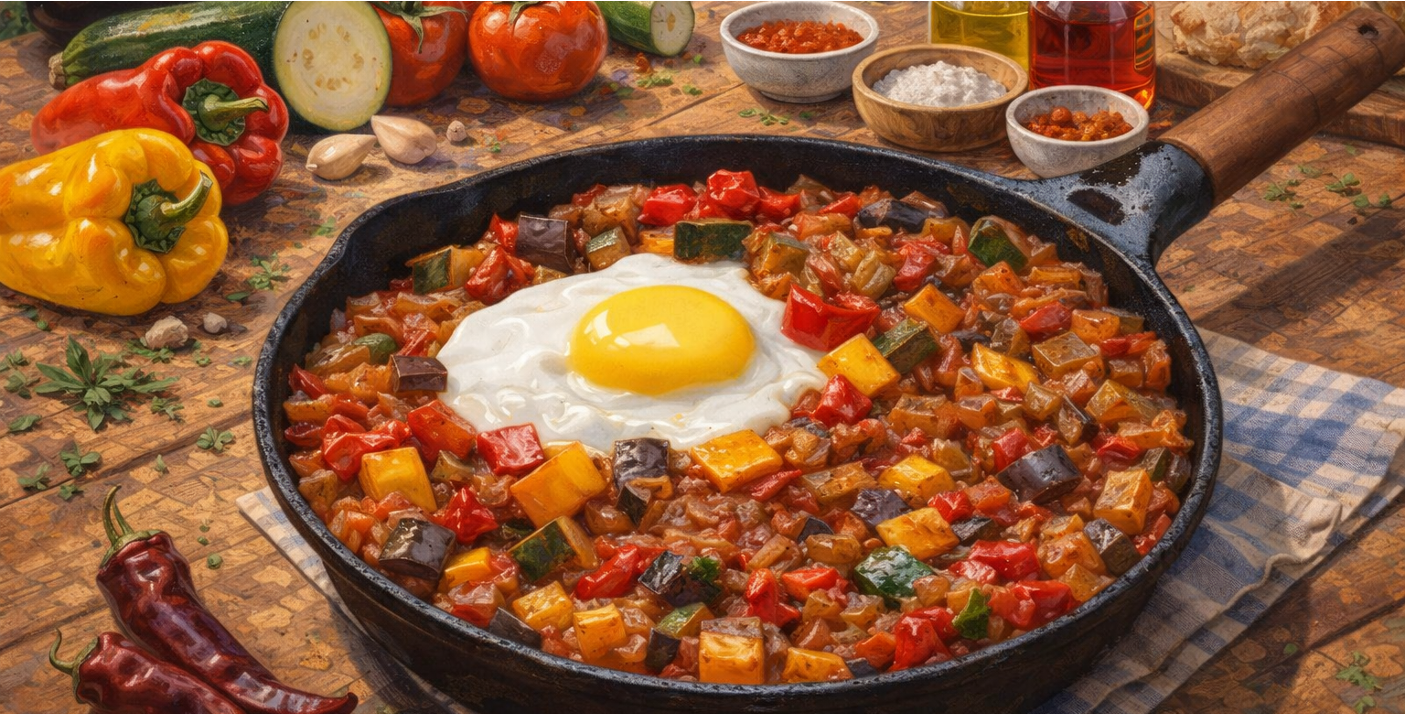
Pisto achieves a soft, spoonable consistency, with vegetables tender but not indistinguishable. The flavors are layered and mellow, making it suitable as a main dish or accompaniment. It is commonly served with a fried egg on top, its runny yolk blending into the vegetables. The versatility of pisto manchego makes it perfect with grilled meats or simply on its own with bread.
Cultural Significance in La Mancha
In La Mancha, pisto is deeply associated with home cooking rather than celebration. It is often prepared in large batches and reheated, improving in flavor over time. This practicality reflects regional values of thrift and resourcefulness. Sharing a dish of pisto manchego offers warmth and nourishment, embodying the everyday culture of the region.
Pisto Manchego in Contemporary Cuisine
Modern interpretations of pisto appear in tapas bars and restaurants, sometimes refined in presentation but rarely altered in essence. While comparisons to ratatouille are common, locals insist that pisto has its own character, rooted in olive oil and Spanish produce. Indeed, the continued popularity of pisto manchego proves its adaptability and lasting emotional appeal.
Traditional Pisto Manchego Recipe
Ingredients
- Ripe tomatoes – 1 kg
- Zucchini – 2 medium
- Green bell peppers – 2
- Onion – 1 large
- Garlic – 2 cloves
- Extra virgin olive oil – 4 tbsp
- Salt – to taste
- Eggs – for serving (optional)
Method
Heat olive oil in a wide pan and sauté onion and garlic until soft. Add chopped peppers and cook until tender. Stir in diced zucchini and cook gently. Add peeled, chopped tomatoes and season with salt. Simmer slowly until vegetables are soft and flavors meld. For this simple pisto manchego recipe, serve warm or at room temperature, topped with a fried egg if desired.


