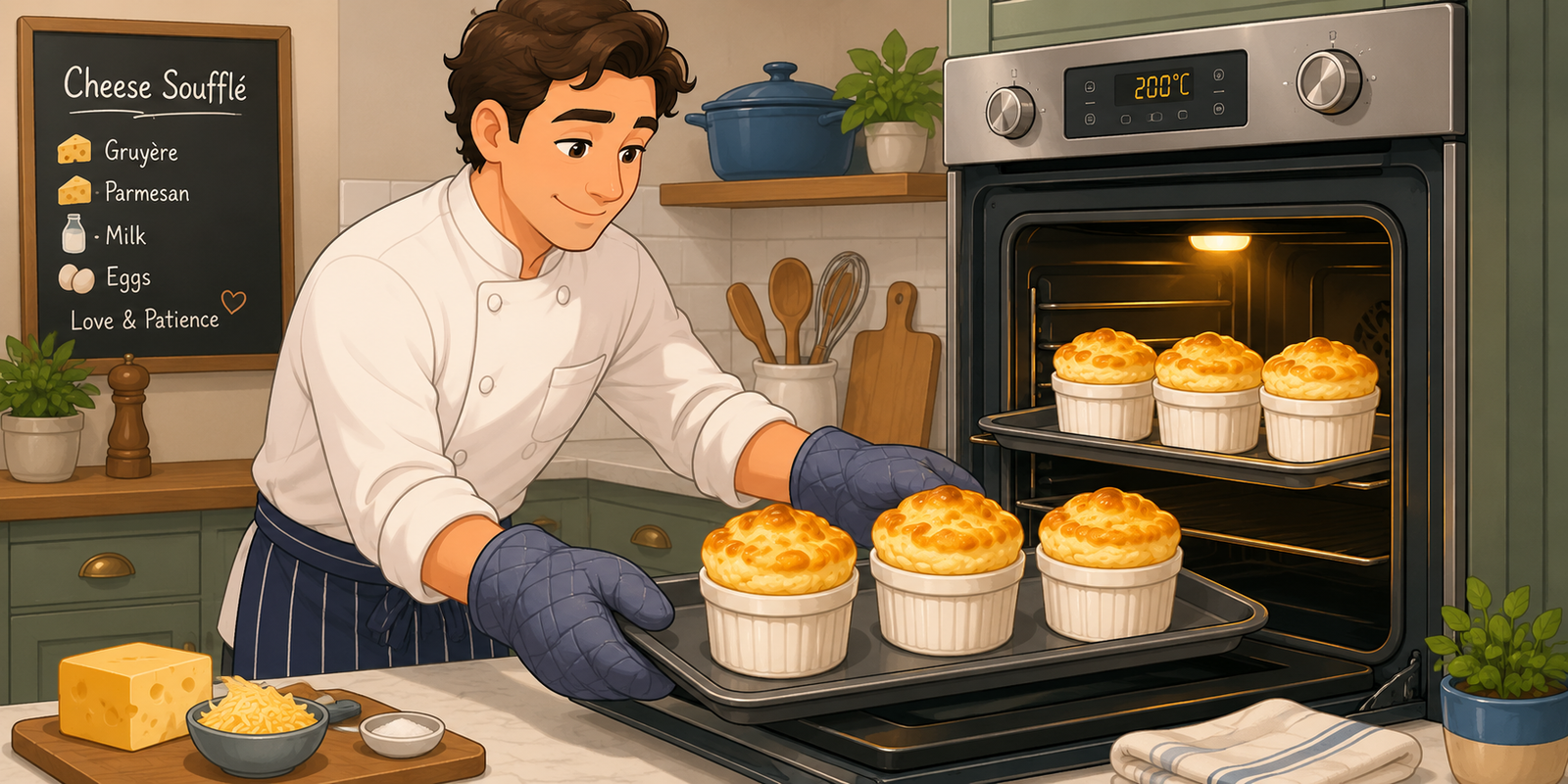
Few dishes carry as much mystique as the soufflé. Mention one at a dinner party and someone will inevitably share a story of collapse, of oven doors opened too soon, of hopes rising and falling in equal measure. Yet behind the drama lies a dish that is far more forgiving than its reputation suggests. Understand the technique, and the soufflé stops being a gamble and becomes one of the most reliable showstoppers in your repertoire.
A Brief History of Rising Ambition
The soufflé emerged in early eighteenth-century France, its name derived from the verb souffler, meaning “to breathe” or “to puff.” Early versions appeared in Vincent La Chapelle’s cookbooks in the 1740s, but it was the great nineteenth-century chef Marie-Antoine Carême who elevated the soufflé into a symbol of French culinary refinement. Carême’s towering creations, made possible by improved ovens with more consistent heat, turned the soufflé into the ultimate test of a chef’s precision. It has remained so ever since — a dish where technique is not merely helpful but everything.
The Science of the Rise
At its heart, a soufflé is a marriage of two components: a flavourful base and beaten egg whites. The base — typically a béchamel for savoury versions or a pastry cream or fruit purée for sweet ones — provides structure, richness, and taste. The egg whites provide the lift.
When you whisk egg whites, you unravel their proteins and trap millions of tiny air bubbles in a delicate foam. In the oven, two things happen simultaneously: the trapped air expands with the heat, and the moisture in the mixture turns to steam, inflating the soufflé like a hot-air balloon. Meanwhile, the egg proteins gradually set, giving the risen structure just enough rigidity to hold — temporarily. A soufflé’s fall is not failure; it is physics. As it cools, the air contracts. The goal is simply to serve it during its glorious, fleeting peak.
The Techniques That Matter
Whipping the whites. Use a spotlessly clean bowl — any trace of fat sabotages the foam. Whisk to soft, glossy peaks that droop slightly when the whisk is lifted. Overbeaten whites turn grainy and dry, breaking apart when folded and producing a coarse, unstable rise. A pinch of cream of tartar or a few drops of lemon juice stabilises the foam by lowering its pH.
Folding, not stirring. This is where soufflés are won or lost. First, vigorously stir a third of the whites into the base to lighten it — sacrifice these bubbles willingly. Then fold in the remainder gently with a large spatula, cutting down through the centre and sweeping up the sides, rotating the bowl as you go. Stop the moment no white streaks remain. Every extra fold costs you height.
Preparing the dish. Butter the ramekin generously with upward strokes, then coat it with breadcrumbs, grated cheese, or sugar. This gives the batter traction to climb the walls — a soufflé literally pulls itself up the sides of its dish.
Respecting the oven. Bake on a preheated tray in the lower third of the oven, and resist the urge to peek for at least the first twenty minutes. A sudden draught of cold air can deflate the fragile structure before the proteins have set.
Beyond the Classic
Once the technique is second nature, the soufflé becomes a canvas. Savoury versions embrace spinach, smoked haddock, wild mushrooms, or goat’s cheese. Sweet soufflés span chocolate, Grand Marnier, lemon, and raspberry. The twice-baked soufflé — cooked, cooled, then reheated in cream — even removes the timing pressure entirely, making it a favourite of restaurant kitchens. But the cheese soufflé remains the definitive expression of the form: simple ingredients, transformed by air and heat into something extraordinary.
Classic Cheese Soufflé
Serves 4
Ingredients
- 30g butter, plus extra for greasing
- 25g finely grated Parmesan, for coating the dish
- 30g plain flour
- 250ml whole milk, warmed
- ½ tsp Dijon mustard
- Pinch of cayenne pepper
- Salt and freshly ground black pepper
- 4 large egg yolks
- 100g Gruyère cheese, grated
- 5 large egg whites
- Pinch of cream of tartar
Method
- Preheat the oven to 190°C (170°C fan) with a baking tray inside. Butter a 1-litre soufflé dish and coat with Parmesan.
- Melt the butter in a saucepan, stir in the flour, and cook for 1 minute. Gradually whisk in the warm milk and cook until thick and smooth. Season with mustard, cayenne, salt, and pepper.
- Remove from the heat and beat in the egg yolks one at a time, then stir in the Gruyère until melted.
- Whisk the egg whites with the cream of tartar to soft, glossy peaks. Stir a third into the cheese base, then gently fold in the rest.
- Pour into the dish, level the top, and run a thumb around the inner rim to encourage an even rise.
- Bake for 25–30 minutes until tall, golden, and slightly wobbly at the centre. Serve immediately — a soufflé waits for no one.