Emilia-Romagna Cuisine and Northern Italian Identity
Emilia-Romagna cuisine is widely regarded as the foundation of northern Italian food culture. This region has influenced how pasta, meat sauces, and comforting dishes are prepared far beyond Italy. The cooking here is rich but controlled, shaped by tradition rather than trends. It relies on butter, pork, cheese, and fresh egg pasta, setting it apart from olive-oil-based southern cooking.
The result is food that feels generous, deeply satisfying, and rooted in everyday life rather than special occasions alone.
The Landscape Behind Emilia-Romagna Food Traditions
The fertile Po Valley plays a key role in shaping Emilia-Romagna food traditions. Rich soil and reliable farming supported dairy cattle, pigs, and wheat for centuries. Because ingredients were plentiful, cooks focused on refining techniques instead of compensating for scarcity.
This environment allowed regional cooking to develop confidence. Preservation, slow cooking, and handmade preparation became essential skills, passed down through generations.
Butter and Dairy in Regional Cooking
Butter became central because dairy farming was deeply established. Unlike regions where olive oil dominated, butter offered a softer, rounder flavour profile that suited filled pasta and slow-cooked sauces.
Used carefully, butter adds richness without sharpness. It binds ingredients together and enhances texture, supporting the overall balance of dishes rather than overpowering them.
Pork as a Pillar of Local Cuisine
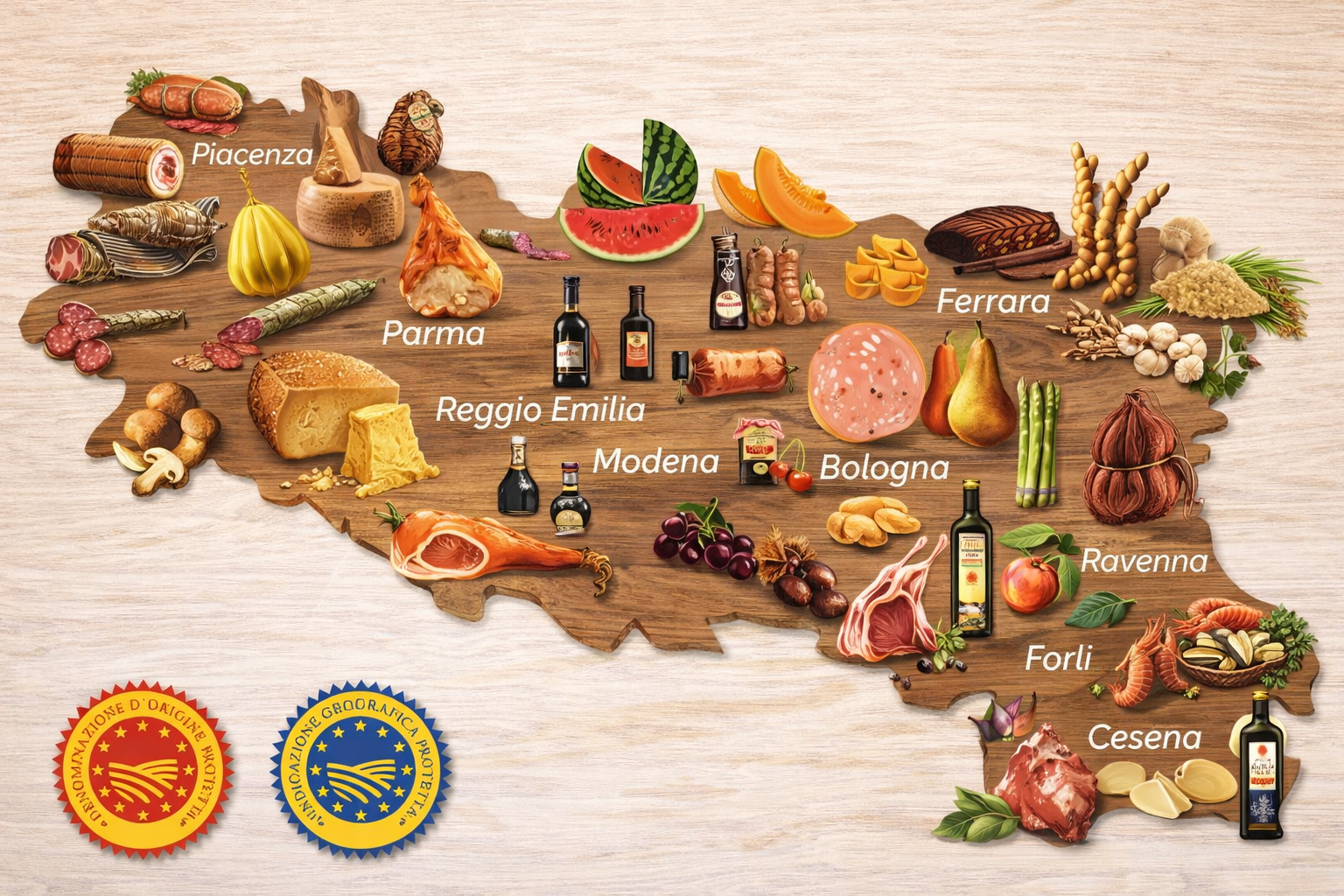
Pork is a defining element of regional Italian cooking in this area. The tradition of using the whole animal led to world-renowned cured meats such as prosciutto di Parma, mortadella, and culatello. These foods reflect centuries of preservation knowledge and restraint.
Fresh pork also plays a major role. It adds sweetness and depth to sauces, fillings, and broths, giving dishes warmth and structure that feel comforting and familiar.
Egg Pasta as a Signature of Emilia-Romagna Cuisine
Fresh egg pasta is one of the clearest expressions of Emilia-Romagna cuisine. Instead of dried pasta, cooks rely on dough made with flour and eggs, producing a golden colour and tender bite.
Tagliatelle, tortellini, tortelloni, cappelletti, and lasagne all come from this tradition. Pasta-making is treated as a learned skill, developed through repetition and experience rather than shortcuts.
How Emilia-Romagna Food Traditions Create Balance
What defines Emilia-Romagna food traditions is harmony. Egg pasta provides structure, butter softens flavours, and pork delivers savoury depth. Each ingredient has a clear role.
Seasoning is restrained, spices are minimal, and technique leads the way. This balance creates dishes that feel indulgent without being excessive.
Dishes That Represent the Region
Some of Italy’s most famous dishes come from this region. Tagliatelle al ragù highlights fresh pasta and slow-cooked meat sauce. Tortellini in brodo showcases delicate pasta and savoury fillings. Lasagne layers pasta, meat, butter, and cheese into a dish recognised worldwide.
Each dish reflects the principles behind Emilia-Romagna cuisine: patience, craftsmanship, and respect for ingredients.
Why Emilia-Romagna Cuisine Still Matters
Even today, Emilia-Romagna cuisine continues to influence how Italian food is taught and cooked globally. Chefs and home cooks alike look to this region for standards in pasta-making and meat preparation.
Its strength lies in consistency. The cuisine does not chase trends, because its methods already work.