There’s a sound that means dinner is about to be good. It’s not the sizzle of onions or the pop of mustard seeds alone — it’s the sharp, crackling hiss of curry leaves hitting hot oil. If you grew up in a South Indian kitchen, or spent enough time in one, you know that sound in your bones. It’s the smell that pulls you out of the next room and into the kitchen. You find yourself asking, “what are you making?”
And yet, curry leaves are one of the most misunderstood ingredients outside of India. People push them to the side of the plate like a bay leaf. Some recipes abroad even substitute curry powder for curry leaves — which, if you know anything about either, is a small culinary crime. So let’s set the record straight: curry leaves and curry powder have nothing to do with each other. One is a fresh, glossy leaf plucked straight off a tree. The other is a spice blend invented largely for Western pantries. Today, we’re talking about the real thing.
What Exactly Is a Curry Leaf?
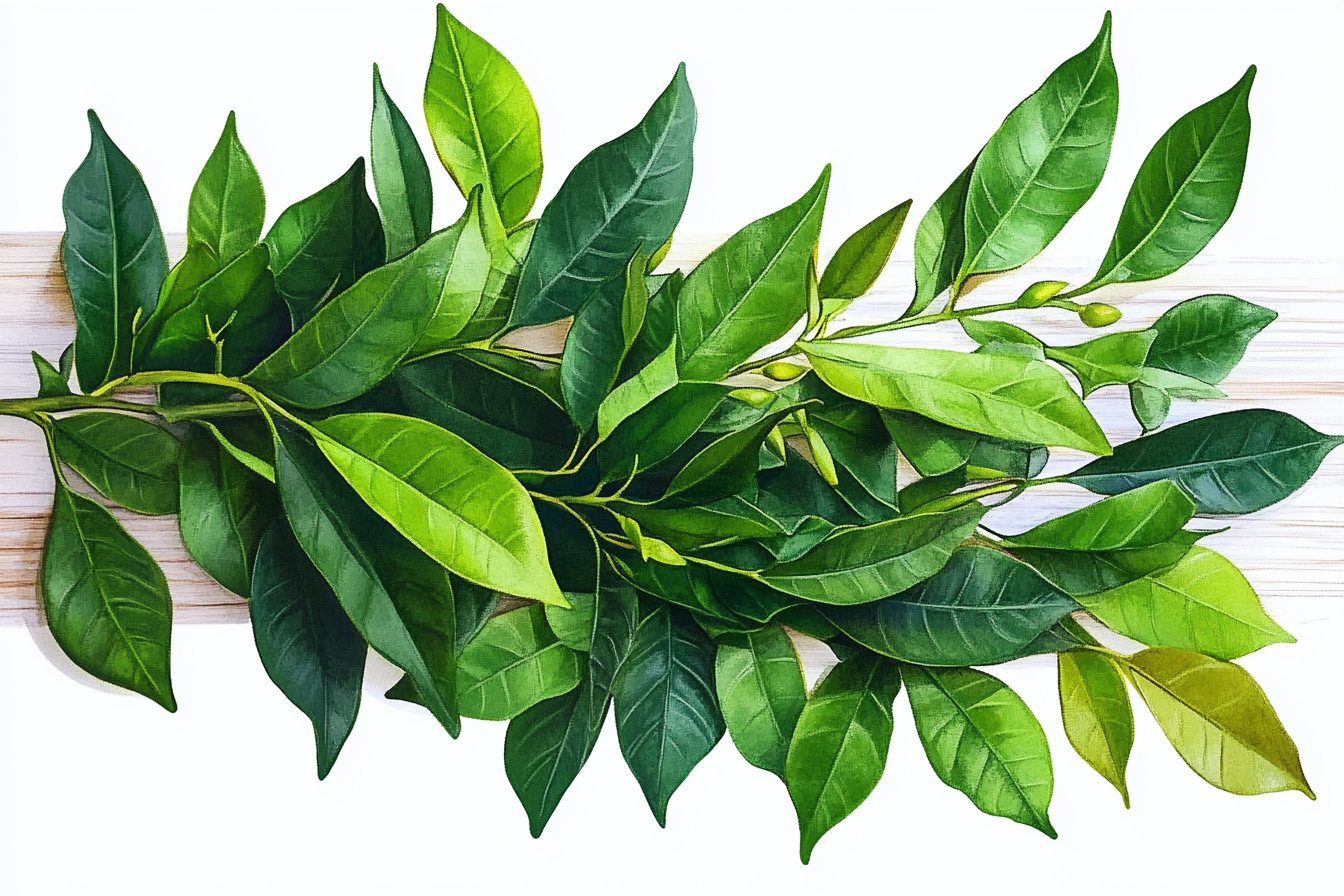
The curry leaf (Murraya koenigii) comes from a small tree native to the Indian subcontinent, closely related to citrus. That relation shows — snap a fresh leaf in half and you’ll catch a whiff of something faintly citrusy, smoky, a little bit like an anise-and-lemon hybrid. No spice jar could ever replicate this aroma.
In South India — Tamil Nadu, Karnataka, Kerala, Andhra Pradesh — the curry leaf tree (locally called kadipatta, karivepaku, or karuveppilai, depending on where you are) often grows right in the backyard. Grandmothers pluck a sprig on their way to the stove the same way you might grab a garnish from your window box. It isn’t bought in bulk and stored for months. Instead, it’s used fresh, generously, and constantly.
The Flavour Curry Leaves Actually Bring
Curry leaves aren’t a “background” flavour — they’re structural. In South Indian cooking, they’re part of the tadka or tempering, the ritual of blooming whole spices in hot oil or ghee at the start (or end) of cooking. Mustard seeds crackle first, then cumin, then a dried red chilli or two. Right at the end, a fistful of curry leaves goes in — they should sizzle loudly and turn a slightly darker, glossy green almost instantly.
That final sizzle is where the magic happens. Curry leaves are packed with volatile aromatic oils that only fully release under high heat. Add them too early or too late, and you lose most of what makes them special. Get the timing right, and they perfume an entire pot of sambar, rasam, or coconut chutney with something warm, slightly bitter, and deeply comforting. It’s the flavour equivalent of a well-worn cotton saree, if that makes sense.
Why it Deserve a Spot in Your Nutrition Story Too
As a dietitian, I can’t talk about curry leaves without talking about what they quietly do for the body. This is a herb that earns its keep well beyond flavour.
- Rich in iron and folate — traditionally valued in Indian households for supporting haemoglobin levels. This is part of why curry leaf chutney is often pushed onto new mothers and growing children.
- A good source of Vitamin A and antioxidants — the deep green colour is a strong hint of the carotenoids inside, which support eye health and skin.
- Traditionally used to support digestion — many South Indian meals lean on curry leaves precisely because they’re believed to ease bloating and aid the breakdown of heavier, ghee-laden dishes.
- A quiet source of calcium — modest compared to dairy, but it adds up when curry leaves are eaten as often as they are in South Indian households. This is especially true since they are sometimes eaten daily.
None of this makes curry leaves a “superfood” in the marketing sense — and I’d gently push back on any headline that calls it that. What it is, is a genuinely nutrient-dense, everyday herb that’s been part of a sensible, balanced way of eating for generations. This was the case long before anyone put it in a capsule and sold it as a supplement.
How to Actually Use them
If you’ve only ever seen a sad, wilted sprig sitting in a plastic packet at the grocery store, I understand the skepticism. Here’s how to actually get the best out of them.
1. Buy them fresh, not dried. Dried curry leaves lose almost all their aroma — they’re a shadow of the real thing. If your local store doesn’t stock fresh ones, ask; South Asian grocers almost always do.
2. Store them right. Wrap fresh curry leaves loosely in a paper towel, then in a partially open plastic bag, and refrigerate. They’ll keep for two to three weeks this way.
3. Freeze what you won’t use. Curry leaves freeze beautifully. Just pull off the leaves, freeze them in a sealed bag, and use them straight from frozen in your tempering — no need to thaw.
4. Temper them properly. Heat oil or ghee until visibly shimmering, add whole spices first (mustard seeds, cumin, dried chillies), and add curry leaves last, standing slightly back — they will splutter. Let them crackle for about 10-15 seconds before adding the rest of your ingredients.
5. Don’t discard them from the dish. Many people fish curry leaves out before eating, the way you would a bay leaf. Don’t. They’re soft, edible, and packed with the nutrients we just talked about. Eat them.
A Few Ways to Start Cooking
Curry leaf chutney — ground with coconut, tamarind, and green chillies, this is one of the most underrated chutneys in Indian cuisine.
Curry leaf rice — leftover rice tempered with curry leaves, peanuts, and mustard seeds, a South Indian answer to fried rice.
Sambar and rasam — no version of either is complete without a fresh curry leaf tempering poured on top right before serving.
Buttermilk (majjige/moru) — a few crushed curry leaves and a green chilli turn plain buttermilk into a cooling, digestive-friendly summer drink.
The Bigger Picture
There’s something quietly beautiful about an ingredient that never really left home. Curry leaves haven’t been rebranded, bottled, or turned into a wellness trend — they’re just still doing what they’ve always done, in millions of kitchens, every single day. That consistency is its own kind of magic.
So next time a recipe calls for curry leaves and you’re tempted to skip it because you don’t have any on hand — don’t substitute, don’t skip. Track some down, even if it means a trip to a South Asian grocery store. Once you hear that first sizzle in hot oil, you’ll understand exactly why generations of South Indian cooks have never let this leaf go.