Cheese as Structure in Sauces, Not Just Flavor
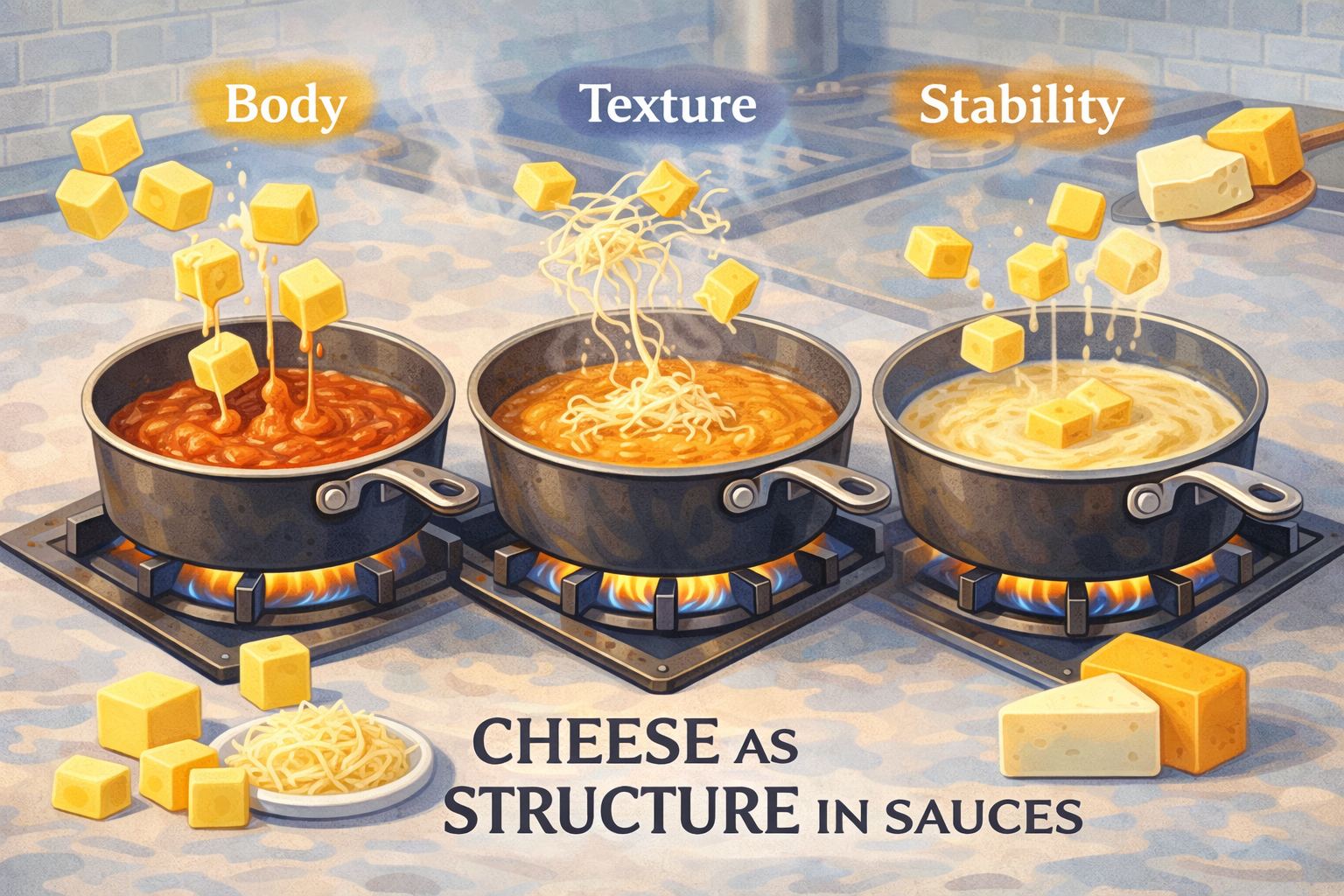
Cheese as structure in sauces is one of the most overlooked ideas in cooking. Cheese is often thought of as a finishing touch, added for taste or richness. In reality, cheese plays a much bigger role. It helps build body, control texture, and create stability in sauces. When used correctly, cheese becomes part of the sauce’s foundation, not just an extra ingredient.
Understanding cheese as structure in sauces changes how you cook. Instead of relying only on flour, cream, or reduction, you begin using cheese to shape how a sauce feels, flows, and holds together.
How Cheese Creates Body and Thickness
One key reason cheese as structure in sauces works so well is protein. As cheese melts, its proteins and fats interact with liquid, creating a natural thickening effect. Unlike flour-based thickeners, cheese adds body without dulling flavor.
For example, grated hard cheeses slowly melt and disperse, giving sauces weight and cohesion. Soft cheeses melt more quickly, creating smoothness and elasticity. In both cases, cheese contributes to texture first and flavor second.
Cheese as an Emulsifier
Cheese as structure in sauces is especially important in emulsions. Many cheeses contain emulsifying salts or naturally balanced fat-to-protein ratios. These properties help bind fat and water into a stable sauce.
This is why sauces like cheese-based pasta sauces feel unified instead of oily or broken. When cheese is added properly, it stabilizes the sauce and prevents separation. The result is a sauce that clings rather than pools.
Temperature and Timing Matter
How and when cheese is added determines whether cheese as structure in sauces succeeds or fails. High heat can cause proteins to tighten too quickly, leading to grainy or split sauces. Lower, controlled heat allows cheese to melt gently and integrate smoothly.
Adding cheese off the heat, or toward the end of cooking, protects its structure-building ability. This timing keeps sauces creamy rather than stringy or greasy.
Different Cheeses, Different Structures
Not all cheeses behave the same way. Cheese as structure in sauces depends on moisture, age, and fat content. Aged cheeses add firmness and depth, while fresh cheeses add softness and spread.
Hard cheeses provide strength and thickness. Semi-soft cheeses create elasticity and richness. Fresh cheeses contribute smoothness and lightness. Choosing the right cheese determines how the sauce will behave on the plate.
Why Cheese Replaces Flour in Many Sauces
Cheese as structure in sauces often replaces traditional thickeners. Instead of flour or starch, cheese builds texture naturally while enhancing flavor. This creates sauces that feel richer but lighter at the same time.
Because cheese thickens without muting taste, sauces remain expressive and balanced. The structure feels intentional rather than heavy.
Cheese and Sauce Stability
Another advantage of cheese as structure in sauces is stability over time. A well-made cheese sauce holds its texture longer, especially when reheated gently. The proteins help maintain cohesion, preventing separation.
This is why cheese-based sauces often feel more forgiving than cream-only sauces. When handled correctly, they retain their structure without constant adjustment.
Seeing Cheese as a Building Material
Thinking of cheese as structure in sauces shifts your approach to cooking. Cheese becomes a building material, not a garnish. It supports the sauce, defines its texture, and shapes the eating experience.
Once you see cheese this way, sauces become more controlled, more reliable, and more satisfying. Flavor improves not because more cheese is added, but because it is used with purpose.