Part of Second Career in the Kitchen.
Meat is where I was most afraid, and where I’d wasted the most money. As a diner I’d eaten extraordinary meat — dry-aged beef in a Paris institution, slow-smoked lamb at a Basque sidrería, a single perfect bite of jamón in San Sebastián that I still think about. As a home cook I could not, for the life of me, cook a steak without turning it grey and sad or, worse, serving it raw in the middle while the outside burned. The expensive cut would go in the pan and my nerve would go out the window. What culinary school eventually taught me is that meat isn’t one skill but a small set of them, and which one you need is written in the cut itself. A tender cut and a tough cut are almost opposite problems. Once I understood that, the fear went, and the waste went with it.
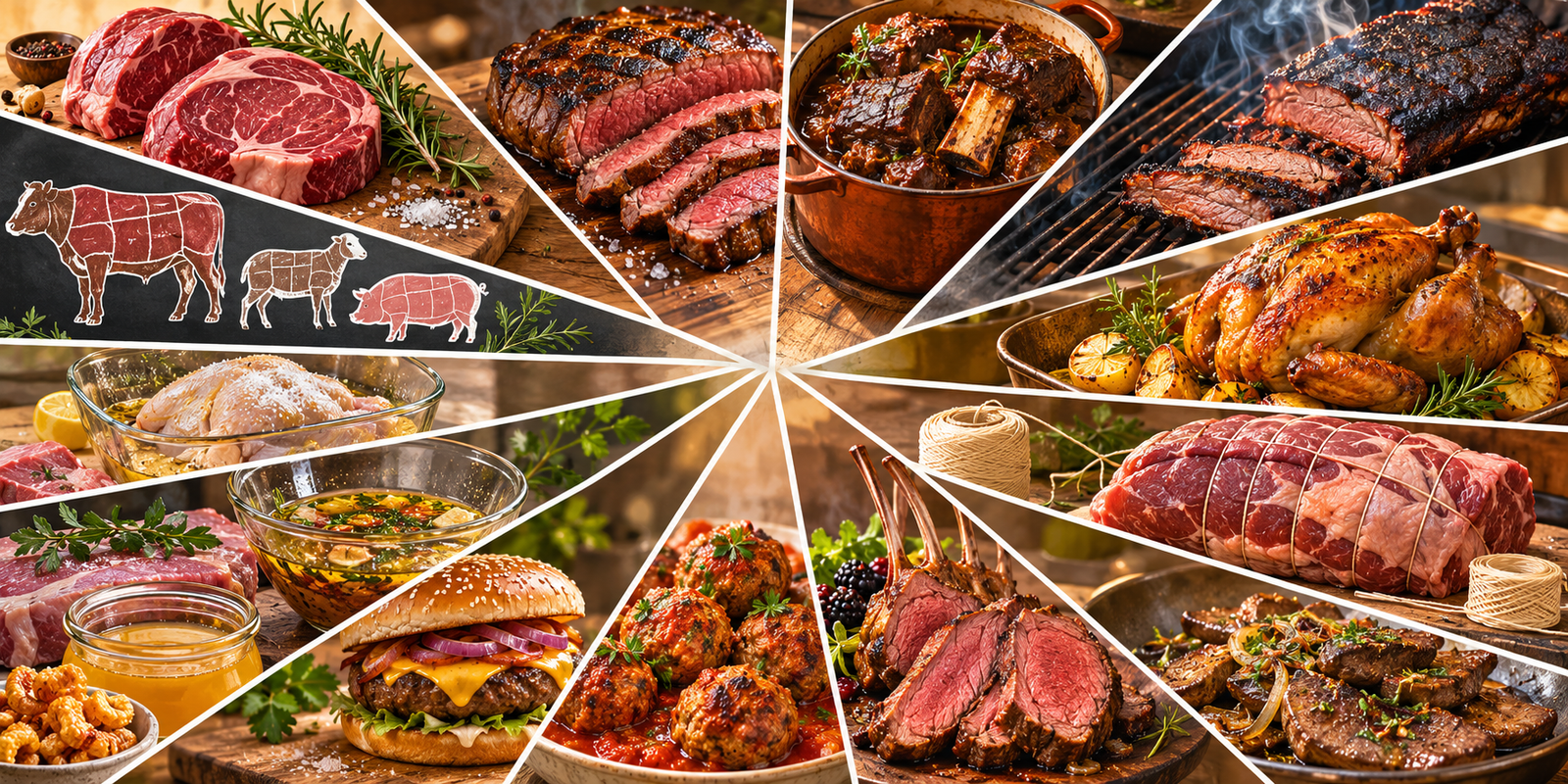
Meat is usually the most expensive thing in the trolley, which is exactly why it’s worth learning properly — a little knowledge pays for itself fast. The whole subject organises around one idea: tender cuts want fast, high heat; tough cuts want slow, low heat; and everything else is detail. Get that distinction into your bones and you can cook any animal, any cut, with confidence. Here’s the full map.
Read the Animal First
Before any heat, you need to understand what’s in front of you, because the cut dictates the method. Understanding Cuts of Beef is the foundational literacy — which parts are tender and which are worked, and therefore how each wants to be cooked. The same logic applies across species: Lamb: Cuts and Cooking Methods and How to Cook Pork Safely each have their own map, the latter with genuinely important food-safety rules worth getting right. And the philosophy that ties it together, the one that made me a more thoughtful and economical cook, is Nose-to-Tail: Using the Whole Animal — respecting and using every part rather than only the glamorous cuts.
Fast and Hot: The Tender Cuts
This is the family that terrified me and now gives me the most pleasure. How to Cook the Perfect Steak is the keystone — once the crust-and-rest logic clicks, it’s genuinely easy — and it stands on two supporting skills I wish I’d learned first. Reading Meat Doneness Temperatures with a thermometer ended my guessing forever, and How to Rest and Carve Meat is the no-cost step that stops all those hard-won juices running out across the board. Miss the rest, and you’ve wasted everything you did right up to that point. I learned that one the expensive way.
Slow and Low: The Tough Cuts
Here’s the counterintuitive joy of meat cookery: the cheapest, toughest cuts become the most delicious — they just demand time instead of money. How to Braise Short Ribs is pure alchemy, turning sinewy, stubborn meat into something you can eat with a spoon. Low and Slow: BBQ and Smoking Basics applies the same patience to smoke and fire, and Slow Cooker and Pressure Cooker Meats gets you there on a weeknight, the pressure cooker compressing an all-day braise into an hour. Supporting all of this is How to Tenderise Tough Cuts, understanding why collagen melts into silk when you give it long, gentle heat.
Roasting and the Whole Cut
Cooking a large piece of meat is its own confidence milestone, and the techniques are deeply satisfying. Roasting a Whole Chicken is the Sunday skill every cook should own — humble, cheap, and endlessly useful. To raise your results, Brining and Dry-Brining Explained is the pro move that seasons meat deeply and keeps it juicy, and How to Truss and Tie Meat gives a roast an even shape so it cooks uniformly and carves cleanly. These are the small professional habits that make the difference between a good roast and a memorable one.
Ground, Rendered, and Resourceful
Some of the best meat cookery uses the humblest material, and this is where real kitchen economy lives. Ground Meat: Burgers and Beyond is cheap, versatile, and full of technique people overlook, while How to Make Meatballs That Hold Together solves the single most common failure — the crumbling, falling-apart batch. How to Render Fat and Make Cracklings turns trim most people bin into cooking fat and crisp treats, and Marinades: What Works and What Doesn’t cuts through a lot of myth about what marinades actually do (and what they don’t).
Beyond the Comfort Zone
Once the fundamentals are solid, two frontiers reward the curious cook. How to Cook Liver and Offal opens up the deeply flavoured, cheap, nutritious cuts that most home cooks walk past — and which I’ve come to love — while Cooking Game Meats explores venison, rabbit, and birds, leaner and more characterful than farmed meat and well worth understanding. Both are part of that nose-to-tail respect, and both make you a broader, more interesting cook than someone who only ever reaches for the same two cuts.
Confidence, Not Courage
The thing I’d tell my nervous early self is that cooking meat well isn’t about courage or instinct or some gift you either have or don’t. It’s about reading the cut, choosing the right method, using a thermometer instead of hope, and resting what you cook. That’s it. The fear I felt standing over an expensive steak came entirely from not understanding those four things; the moment I did, the fear dissolved into something closer to quiet confidence. Meat rewards knowledge more than almost anything in the kitchen, and it punishes winging it just as hard. Learn the map, respect the animal, and you’ll stop dreading the most expensive thing in your trolley and start looking forward to it.