
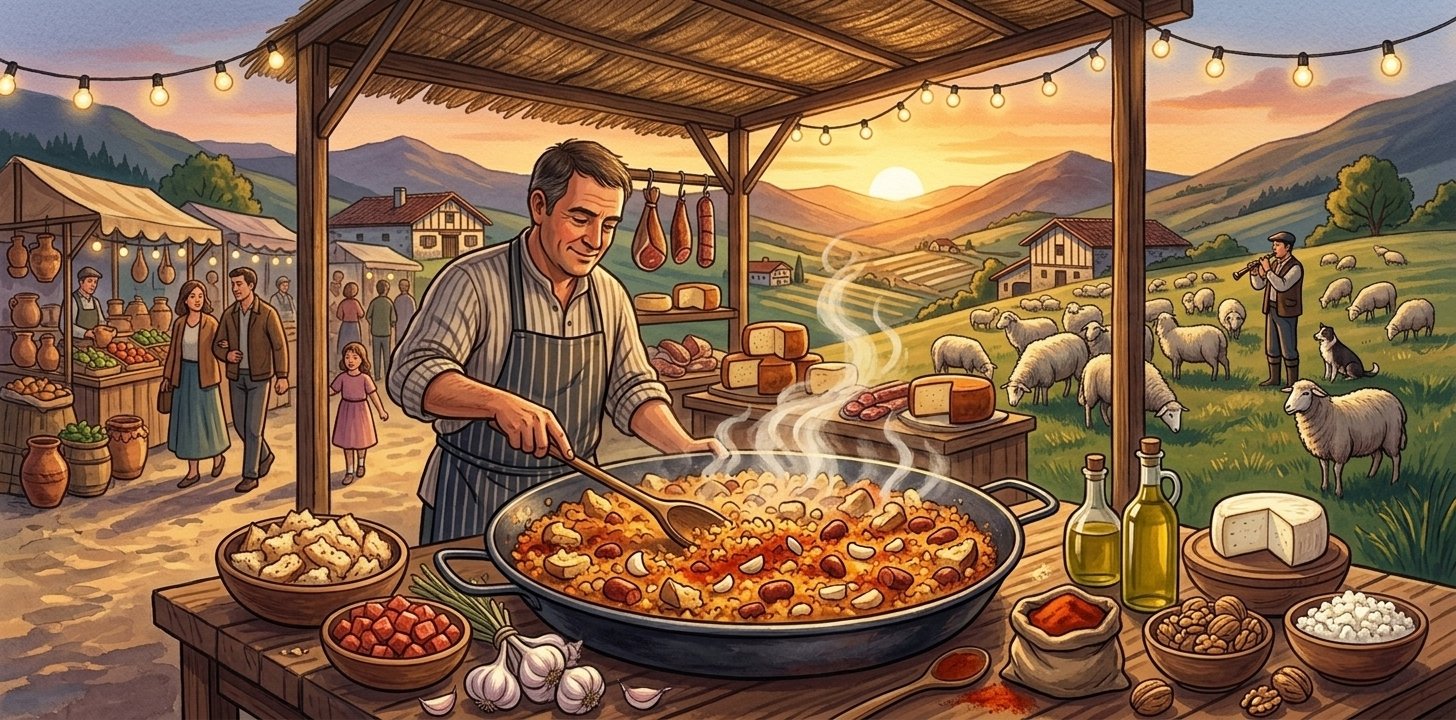
A pan of migas starts with something wonderfully ordinary: stale bread. Add olive oil, garlic, paprika, and a few pieces of chorizo, and those dry crumbs turn into something warm, savoury, and surprisingly irresistible. Each bite has a little crispness, a little softness, and plenty of flavour from the ingredients cooked alongside it.
Migas has deep roots in Spain’s rural cooking, especially among shepherds and agricultural workers who needed filling food from ingredients that could travel and last. Different regions developed their own versions, but they all share the same clever idea: never waste good bread.
From Stale Bread to a Proper Meal
The word migas means “crumbs,” which perfectly describes the dish. Traditionally, cooks tear or chop leftover bread into small pieces, moisten it slightly, and fry it slowly with olive oil and garlic.
The technique makes sense for a shepherd’s kitchen. Fresh bread does not stay fresh forever, but stale bread can sit for days and still become the foundation of a satisfying meal. With a little water and some patience, those hard pieces soften and absorb the flavours from the pan.
Over time, different regions began adding their own ingredients. Migas extremeñas often feature paprika and pork products, while versions from Andalusia, Aragón, Murcia, and other areas have their own combinations of meat, vegetables, and accompaniments.
The Bread Does the Heavy Lifting
The best Spanish migas starts with sturdy, day-old bread. Fresh bread contains too much moisture and can turn mushy when you add water. Stale bread, on the other hand, absorbs just enough moisture to become tender while keeping some texture.
Cut or tear the bread into small pieces, then sprinkle it lightly with water. Do not soak it. The goal is to soften the crumbs just enough for them to cook evenly.
After that, let the bread rest for a while. This gives the moisture time to spread through the pieces instead of leaving some crumbs wet and others completely dry.
Garlic and Olive Oil Bring Migas to Life
Heat olive oil in a wide frying pan and add whole or sliced garlic. Let it cook gently until golden, then add your chosen meat or other ingredients.
Chorizo is a popular addition because its paprika-rich oils spread through the pan. Bacon, pancetta, or other cured pork can also add plenty of savoury flavour. Meanwhile, sweet paprika gives the crumbs their warm colour and unmistakable Spanish character.
Once the seasonings are ready, add the moistened bread. Keep stirring and turning the crumbs so they pick up the flavoured oil evenly.
The Secret Is Patience
Migas does not need complicated cooking, but it does need attention. Keep the heat moderate and stir regularly as the bread cooks.
At first, the crumbs may look soft and slightly clumpy. Gradually, however, the moisture cooks away. The pieces separate, become lighter, and begin developing golden edges.
That is when the texture becomes especially good. Some crumbs stay tender, while others turn slightly crisp. You want enough moisture to keep the dish pleasant to eat without leaving it wet or heavy.
Every Region Has Its Own Migas
There is no single recipe for migas across Spain. In some places, cooks serve it with fried green peppers. Others add grapes, which provide a burst of sweetness against the salty crumbs.
Andalusia has several versions, while Migas Extremeñas is strongly associated with Extremadura. Aragón also has its own traditional style. Some versions use flour rather than bread, showing just how varied the wider Spanish migas tradition can be.
That regional variety makes migas particularly interesting. The basic idea stays humble, but each place turns it into something slightly different.
A Shepherd’s Dish That Still Belongs at Home
Today, you do not need to spend your days tending sheep to appreciate migas. It works beautifully as a rustic lunch, a side dish, or a comforting way to use leftover bread.
Serve it hot, straight from the pan, with fried peppers, grapes, or a few pieces of chorizo alongside. The best part is knowing that the dish began with something many kitchens might simply throw away.
Migas takes yesterday’s bread and gives it another chance. With garlic, olive oil, paprika, and a little time, those crumbs become a dish worth sitting down for.
Migas Recipe
Ingredients
- 400 g day-old rustic bread
- 100 g cooking chorizo, sliced
- 100 g bacon, diced
- 5 garlic cloves
- 4 tbsp olive oil
- 1 tsp sweet paprika
- 100 ml water
- Salt, to taste
- Fresh parsley, optional
- Green grapes or fried green peppers, for serving
Method
- Prepare the bread: Tear the stale bread into small pieces. Sprinkle the water over it gradually, tossing as you go. The bread should feel slightly damp, not soaked.
- Let it rest: Cover the moistened bread with a clean kitchen towel and leave it for at least 30 minutes. This allows the moisture to spread evenly.
- Cook the garlic and meat: Heat the olive oil in a wide frying pan. Add the garlic and cook until lightly golden. Remove it if you want a milder garlic flavour. Add the chorizo and bacon and cook until they release their oils and become golden.
- Add the paprika: Lower the heat and stir in the paprika. Keep it moving so it does not burn.
- Add the bread: Tip the moistened bread into the pan. Stir thoroughly so the crumbs pick up the seasoned oil.
- Cook slowly: Keep cooking over medium-low heat, stirring and turning the crumbs regularly. After about 20 to 30 minutes, the moisture will cook away and the migas will become loose, golden, and lightly crisp in places.
- Season: Taste and add salt only if needed, as the bacon and chorizo already bring plenty of seasoning.
- Serve: Spoon the migas onto plates while hot. Serve with green grapes, fried green peppers, or extra chorizo.


