
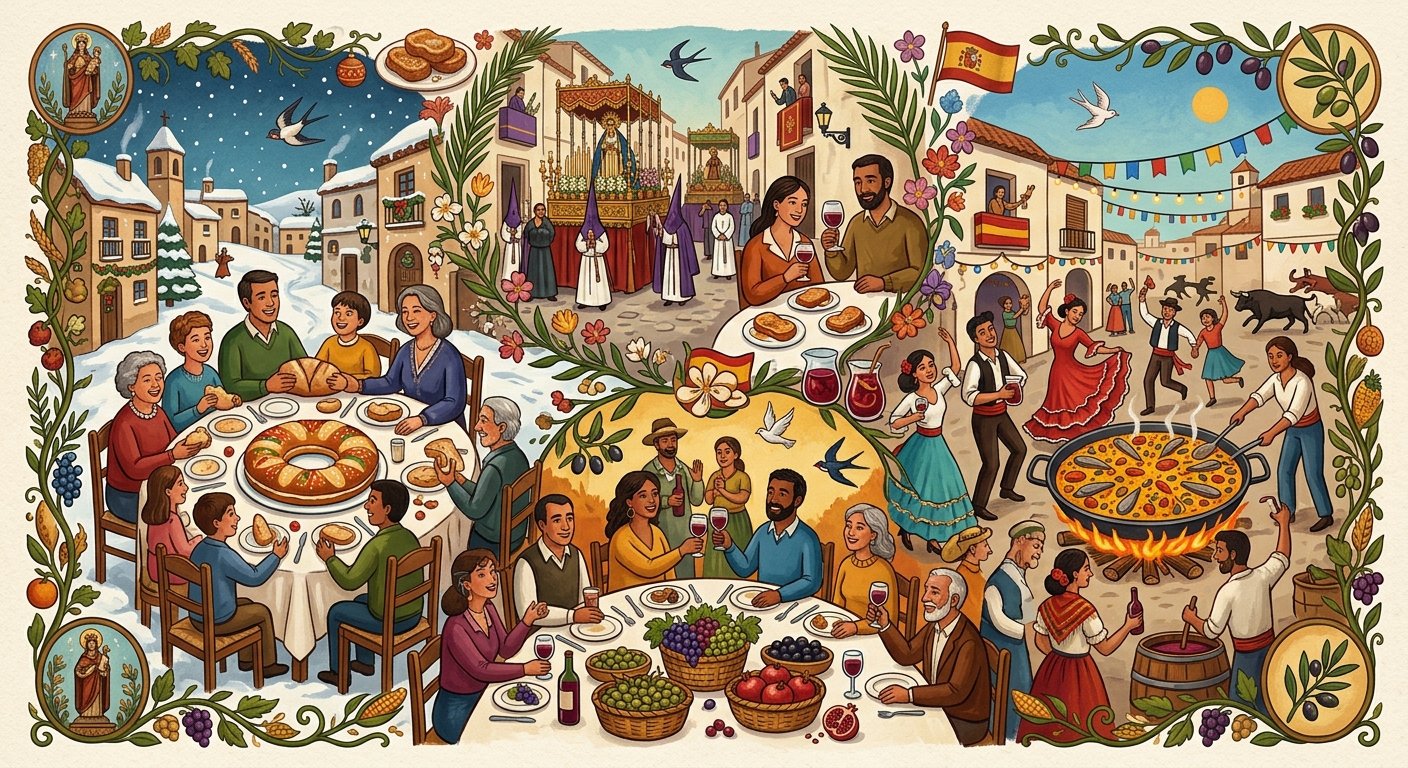
In Spain, the calendar rarely passes without a reason to gather around a table. January brings sweet pastries and family celebrations, spring fills streets with processions and fairs, summer turns villages into open-air parties, and autumn brings harvests and local food festivals. Spanish fiestas are not simply events to watch. Food sits right in the middle of them.
Spain has hundreds of local celebrations alongside nationwide traditions such as Carnival, Easter, Christmas, and New Year’s Eve. Many towns also have their own annual fiesta, often built around a local ingredient, saint, historical event, or seasonal tradition.
January Begins With Something Sweet
The Spanish festive year begins with Three Kings’ Day, celebrated on 6 January. The evening before, the Reyes Magos parades fill towns and cities, and families gather for one final celebration after Christmas.
At the table, Roscón de Reyes takes centre stage. This ring-shaped sweet bread has a soft, fragrant crumb and a colourful topping of candied fruit. A small figurine hides inside, turning dessert into a little game. Whoever finds it traditionally receives good luck, although customs surrounding the hidden figure vary.
Spring Brings Festivals to the Streets
By March, Las Fallas transforms Valencia. Enormous satirical figures fill the streets before being set ablaze during the festival’s spectacular finale. Food naturally follows the crowds, with stalls and local treats providing something to eat while people move between celebrations.
Easter brings a completely different atmosphere. During Semana Santa, religious processions fill cities across Spain, particularly Seville, Málaga, Valladolid, and other historic centres. The food becomes equally traditional, with dishes such as torrijas, a sweet made by soaking bread in milk or another liquid before frying and coating it with sugar or other toppings. Spain’s Easter traditions vary considerably by region, so the table changes as much as the processions do.
Summer Means Eating Outdoors
When summer arrives, Spanish fiestas move into a different gear. San Fermín in Pamplona, the bonfires of San Juan, and countless local celebrations bring music, dancing, fireworks, and food into the streets. Summer is also the season when many Spanish towns hold their main annual fiestas.
At these gatherings, food often becomes wonderfully informal. Grilled meats, sausages, sandwiches, local cheeses, cured meats, fried foods, and regional specialities can appear at communal tables and temporary stalls. The exact menu depends on where you are, because Spanish fiesta food is closely tied to local ingredients and traditions.
Tomatoes Take Over Buñol
Then comes one of Spain’s most unusual food celebrations: La Tomatina in Buñol. Participants gather for a gigantic tomato fight, turning the streets into a sea of red. The festival is playful rather than a celebration centred on eating the tomatoes, but it demonstrates just how dramatically food can become part of a Spanish festival’s identity. Spain’s official tourism calendar lists La Tomatina among the country’s major summer fiestas.
Elsewhere, summer celebrations might focus on seafood, wine, cheese, fruit, or another local speciality. Spain’s official tourism site lists numerous gastronomic fairs and festivals dedicated to regional foods and wines.
Autumn Brings the Harvest
As temperatures fall, the focus shifts towards the products of the harvest. Wine festivals celebrate the grape harvest in wine-producing regions, while local fairs put seasonal ingredients at the centre of the festivities.
Jerez, for example, holds grape harvest celebrations, while other parts of Spain organise events around cheese, cider, ham, seafood, and agricultural products. These occasions connect food with the landscape that produces it. The ingredient on the plate is not just something to taste. It represents the work, climate, and traditions of the region.
Christmas Ends the Year With a Feast
Then the cycle comes around again. Spanish Christmas food tends to be generous, with long meals featuring starters such as Iberian ham, cheeses, seafood, and preserves before substantial main courses arrive. Depending on the region, the table may hold stews, soups, roast lamb, suckling pig, or baked fish.
Dessert brings another wave of treats, including turrón, marzipan, Christmas biscuits, and Roscón de Reyes as the season moves towards January. And on New Year’s Eve, twelve grapes take over the spotlight. People traditionally eat one grape with each stroke of midnight, hoping to bring good fortune for the coming year.
A Calendar You Can Taste
What makes Spanish fiestas and food so closely connected is the sheer variety. There is no single festival menu and no one way to celebrate. A religious procession might end with a traditional sweet, a summer fiesta might revolve around grilled food and drinks, and a harvest celebration might put one local ingredient on a pedestal.
Across the year, food follows the seasons, the regions, and the people celebrating them. That makes Spain’s festival calendar feel almost edible. Follow it from January to December and you get more than a list of celebrations. You get a year-long tour through the country’s flavours, traditions, and local identities.


