
Discover the history, traditions, atmosphere, and timeless appeal of the Trattoria, Italy’s beloved neighborhood restaurant where homemade food, regional recipes, and warm hospitality come together.
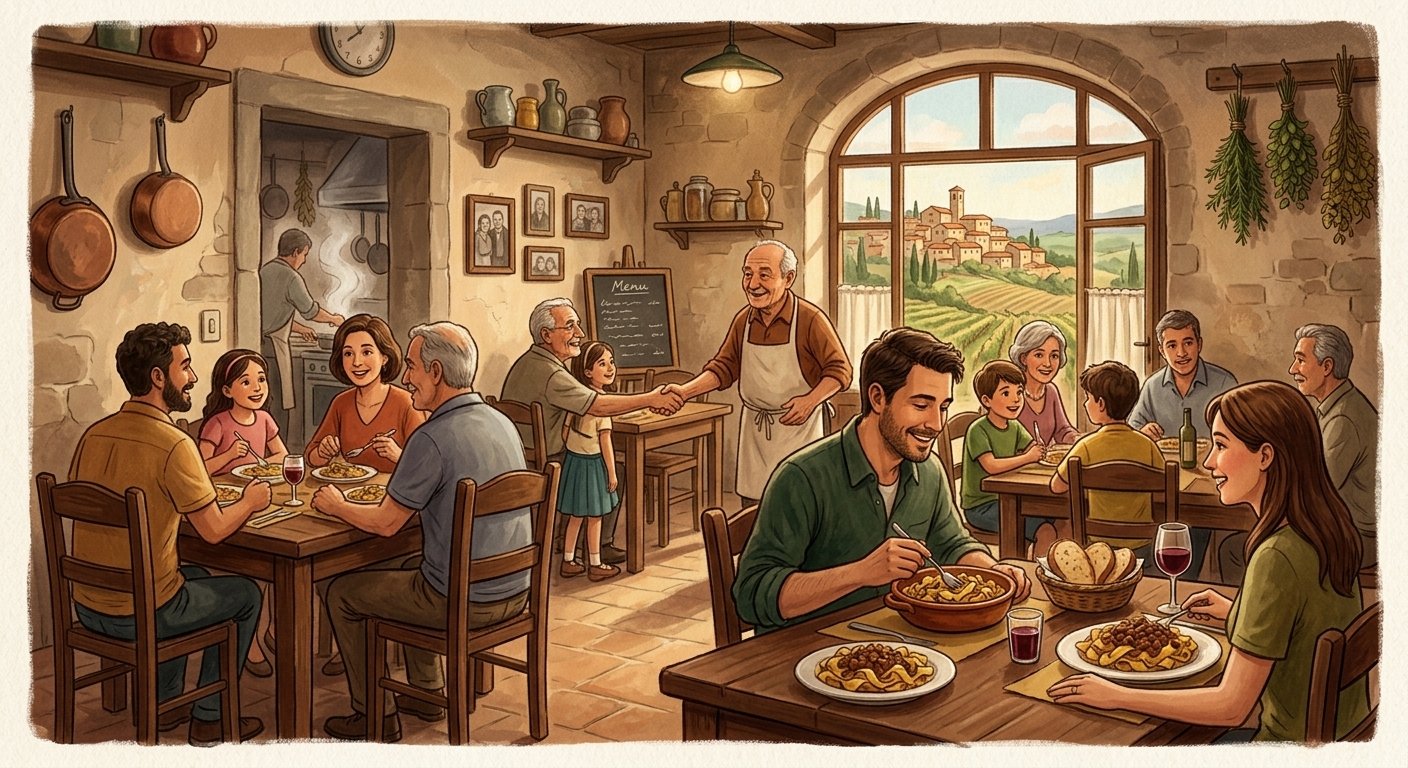
The first time I walked into a small trattoria in Tuscany, I almost passed it by. There was no grand entrance, no elaborate menu displayed outside, and no formal dress code. Inside, a few wooden tables were filled with local families enjoying long lunches while the owner greeted nearly every guest by name. The menu was handwritten, featuring only a handful of dishes prepared with seasonal ingredients. One bowl of handmade pappardelle with wild boar ragù was enough to convince me that some of Italy’s finest meals are found in its simplest restaurants.
That afternoon taught me that a trattoria is more than a place to eat. It is where local traditions, family recipes, and community life meet around the table.
What Is a Trattoria?
A trattoria is a traditional Italian restaurant known for serving simple, homemade regional cuisine in a relaxed and welcoming setting. Unlike formal restaurants, trattorias emphasize comfort, generous portions, seasonal ingredients, and affordable prices.
Many trattorias are family-owned businesses that pass recipes from one generation to the next. Rather than offering elaborate international menus, they typically focus on dishes closely connected to their local region.
Across Italy, the trattoria represents everyday dining at its most authentic.
The History of the Trattoria
The word trattoria comes from the Italian verb trattare, meaning “to treat” or “to provide hospitality.”
Trattorias began appearing during the 18th and 19th centuries as simple eating houses serving travelers, workers, merchants, and local residents. Unlike elegant restaurants that catered to wealthy guests, trattorias offered hearty homemade meals prepared from locally available ingredients.
As Italian cities grew during the 19th and early 20th centuries, family-run trattorias became gathering places where neighbors shared meals, celebrated special occasions, and preserved regional culinary traditions.
Today, they remain one of the defining features of Italian food culture.
What Makes a Trattoria Different?
Although every trattoria has its own personality, several characteristics remain consistent.
Most trattorias offer:
- Family-style hospitality
- Regional recipes
- Seasonal ingredients
- Homemade pasta
- Affordable prices
- Relaxed atmosphere
Rather than focusing on luxury, they celebrate honest cooking prepared with care.
Trattoria vs. Osteria vs. Ristorante
Italy has several different types of dining establishments.
Trattoria
A trattoria typically offers:
- Homemade regional food
- Informal service
- Moderate prices
- Family atmosphere
Osteria
Traditionally, an osteria focused on wine and simple meals. Modern osterias often resemble trattorias but may feature shorter menus and stronger emphasis on local wines.
Ristorante
A ristorante generally provides:
- More formal service
- Extensive menus
- Elegant presentation
- Higher prices
While the distinctions have become less rigid over time, these traditional differences still help diners understand what to expect.
The Menu at a Traditional Trattoria
Menus vary by region and season, but many trattorias follow the classic structure of an Italian meal.
Typical offerings include:
Antipasti
- Bruschetta
- Cured meats
- Local cheeses
- Marinated vegetables
Primi
- Fresh pasta
- Risotto
- Gnocchi
- Soup
Secondi
- Roasted meats
- Grilled fish
- Braised beef
- Chicken dishes
Contorni
- Seasonal vegetables
- Potatoes
- Salads
Dolci
- Tiramisu
- Panna cotta
- Crostata
- Gelato
Many menus change daily depending on what is fresh at local markets.
A Celebration of Regional Cuisine
One of the greatest strengths of the trattoria is its commitment to local food traditions.
For example:
- Tuscany serves Bistecca alla Fiorentina and Ribollita.
- Emilia-Romagna specializes in handmade tortellini and ragù.
- Sicily offers Caponata and Pasta alla Norma.
- Veneto features Risi e Bisi and seafood risotto.
- Piedmont highlights Tajarin pasta and truffles.
Rather than trying to represent all of Italy, each trattoria proudly celebrates its own region.
The Atmosphere
Dining in a trattoria feels comfortable rather than formal.
Guests often notice:
- Wooden tables
- Handwritten menus
- Family photographs
- Friendly conversation
- Local wines
- Slow, relaxed meals
Meals are rarely rushed. Instead, they encourage conversation, laughter, and time spent together.
Why Seasonal Ingredients Matter
Most traditional trattorias build their menus around seasonal produce.
Spring may feature:
- Asparagus
- Fresh peas
- Artichokes
Summer brings:
- Tomatoes
- Zucchini
- Eggplant
Autumn highlights:
- Porcini mushrooms
- Truffles
- Chestnuts
Winter emphasizes:
- Braised meats
- Root vegetables
- Hearty soups
This seasonal approach keeps menus fresh while supporting local farmers and producers.
Whenever I visit a new town in Italy, I usually look for a family-run trattoria instead of the busiest tourist restaurant. The menu may be shorter, but the food often reflects generations of local cooking and introduces me to dishes I might never have discovered otherwise.
The Trattoria in Modern Italy
Modern trattorias continue to evolve while remaining faithful to their roots.
Many now combine traditional family recipes with contemporary presentation or locally sourced organic ingredients. Some have earned international recognition without losing the warmth and simplicity that define the trattoria experience.
Even as Italian dining changes, these neighborhood restaurants remain places where recipes, stories, and hospitality pass from one generation to the next.
Why the Trattoria Represents Italian Culture
The trattoria is much more than a restaurant. It represents the Italian belief that food should bring people together, celebrate local traditions, and honor seasonal ingredients.
Rather than focusing on luxury or elaborate techniques, it values authenticity, generosity, and community. Every meal reflects the history of a region, the pride of its cooks, and the joy of sharing good food around the table.
Whether tucked away in a Tuscan village, a Roman side street, or a Sicilian seaside town, the trattoria continues to offer one of the most genuine and memorable experiences in Italian cuisine.
Classic Pappardelle al Ragù Recipe
Ingredients
- 400 g fresh pappardelle
- 500 g beef or wild boar mince
- 2 tablespoons extra virgin olive oil
- 1 onion, finely chopped
- 1 carrot, finely chopped
- 1 celery stalk, finely chopped
- 150 ml dry red wine
- 400 g San Marzano tomatoes, crushed
- 2 tablespoons tomato paste
- 2 bay leaves
- 70 g freshly grated Parmigiano Reggiano
- Salt and freshly ground black pepper
Instructions
- Heat the olive oil in a large pot.
- Cook the onion, carrot, and celery until softened.
- Add the meat and brown thoroughly.
- Stir in the tomato paste and cook for 2 minutes.
- Pour in the red wine and allow it to reduce.
- Add the crushed tomatoes and bay leaves.
- Simmer gently for about 2 hours, stirring occasionally.
- Cook the pappardelle until al dente.
- Toss the pasta with the ragù and finish with Parmigiano Reggiano.
Serving Suggestions
Serve Pappardelle al Ragù with crusty Italian bread and a fresh green salad. Pair it with Chianti Classico, Barbera, or Sangiovese for a traditional trattoria-style meal, and finish with tiramisu or panna cotta for dessert.
Preparation Time: 20 minutes
Cooking Time: 2 hours 15 minutes
Servings: 4


