
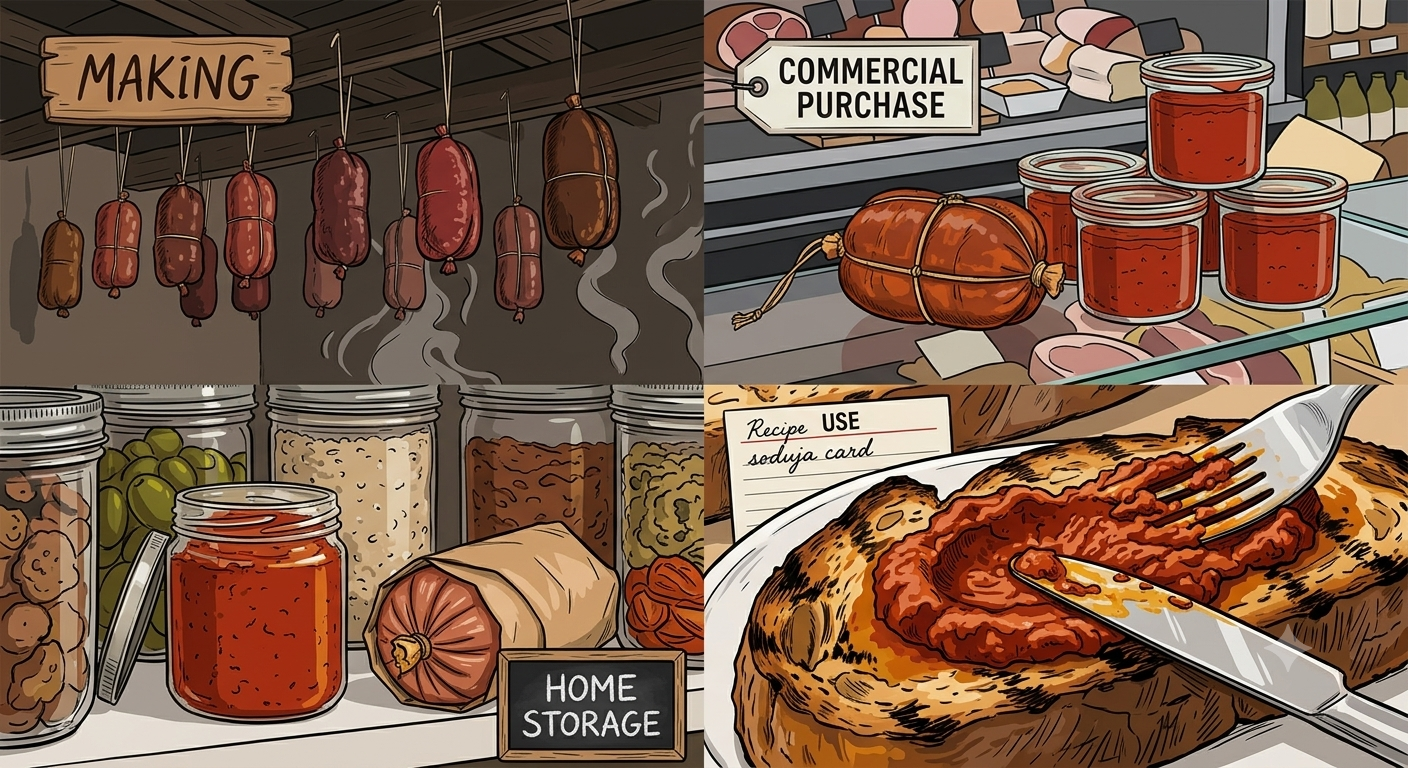
Discover the history, production, culinary uses, and authentic recipe featuring ’Nduja, Calabria’s famous spicy spreadable salami that has become one of Italy’s most exciting regional specialties.
The first time I tasted ’Nduja, I expected it to behave like an ordinary salami. Instead, the moment it touched warm toasted bread, it softened into a rich, spicy spread that filled the kitchen with the smoky aroma of chili peppers. The heat arrived gradually rather than all at once, followed by a deep savory richness that lingered pleasantly.
I quickly understood why chefs love cooking with ’Nduja. A small spoonful could transform a simple pasta, pizza, or stew into something bold and memorable. It wasn’t just another cured meat—it was a flavor powerhouse that captured the fiery spirit of southern Italy.
What Is ’Nduja?
’Nduja is a traditional spreadable cured pork salami from the Calabria region in southern Italy. Unlike firm cured sausages, ’Nduja has a soft, almost buttery consistency because it contains a high proportion of pork fat blended with finely minced meat and generous amounts of Calabrian chili peppers.
After being seasoned, stuffed into natural casings, lightly smoked, and cured, the mixture develops a rich, spicy flavor and a smooth texture that spreads easily on warm bread or melts beautifully into cooked dishes.
Today, ’Nduja is considered one of Italy’s most distinctive regional specialties and has gained international popularity for its bold taste.
The History of ’Nduja
The origins of ’Nduja are closely linked to the small Calabrian town of Spilinga, where it has been produced for centuries.
Like many traditional Italian foods, it developed as a practical way to preserve pork after seasonal slaughter. Local families used less expensive cuts of meat together with pork fat and abundant Calabrian chili peppers, which acted as both seasoning and a natural preservative.
Over time, the recipe became deeply rooted in Calabrian culture. Today, Spilinga is still regarded as the birthplace of authentic ’Nduja, and the town even celebrates it with annual food festivals.
How ’Nduja Is Made
Traditional ’Nduja follows a carefully balanced curing process.
The basic steps include:
- Finely mincing pork meat and fat
- Mixing with generous amounts of Calabrian chili peppers
- Adding sea salt and spices
- Stuffing the mixture into natural casings
- Lightly smoking over hardwood
- Air-curing for several weeks or months
The combination of fat and chili peppers gives ’Nduja its signature spreadable consistency and vibrant red color.
Unlike many cured meats, it remains soft even after aging.
What Makes ’Nduja Unique?
Several qualities distinguish ’Nduja from other Italian cured meats.
Spreadable Texture
Its high fat content allows it to soften easily at room temperature and melt quickly when heated.
Bold Heat
Calabrian chili peppers provide a pleasant warmth rather than an overpowering burn, creating a balanced spicy flavor.
Smoky Aroma
Traditional smoking adds subtle depth that complements the richness of the pork.
Versatility
’Nduja works equally well as a spread, seasoning, or cooking ingredient.
’Nduja vs. Other Italian Cured Meats
Although often grouped with salami, ’Nduja is quite different from other Italian charcuterie.
Salami is firm enough to slice and is usually eaten cold.
Pancetta is cured pork belly used mainly for cooking and has no chili heat.
Guanciale comes from pork cheek and is prized for its rich fat in Roman pasta dishes.
’Nduja, however, is soft, spicy, and designed to spread or melt into sauces, making it unique among Italy’s cured meats.
Culinary Uses
Because it melts so easily, ’Nduja is incredibly versatile.
It is commonly used in:
- Pasta sauces
- Pizza
- Bruschetta
- Risotto
- Soups
- Stews
- Scrambled eggs
- Sandwiches
- Burgers
- Roasted vegetables
A small amount adds remarkable depth, spice, and richness to almost any savory dish.
Nutritional Benefits
’Nduja provides:
- High-quality protein
- Iron
- Vitamin B12
- Zinc
The Calabrian chili peppers also contain vitamin C and antioxidants. However, because ’Nduja is rich in fat and sodium, it is best enjoyed in moderation as a flavoring ingredient rather than a large serving.
Whenever I have a jar of ’Nduja in my refrigerator, I find myself adding a spoonful to simple tomato sauce. Within minutes, an ordinary pasta dinner develops a rich, smoky heat that tastes like it has been simmering for hours.
’Nduja in Modern Italian Cuisine
Today’s chefs have embraced ’Nduja far beyond Calabria.
It appears in gourmet pizzas, seafood pasta, roasted vegetables, artisan sandwiches, and even creative appetizers. Some chefs blend it into butter or mayonnaise, while others use it to season grilled seafood or roasted potatoes.
Despite these contemporary applications, the traditional Calabrian recipe remains at the heart of its identity.
Why ’Nduja Continues to Win Hearts
What makes ’Nduja so remarkable is its ability to deliver intense flavor with very little effort.
Its creamy texture, smoky aroma, and gentle heat embody the bold personality of Calabrian cuisine while remaining incredibly versatile in the kitchen.
Whether spread onto warm bread or stirred into a pasta sauce, ’Nduja demonstrates how regional Italian ingredients continue to inspire cooks around the world.
Spicy ’Nduja Pasta Recipe
Ingredients
- 300 g spaghetti or rigatoni
- 2 tablespoons ’Nduja
- 2 tablespoons extra virgin olive oil
- 2 garlic cloves, finely sliced
- 400 g canned crushed tomatoes
- 40 g grated Pecorino Romano or Parmesan
- Fresh basil leaves
- Freshly ground black pepper
Instructions
- Cook the pasta in salted boiling water until al dente.
- Heat the olive oil in a large skillet over medium heat.
- Add the garlic and cook until fragrant.
- Stir in the ’Nduja, allowing it to melt into the oil.
- Add the crushed tomatoes and simmer for 10–12 minutes.
- Reserve a little pasta water, then drain the pasta.
- Toss the pasta into the sauce, adding reserved pasta water if needed.
- Finish with grated Pecorino Romano, fresh basil, and black pepper.
Serving Suggestions
Serve the pasta with crusty Italian bread, a crisp green salad, or roasted vegetables. Garnish with additional Pecorino Romano and a drizzle of extra virgin olive oil for a classic Calabrian-inspired meal.
Preparation Time: 10 minutes
Cooking Time: 20 minutes
Servings: 4


