
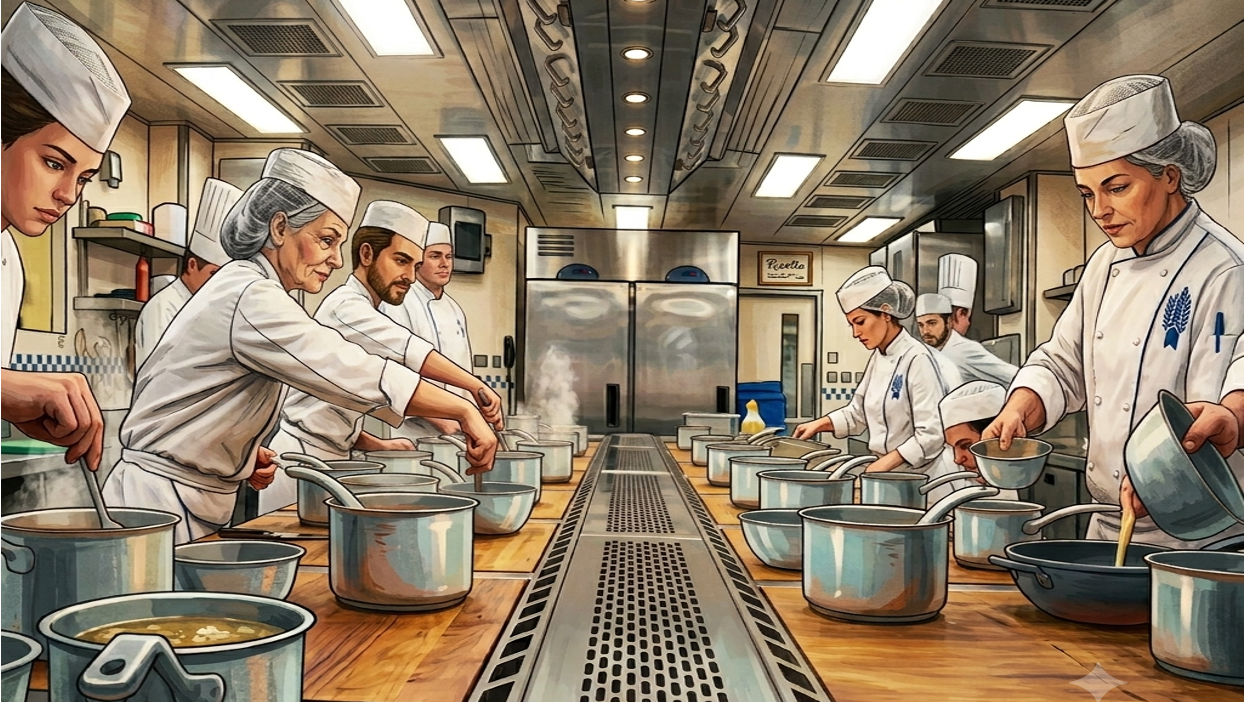
Discover how France’s world-renowned culinary schools have shaped generations of chefs and continue to uphold the traditions of haute cuisine.
The first time I watched a documentary about a French culinary school, I was amazed by the discipline in the kitchen. The Culinary Schools of France place a remarkable emphasis on this level of expertise. Students weren’t simply learning recipes—they were mastering knife skills, perfecting sauces, studying ingredients, and repeating the same techniques until they became second nature. It reminded me that behind every beautifully plated dish lies years of dedication and practice.
Since then, I’ve come to appreciate that France’s culinary schools are much more than educational institutions. They are guardians of a rich gastronomic heritage, preserving centuries-old techniques while inspiring the next generation of chefs to innovate. Whether you’re a professional cook or a passionate home chef, there’s something inspiring about the French approach to culinary education.
The Birth of Haute Cuisine
To understand the importance of French culinary schools, it’s helpful to first understand haute cuisine.
The term haute cuisine, meaning “high cuisine,” refers to the refined style of French cooking that emphasizes precision, quality ingredients, elegant presentation, and carefully balanced flavors. This culinary tradition began to take shape in the royal courts of France during the 17th and 18th centuries and later evolved through the work of legendary chefs such as Marie-Antoine Carême and Auguste Escoffier.
Escoffier, often called the father of modern French cuisine, introduced the brigade de cuisine system, which organized professional kitchens into specialized roles. His influence is still evident in restaurants and culinary schools worldwide.
Today, haute cuisine continues to represent excellence, craftsmanship, and respect for culinary tradition.
Why France Became a Global Culinary Leader
France has earned its reputation as one of the world’s culinary capitals through centuries of innovation, regional diversity, and a deep appreciation for food culture.
French cooking places equal importance on technique and ingredients. Rather than relying on complex seasoning, chefs focus on bringing out the natural flavors of fresh produce, premium meats, seafood, dairy, and herbs.
This philosophy has influenced professional kitchens across Europe, Asia, the Americas, and beyond. Many of the cooking methods taught in culinary schools around the world—such as sautéing, braising, poaching, and making classic mother sauces—have their roots in French cuisine.
The Role of French Culinary Schools
French culinary schools are known for their structured and rigorous approach to training. Students begin with the fundamentals before progressing to more advanced techniques.
Typical areas of study include:
- Knife skills
- Food safety and hygiene
- Classical cooking techniques
- Sauce preparation
- Pastry and baking
- Butchery and seafood preparation
- Menu planning
- Kitchen management
- Plating and presentation
- Wine and food pairing
Rather than memorizing recipes, students learn why techniques work, allowing them to adapt confidently to different ingredients and cuisines.
Famous Culinary Schools in France
France is home to several internationally respected culinary institutions.
Le Cordon Bleu
Founded in Paris in 1895, Le Cordon Bleu is perhaps the world’s best-known culinary school. It offers professional programs in cuisine, pastry, bakery, hospitality, and wine studies, attracting students from more than 100 countries.
Institut Paul Bocuse (Institut Lyfe)
Named after legendary chef Paul Bocuse, this institution combines culinary arts with hospitality management and innovation. It is recognized for blending classical French techniques with modern gastronomy.
École Ferrandi Paris
Often called the “Harvard of Gastronomy,” Ferrandi Paris provides comprehensive training in cuisine, pastry, baking, hospitality, and restaurant management. Its graduates are highly sought after by Michelin-starred restaurants worldwide.
Alain Ducasse Education
Founded by celebrated chef Alain Ducasse, this school emphasizes sustainability, creativity, and excellence while remaining deeply rooted in French culinary traditions.
Each institution contributes to preserving the principles of haute cuisine while preparing students for today’s evolving hospitality industry.
Learning Beyond Recipes
One of the defining features of French culinary education is its focus on discipline and repetition.
Students may spend weeks perfecting a single skill, such as making an omelet, preparing a velouté sauce, or filleting a fish. At first, this level of practice may seem repetitive. However, it builds confidence and consistency—qualities that are essential in professional kitchens.
Whenever I try to master a new cooking technique at home, I’m reminded that improvement rarely comes from doing something once. It comes from practicing patiently until the movement becomes natural. French culinary schools embrace this philosophy every day.
The Influence of Haute Cuisine Around the World
The teachings of French culinary schools extend far beyond France.
Many renowned chefs who trained in French institutions have gone on to open restaurants around the world, blending classical techniques with local ingredients and traditions.
As a result, French methods continue to influence cuisines ranging from Japanese fine dining and modern Nordic cooking to contemporary Indian and Latin American gastronomy.
The language of professional kitchens also reflects this influence. Terms such as mise en place, julienne, roux, consommé, and sous-vide are now used internationally.
French Culinary Education Today
Modern culinary schools continue to honor classical techniques while embracing contemporary trends.
Students now study topics such as:
- Sustainable sourcing
- Plant-based cuisine
- Food innovation
- Nutrition
- Zero-waste cooking
- Digital restaurant management
- International culinary trends
This balance between tradition and innovation ensures that graduates are prepared for the future while respecting the foundations of French gastronomy.
Why French Culinary Schools Continue to Inspire
What I admire most about French culinary education is its belief that excellence is achieved through patience, curiosity, and continuous learning. Every perfectly sliced vegetable, every carefully whisked sauce, and every beautifully plated dessert reflects countless hours of practice.
Whether or not we attend a professional culinary school, we can all learn from this mindset. Great cooking isn’t about shortcuts or expensive ingredients—it’s about respecting the craft, understanding the techniques, and taking pride in every meal we prepare.
In many ways, that’s the true legacy of France’s haute cuisine tradition. It reminds us that cooking is not only a practical skill but also an art form that deserves time, dedication, and passion.
Classic French Velouté Sauce Recipe
Ingredients
- 2 tablespoons unsalted butter
- 2 tablespoons all-purpose flour
- 2 cups chicken or vegetable stock
- Salt and white pepper to taste
- A pinch of nutmeg (optional)
Instructions
- Melt the butter in a saucepan over medium heat.
- Add the flour and whisk continuously for 2–3 minutes to create a blond roux.
- Gradually pour in the warm stock while whisking to prevent lumps.
- Bring the mixture to a gentle simmer.
- Cook for 15–20 minutes, stirring occasionally, until the sauce thickens.
- Season with salt, white pepper, and nutmeg if desired.
- Strain for an extra-smooth finish before serving.
Serving Suggestions
Velouté sauce pairs beautifully with roasted chicken, poached fish, steamed vegetables, pasta, or as the base for many classic French sauces.
Preparation Time: 10 minutes
Cooking Time: 20 minutes
Servings: Makes about 2 cups


