
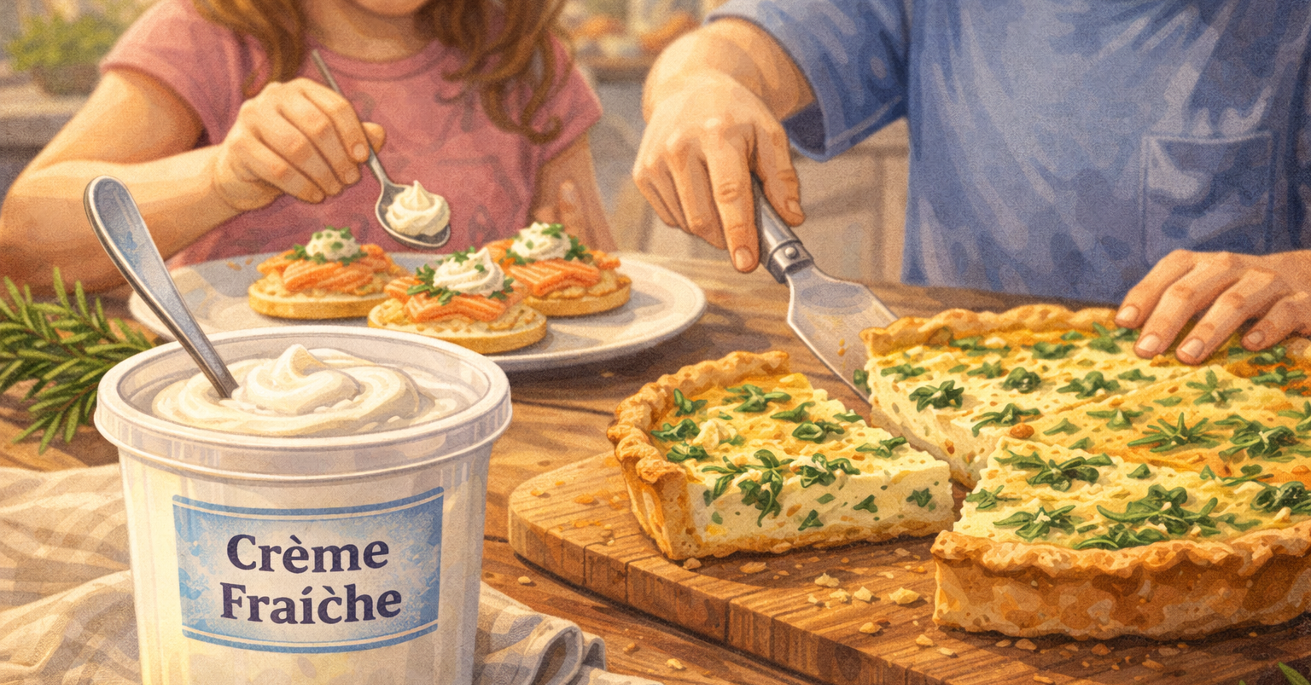
Crème fraîche is a rich dairy product that holds a special place in French cooking. Thick, smooth, and gently tangy, it adds depth without overpowering other ingredients. Unlike standard cream, it is lightly fermented, which gives it structure and subtle acidity.
Because of this balance, it works beautifully in savoury dishes as well as desserts. It melts smoothly and enhances texture without splitting, which makes it especially useful in warm preparations.
Crème fraîche and Its Role in French Kitchens
Crème fraîche developed naturally in traditional dairies. In earlier times, fresh cream left at room temperature would ferment due to natural bacteria. This process thickened the cream and created the mild tang that defines it.
French cooks soon recognised its value. It became essential in sauces, gratins, soups, and stews. Unlike some dairy products, it resists curdling when heated, which makes it dependable in everyday cooking.
Today, it remains common in both home kitchens and professional restaurants.
Understanding Cultured French Cream
Cultured French cream differs from sour cream in texture and flavour. It usually contains a higher fat content, which gives it a smoother mouthfeel and less sharp acidity.
The fermentation process produces lactic acid that thickens the cream naturally. As a result, this cultured dairy product stays stable when stirred into hot sauces or soups. That stability explains why many chefs prefer it for finishing dishes.
Its texture feels rich yet controlled.
Why This Fermented Cream Is So Versatile
Crème fraîche adapts easily to many recipes. In savoury cooking, it adds body to pasta sauces or balances acidity in tomato-based dishes. For example, stirring a spoonful into mushroom soup creates silkiness without masking flavour.
In desserts, it pairs well with berries or fruit tarts. The gentle tang offsets sweetness and creates contrast. Some bakers even fold it into cake batter to improve moisture.
This flexibility keeps it relevant in modern kitchens.
Traditional Crème fraîche Recipe
Making crème fraîche at home requires only two ingredients and a little patience.
Ingredients:
- 250 ml double cream
- 1 tablespoon natural live yoghurt or buttermilk
Method:
- Pour the double cream into a clean jar.
- Stir in the yoghurt or buttermilk until fully combined.
- Cover loosely and leave at room temperature for 12–24 hours.
- Once thickened, refrigerate for several hours before using.
The finished result should feel thick, smooth, and lightly tangy.
Serving Cultured French Cream
Cultured French cream is often served simply. A spoonful on roasted vegetables or baked potatoes adds richness without overwhelming the dish. It also complements smoked salmon and fresh herbs.
In classic French cuisine, it is stirred into pan sauces just before serving. Because it stays stable under heat, it creates a glossy finish.
Even desserts benefit from a small dollop alongside warm fruit.
Why Crème fraîche Still Matters
Crème fraîche remains valued because it enhances flavour naturally. Rather than dominating a dish, it supports other ingredients.
In a world of processed substitutes, this fermented cream still represents careful preparation and tradition. Through balance and gentle acidity, it continues to reflect the elegance of French cooking.


