
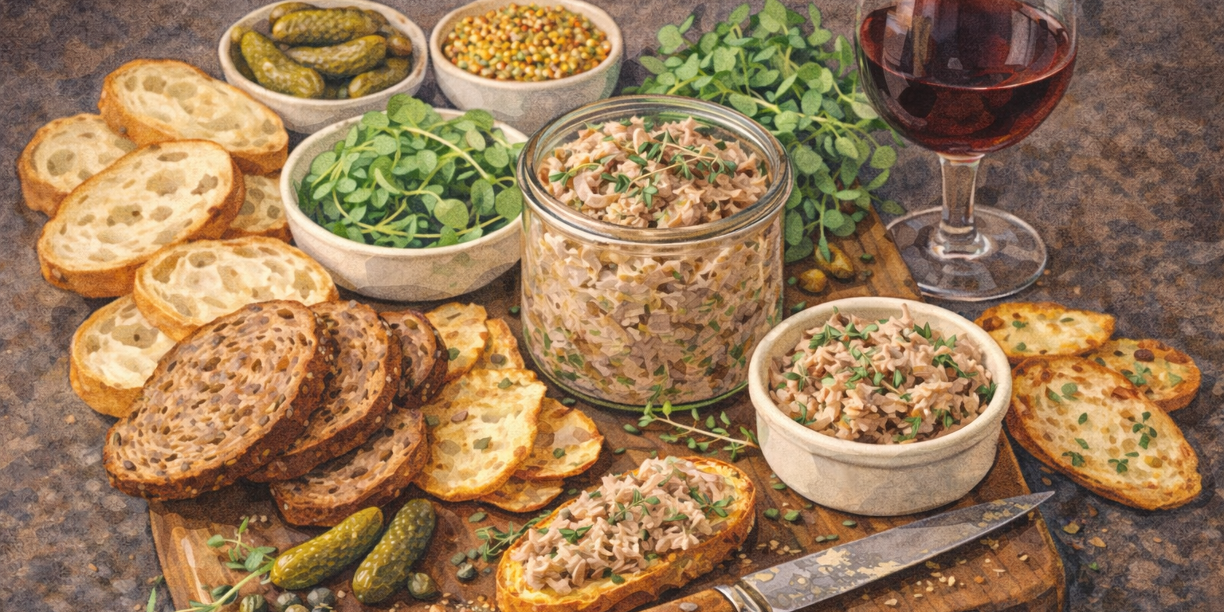
Rillettes is one of the most comforting preparations in French country cooking. At first glance, it looks like a simple meat spread, yet its flavour tells a deeper story of patience and slow cooking. Traditionally made from pork, rillettes transforms humble ingredients into something rich and satisfying.
Although often served as part of a charcuterie board, rillettes began as a practical preservation method. Today, it remains a beloved example of how time and technique can elevate simple food.
Rillettes and Its Role in French Charcuterie
Rillettes holds a respected place in French charcuterie traditions. Unlike cured sausages or pâtés, this preparation relies on long, gentle cooking rather than drying or baking.
In regions such as Tours and Le Mans, cooks perfected rillettes by simmering pork slowly in its own fat. This slow process allowed the meat to become tender enough to shred easily. Once cooled, the mixture set into a spreadable texture protected by a thin layer of fat.
Over time, what began as preservation became a regional speciality.
Understanding the French Slow-Cooked Meat Spread
This French slow-cooked meat spread follows a straightforward principle: low heat and patience. Pork shoulder is most commonly used because it contains the right balance of lean meat and fat.
The meat cooks gently for several hours with salt, pepper, and sometimes garlic or herbs. As it softens, it is shredded and mixed with its cooking fat. Once packed into jars or dishes, the mixture cools and firms slightly.
The result is neither smooth like pâté nor coarse like sausage. Instead, it sits somewhere in between.
Why Rillettes Taste Rich but Balanced
Rillettes tastes rich because of the slow cooking in fat. However, it should never feel greasy. The key lies in proportion. Too much fat makes it heavy, while too little can dry it out.
When prepared properly, the flavour feels deep yet rounded. A touch of pepper adds warmth without overpowering the meat. Some variations include duck or goose instead of pork, creating slightly different textures and aromas.
Simple ingredients remain the focus.
Traditional Rillettes Recipe
Making rillettes at home requires time rather than complicated technique.
Ingredients:
- 1 kg pork shoulder, cut into chunks
- 300 g pork fat
- 2 teaspoons salt
- 1 teaspoon freshly ground black pepper
- 2 cloves garlic, lightly crushed
- 1 bay leaf
Method:
- Place the pork shoulder and pork fat into a heavy pot.
- Add salt, pepper, garlic, and bay leaf.
- Cook gently over very low heat for 3 to 4 hours, stirring occasionally. The meat should become extremely tender.
- Remove the bay leaf and garlic.
- Shred the meat using two forks, mixing it with some of the melted fat until moist but not oily.
- Pack the mixture firmly into jars or small dishes.
- Pour a thin layer of melted fat over the top to seal.
- Allow to cool completely before refrigerating.
Serve chilled but not cold, so the texture remains soft and spreadable.
How to Serve the French Slow-Cooked Meat Spread
The French slow-cooked meat spread is usually served simply. Crusty bread provides texture. Cornichons or mustard add acidity to balance the richness.
It works well as a starter, a light lunch, or part of a sharing platter. Because it can be made ahead, it suits gatherings and relaxed meals.
The simplicity of the serving style reflects its rural origins.
Why Rillettes Still Matters Today
Rillettes remains popular because it connects modern cooking to traditional values. It shows how patience can transform affordable cuts into something special.
In contemporary kitchens, chefs sometimes experiment with duck or even fish versions. Yet the core idea remains unchanged: slow cooking, careful seasoning, and balance.
Through restraint and respect for ingredients, rillettes continues to represent the heart of French country cuisine.


