
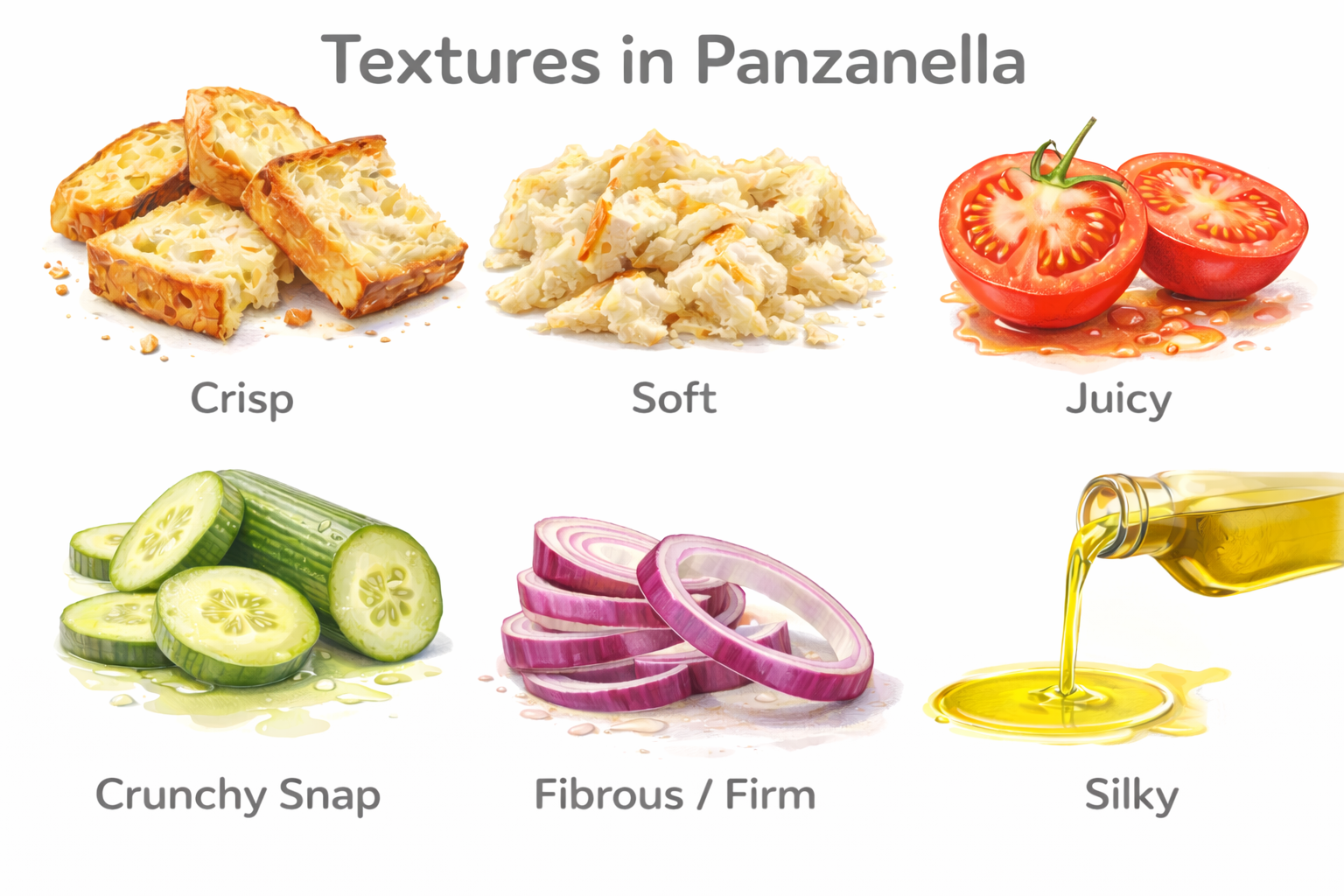
Italian cooks think about texture as carefully as they think about flavor. Food should feel good to eat, not just taste good. This way of thinking explains why Italian dishes feel balanced and comforting instead of heavy or tiring.
Texture shapes the eating experience from start to finish. It affects how ingredients are prepared, how they cook, and how satisfying the final dish feels.
How Italian Cooks Think About Texture From the First Cut
Italian cooks think about texture even before the stove is turned on. The way ingredients are cut sets the direction for the entire dish.
Finely chopped onions melt into sauces, while larger pieces keep a gentle bite. Tomatoes may be crushed by hand for a rustic feel or passed smooth for a silky sauce. Garlic can be sliced, smashed, or left whole depending on how noticeable it should feel in the mouth.
These early decisions quietly shape the final texture long before cooking begins.
Balance Matters More Than Extremes
Italian cooking avoids extremes. Too much softness can make food feel dull. Too much crunch can feel harsh. Balance keeps eating enjoyable.
Pasta holds a slight firmness while sauces stay smooth. Bread offers a crisp crust with a soft interior. Vegetables soften without losing their shape. Each element supports the others instead of competing.
This balance keeps every bite interesting without overwhelming the palate.
How Italian Cooks Think About Texture and the Role of Al Dente
The idea of al dente shows how strongly texture matters in Italian cooking. Pasta, vegetables, and even beans often keep a bit of firmness.
That gentle resistance slows eating and makes meals more satisfying. When food becomes too soft, it feels heavy and less engaging. A little bite gives simple dishes energy and life.
Italian Cooking Texture Philosophy in Simple Dishes
The fewer ingredients a dish has, the more texture matters. Simple food leaves no place to hide mistakes.
Spaghetti with olive oil and garlic works only when the pasta keeps its bite and the oil coats lightly. Overcooked pasta or burned garlic can ruin the experience, even if the flavors are right.
Italian cooks rely on texture to create depth when ingredients are minimal.
Finishing Touches Complete the Texture Story
Texture decisions continue right until the end. Finishing touches add contrast without changing the dish completely.
A drizzle of olive oil softens roasted vegetables. Grated cheese melts smoothly into risotto. Toasted breadcrumbs add light crunch to creamy sauces. These small details make the dish feel complete.
Why Texture Affects Satisfaction and Comfort
Texture influences how fast you eat and how full you feel. Food with structure encourages slower eating and better digestion.
That’s why Italian meals rarely feel heavy, even when they include pasta or cheese. Texture guides comfort just as much as flavor.
What Home Cooks Can Learn From This Approach
Anyone can cook with texture in mind. Paying attention to softness, firmness, and contrast improves everyday meals.
Once texture becomes part of your thinking, cooking feels more intentional and more rewarding.


