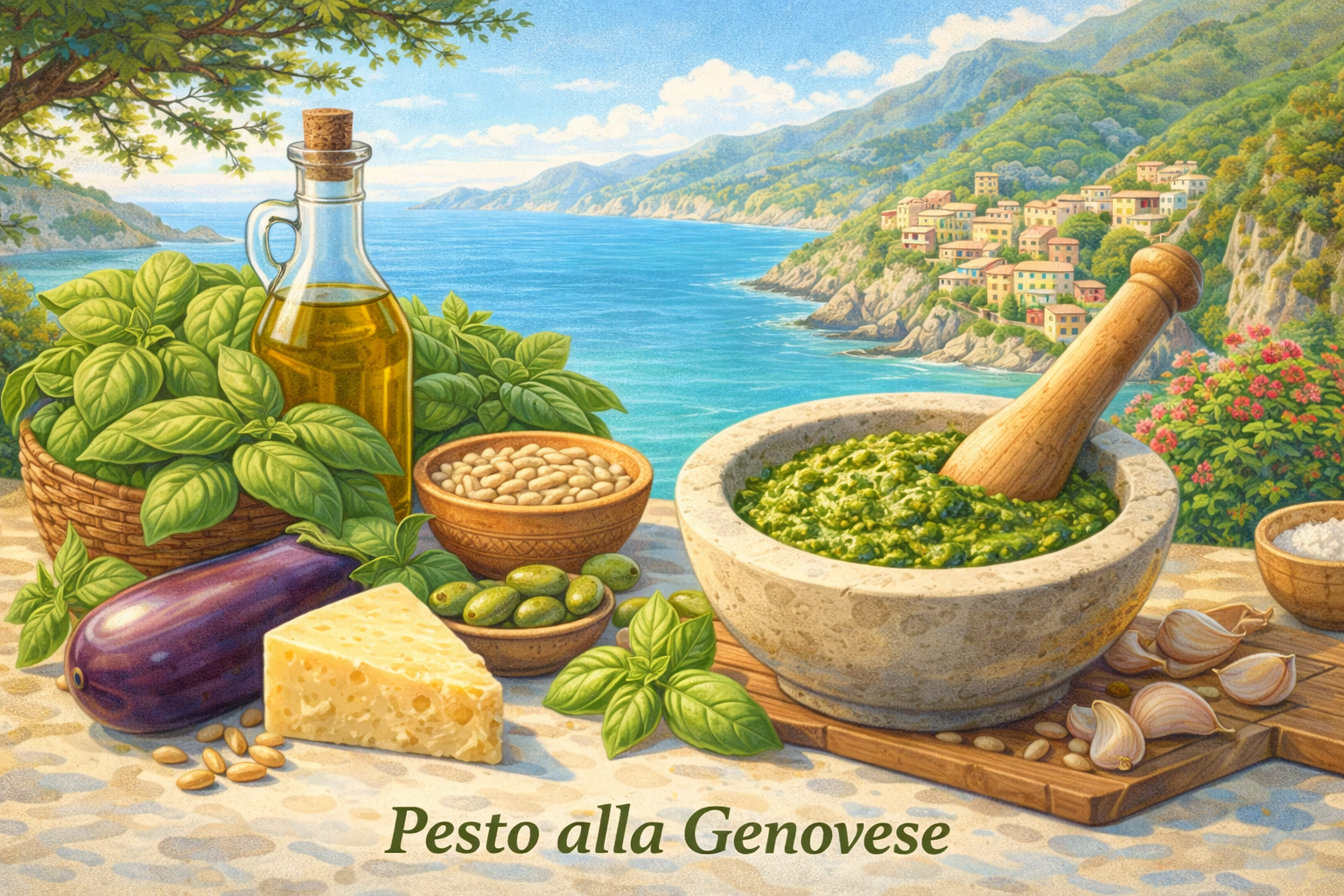
Pesto is not just a sauce; it is a portrait of Liguria in edible form. Born in Genoa, it reflects the region’s steep terraced hills, coastal breezes, and Mediterranean abundance. Every ingredient tells a story of place.
The basil is sacred. True pesto uses Genovese basil, grown near the sea, where salt air tempers its sweetness and gives it a delicate, rounded aroma — never harsh or peppery. In Ligurian kitchens, basil is treated almost reverently.
Pine nuts come from the maritime pines that dot the coastline. Garlic adds depth, but should never dominate. Parmigiano Reggiano and Pecorino Sardo provide structure and umami, while high-quality extra-virgin olive oil binds everything together into a silky emulsion.
Traditionally, pesto is made in a mortar and pestle, not a blender. Crushing rather than cutting releases aromatic oils gently, preserving colour and fragrance. The rhythm of pounding — basil, garlic, pine nuts, then cheese, then oil — is part of Genoese culinary memory.
Culturally, pesto is associated with summer, family lunches, and celebration. In Liguria, it is often served with trofie or trenette, sometimes cooked in the same pot as potatoes and green beans — a thrifty, beautiful tradition that links land and sea.
Pesto is also a lesson in temperature control: it is never heated. Heat dulls basil’s brightness and turns the sauce brown. Instead, hot pasta is tossed off the flame with a little starchy water to loosen the pesto into a creamy coat.
Beyond pasta, pesto finds its way into minestrone, onto grilled vegetables, or spread on focaccia. Yet at its core, it remains a simple, season-driven condiment — green, fragrant, and unmistakably Ligurian.
Recipe — Pesto alla Genovese (serves 4)
Ingredients
- 50g fresh basil leaves (stems removed)
- 1 small garlic clove
- 30g pine nuts
- 50g Parmigiano Reggiano, finely grated
- 20g Pecorino Sardo (or Pecorino Romano), grated
- 90–110ml extra-virgin olive oil
- A pinch of coarse salt
Method (mortar preferred)
- Pound garlic with a pinch of salt into a paste.
- Add pine nuts and crush to a rough cream.
- Add basil a handful at a time, grinding in circular motions.
- Mix in both cheeses until smooth.
- Drizzle in olive oil slowly to reach a creamy consistency.
To serve with pasta:
- Cook 320g trofie or linguine.
- Reserve a little cooking water.
- Toss pasta with pesto off the heat, adding water to loosen.