Heat is one of the most powerful—and often overlooked—tools in cooking. Slow cooking, for example, shows how applying heat gradually can transform ingredients in unique ways. While ingredients usually get the credit, fat, acid, and starch create balance, the way heat is applied—slowly or quickly—ultimately determines how those elements express flavour. In fact, understanding heat often matters more than following a recipe.
Across cuisines, cooks rely on two broad approaches: slow cooking and fast cooking. Neither is better by default. Instead, each shapes flavour in a very different way.
Heat Is Not Just Temperature—It’s Time and Intention
When people talk about heat, they often think only in terms of high or low temperature. However, heat also involves time, moisture, and control. A dish cooked gently for hours behaves very differently from one cooked aggressively in minutes.
I noticed this clearly when cooking onions. Slowly cooked onions turn sweet, soft, and deep. Cook the same onions quickly on high heat, and they become sharp, browned, and savory. Same ingredient. Completely different result.
That difference explains why heat choice defines a dish’s personality.
Slow Cooking: Depth, Sweetness, and Transformation
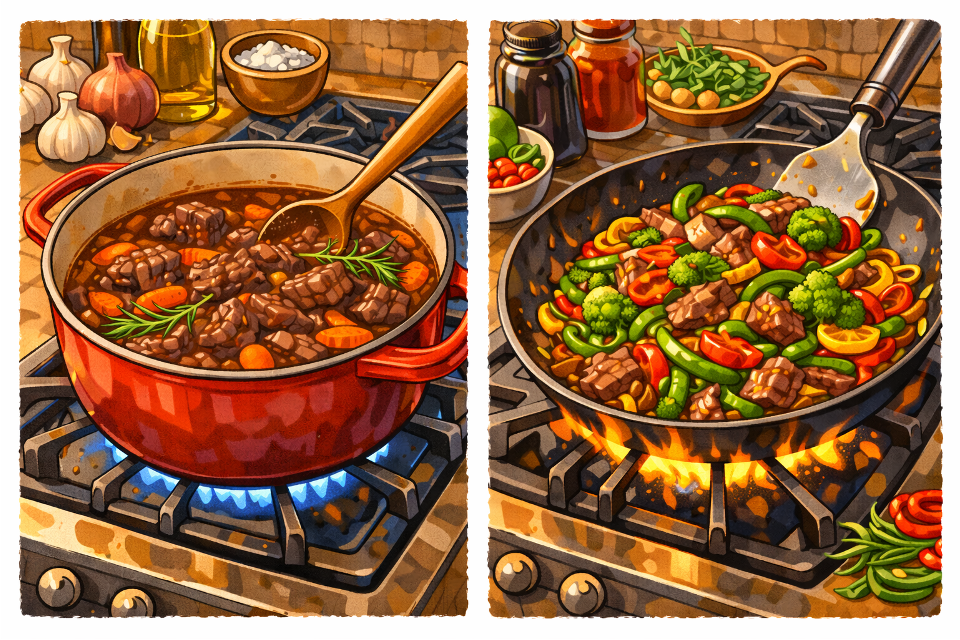
Slow cooking uses low to moderate heat over a long period. This method allows flavours to develop gradually and evenly.
As food cooks slowly, sugars caramelize gently, proteins relax, and moisture redistributes. As a result, dishes become cohesive and deeply flavored. Stews, braises, soups, and sauces rely on this process.
For example, a slow-simmered tomato sauce tastes round and balanced because acidity softens over time. Similarly, beans cooked slowly absorb seasoning fully instead of tasting separate or harsh.
Slow cooking rewards patience. It does not rush flavour—it builds it.
Fast Cooking: Contrast, Texture, and Intensity
Fast cooking, on the other hand, uses high heat for short periods. This approach creates immediate reactions like browning, charring, and crisping.
Techniques such as stir-frying, grilling, roasting at high temperatures, and sautéing rely on speed. Here, heat creates contrast rather than harmony. Crisp edges meet tender centers. Bright flavors stay sharp.
I often think of vegetables here. A quickly blistered pepper tastes fresh and smoky, while a slow-cooked one becomes sweet and mellow. Fast cooking preserves identity instead of blending it.
Because of this, fast cooking demands attention. Seconds matter.
Why Neither Method Works Alone
Great cooking rarely relies on only one type of heat. In fact, many successful dishes combine both.
For example, a stew might start with high heat to brown meat and build flavor, then shift to low heat for slow simmering. Pasta sauces often begin with quick sautéing and finish with gentle cooking. Even bread uses high heat to set the structure, followed by slower baking to cook through.
This combination allows cooks to layer flavor, texture, and aroma intentionally.
Choosing the Right Heat Makes You a Better Cook
Once you understand how heat shapes flavour, cooking becomes more intuitive. If a dish tastes harsh or disconnected, it may need slower heat. If it feels dull or heavy, faster heat can add contrast.
Instead of asking, “What recipe should I follow?” you begin asking, “What does this ingredient need from heat?”
Ultimately, heat is not just a technical detail—it is a creative decision. Slow heat creates depth and comfort. Fast heat delivers energy and clarity. Mastering both allows you to cook with intention, confidence, and control—across any cuisine.