Roman cooking is famously direct. It does not rely on delicate layering, subtle sweetness, or decorative complexity. Instead, it values clarity, contrast, and purpose. Few ingredients capture this attitude better than Pecorino Romano. Sharp, salty, and assertive, Pecorino is not a background note in Roman cuisine—it is a structural element.
To understand Roman cooking, you have to understand why Pecorino sits at its core.
A Cheese Rooted in Roman History
Pecorino Romano is older than Italy itself. Ancient Roman texts reference sheep’s milk cheese as a staple food for soldiers and laborers. Durable, nourishing, and heavily salted, Pecorino traveled well and spoiled slowly.
Sheep thrived in the dry, rugged land surrounding Rome, where cattle struggled. As a result, sheep’s milk cheese became abundant and familiar. Roman cooking did not adopt Pecorino as a trend—it inherited it as a necessity.
Over centuries, what began as survival food became cultural identity.
Sheep’s Milk and Roman Taste
Sheep’s milk behaves differently from cow’s milk. It contains more fat and protein, which creates a sharper, more concentrated cheese.
Roman cooking embraces this intensity. The city’s food tradition favors bold flavors that cut through starch, fat, and heat. Pecorino does exactly that.
I learned this lesson early when I tried substituting Parmesan in a Roman dish. The pasta tasted softer, sweeter, and somehow incomplete. Pecorino brought tension. That tension is intentional.
Pecorino as a Structural Ingredient
In Roman cuisine, Pecorino does not function as a garnish. It functions as seasoning and structure.
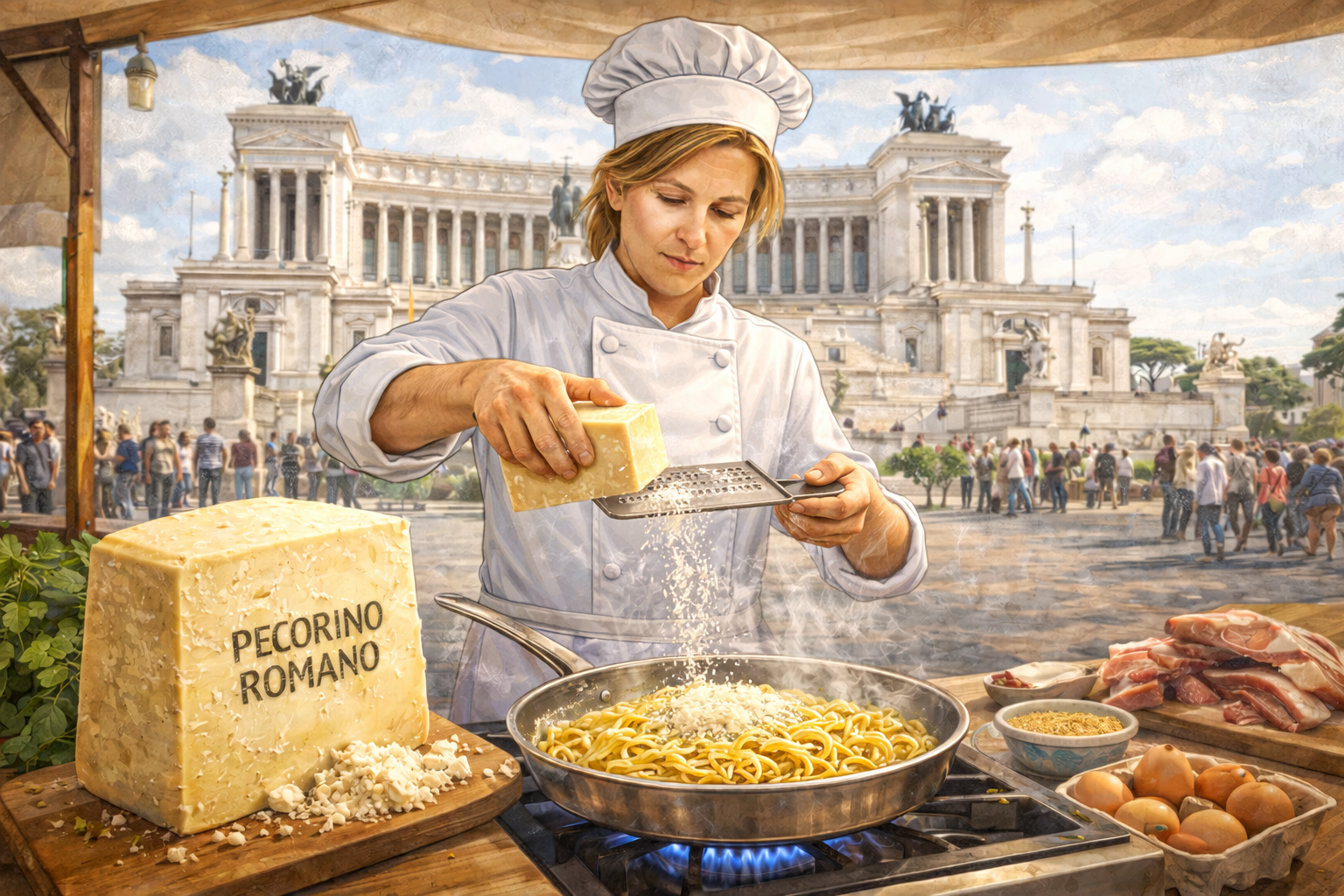
In cacio e pepe, Pecorino and starch create a sauce from almost nothing. In Gricia, Pecorino plays the role of restraint. Rendered guanciale releases a large amount of pork fat—rich, silky, and potentially overwhelming. Pecorino steps in to sharpen that richness. Its salt tightens the flavor, while its bite prevents the dish from becoming greasy. Without Pecorino, gricia feels heavy and one-dimensional. With it, the fat becomes structured and purposeful.
In carbonara, the challenge shifts. Egg yolks bring softness, roundness, and deep richness. Pecorino counters that softness. Its sharpness cuts through the yolk, creating contrast and definition. This is why Roman carbonara tastes savory rather than custardy. The cheese keeps the dish grounded, preventing it from drifting into something creamy or sweet. Pecorino gives carbonara its edge.
In amatriciana, Pecorino serves yet another function. Tomatoes introduce acidity and natural sweetness, especially after cooking. Guanciale adds fat. Pecorino balances both. Its salinity reins in sweetness, while its intensity keeps the sauce from tasting too gentle. Added at the end, Pecorino sharpens the entire dish, restoring clarity after long cooking.
Across all three dishes, Pecorino is not interchangeable. It is the stabilizing force. It does not decorate these pastas—it corrects them. Roman cooking relies on Pecorino because it understands that richness without contrast becomes dull. Pecorino provides that contrast every time.
Without Pecorino, these dishes collapse. Roman cooking depends on its ability to season, bind, and sharpen simultaneously.
Why Roman Cooking Values Contrast
Roman food rarely aims for smoothness alone. Instead, it seeks balance through opposition.
Fat meets salt. Richness meets sharpness. Starch meets bite. Pecorino provides the counterweight that keeps dishes from tipping into heaviness.
This preference reflects Roman temperament: honest, assertive, and uninterested in softening edges for comfort.
Heat, Timing, and Technique Matter
Roman cooks respect Pecorino’s behavior. They know it will clump under high heat and seize when rushed.
As a result, cheese meets pasta off the heat. Pasta water emulsifies fat and starch. Movement binds everything together.
I ruined my first cacio e pepe by adding Pecorino too early. Slowing down taught me that Roman cooking rewards patience, even when flavors are bold.
Why Parmesan Cannot Replace Pecorino
Parmigiano Reggiano brings nuttiness and sweetness. Pecorino brings salt and edge.
Roman dishes require that edge. Substituting Parmesan changes the dish’s architecture, not just its taste. Roman cooking does not aim to soften flavors—it aims to define them.
Pecorino as Roman Identity
Roman cooking loves Pecorino because it reflects the city itself. It is not polite. It does not blend quietly, and it asserts presence and demands attention.
Once you understand Pecorino’s role, Roman cuisine stops feeling aggressive. It starts feeling precise. And in Rome, precision is the highest form of respect.