Fresh herbs often feel like an afterthought—something scattered on top just before serving. In Italian cooking, however, this timing is not casual. Fresh herbs are added late because their role is specific and fragile. They exist to lift, clarify, and finish, not to endure long cooking.
Understanding why fresh herbs are added late reveals how Italian cooking treats aroma as carefully as flavor.
Fresh Herbs Are About Aroma, Not Power
Fresh herbs such as basil, parsley, mint, and fresh oregano contain volatile essential oils. These oils create aroma and brightness, but they evaporate quickly under heat. When herbs cook too long, their defining qualities disappear. Basil loses its sweetness. Parsley turns dull and slightly bitter. Mint becomes flat instead of refreshing.
I learned this lesson while making tomato sauce. Adding basil early seemed logical, but the sauce tasted muted. Adding it just before serving brought the tomato forward instead of covering it.
Fresh herbs do not build flavor through time. They reveal flavor through presence.
Heat Destroys What Makes Fresh Herbs Special
Fresh herbs react to heat almost immediately. High temperatures rupture cell walls and drive aromatic compounds into the air. What remains is color without character.
Italian cooks avoid this loss by adding fresh herbs when heat has already done its work. At that stage, the dish no longer needs cooking—it needs balance.
This is why basil rarely simmers in Italian kitchens. It meets warmth, not fire.
The Clear Divide Between Fresh and Dried Herbs
Italian cooking makes a sharp distinction between fresh and dried herbs.
Dried herbs tolerate long cooking because dehydration concentrates their oils and stabilizes them. Dried oregano, bay leaf, and rosemary can simmer for hours.
Fresh herbs behave differently. Their water content makes them delicate. Long exposure to heat strips them of identity.
Confusing the two leads to disappointment. Italian cooks respect the difference instinctively.
Fresh Herbs as a Final Adjustment
Fresh herbs function like a final seasoning. They correct, lift, and sharpen.
A rich dish finished with parsley feels lighter. A tomato sauce finished with basil feels clearer. Vegetables finished with mint feel fresh instead of heavy.
I began tasting food before adding herbs, then tasting again after. The difference was not subtle. Herbs did not add new flavor—they revealed what was already there.
This is why Italian cooks add herbs with restraint. Too many hides. Just enough clarification.
When Fresh Herbs Can Go in Earlier
Not all fresh herbs are equally fragile. Woody herbs like rosemary, thyme, and sage tolerate longer cooking.
Even then, Italian cooks handle them carefully. They add them whole or in large sprigs and often remove them before serving. The herb perfumes the dish without breaking down into bitterness.
This approach extracts aroma without sacrificing clarity.
Chopping and Handling Matter
How herbs are handled affects their behavior. Finely chopped herbs release oils faster and fade more quickly. Torn leaves last longer and taste cleaner.
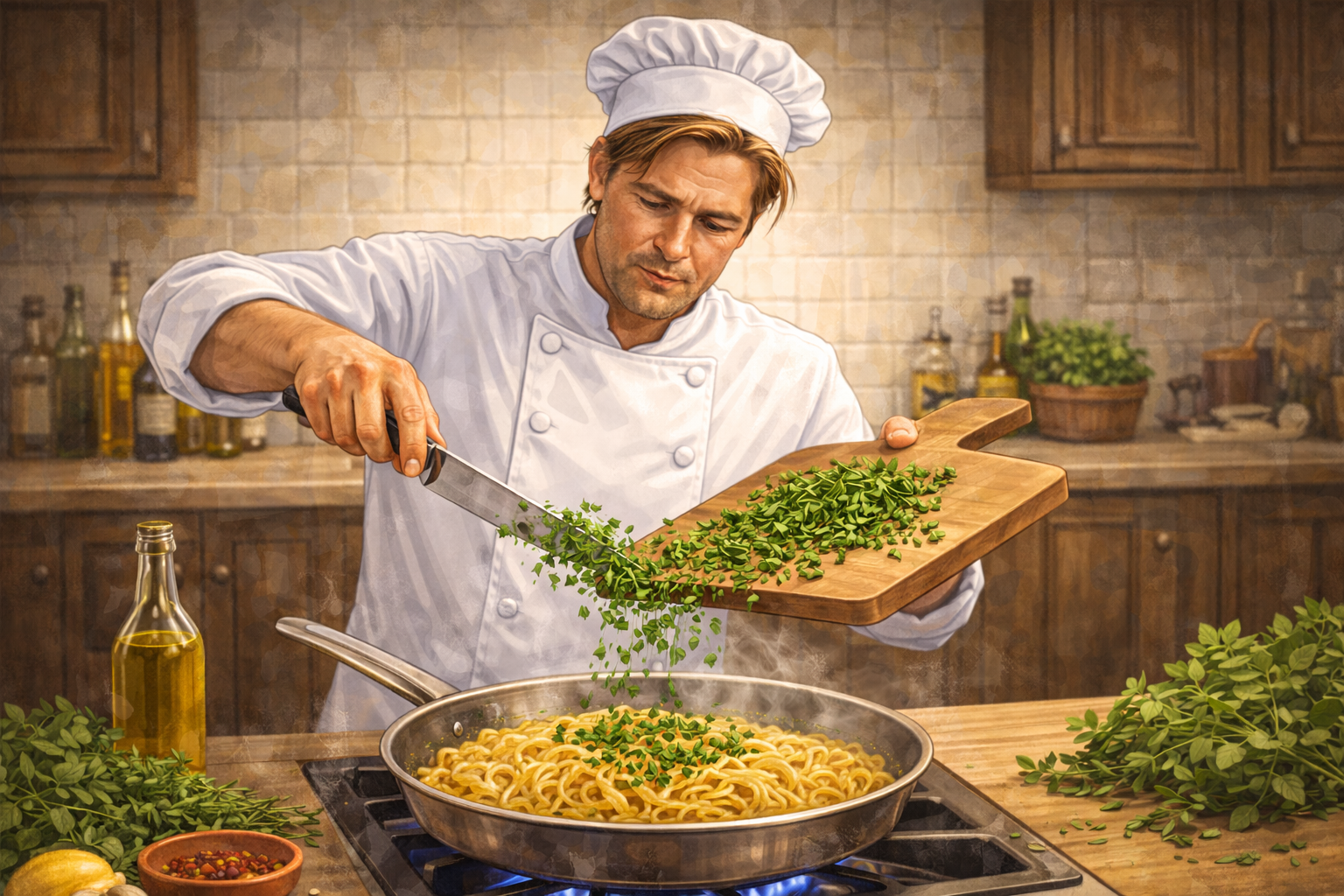
Italian cooks often tear basil rather than cut it. They chop parsley only at the last moment. Bruising is avoided.
These small choices protect aroma.
Why This Technique Reflects Italian Cooking Philosophy
Italian cooking prioritizes restraint. It avoids forcing flavor and instead focuses on timing and intention.
Fresh herbs added late reflect that mindset. They are not meant to dominate or cook into submission. They are meant to arrive at the right moment.
Once you understand this, herbs stop being decoration. They become tools of precision.
Fresh herbs are added late because their job is not to build flavor—it is to finish the conversation.