Dried herbs often suffer from misunderstanding. Many cooks treat them as a second-best substitute for fresh herbs, something to sprinkle in only when fresh leaves are unavailable. In Italian cooking, dried herbs serve a different and more deliberate purpose. They are not finishing touches. They are foundational ingredients, and for that reason, they are added early in the cooking process.
Understanding why dried herbs are added early reveals how Italian cooking uses time, fat, and patience to build depth rather than surface aroma.
Drying Transforms Herbs Completely
When herbs are dried, their water content disappears, but their essential oils become concentrated and stable. This changes how the herbs behave in a dish. Instead of releasing aroma quickly like fresh herbs, dried herbs require heat and moisture to rehydrate and open up.
If dried herbs are added late, they remain sharp, dusty, and disconnected from the dish. They sit on the surface rather than blending in. When added early, however, they slowly soften, releasing flavor gradually and evenly.
I learned this difference the hard way. Sprinkling dried oregano at the end of a tomato sauce made it taste harsh and unfinished. Adding it early allowed the flavor to melt into the sauce instead of floating on top.
Time Is the Ingredient Dried Herbs Need Most
Unlike fresh herbs, dried herbs do not deliver immediate brightness. They need time to activate. Italian cooks understand this instinctively and introduce dried herbs when there is still plenty of cooking ahead.
As the dish simmers, dried herbs rehydrate and release their oils. Heat smooths their sharp edges, while liquid carries flavor deeper into the dish. What begins as something aggressive becomes warm and round.
This slow release aligns perfectly with Italian cooking’s emphasis on patience and integration.
Fat Plays a Critical Role
Fat acts as a carrier for flavor. Olive oil, in particular, helps dried herbs distribute their aroma evenly.
Italian cooks often add them directly to warm oil or early liquid. This allows essential oils to bloom gently instead of clumping. When herbs meet fat early, they flavor the entire dish rather than creating isolated bursts.
This step prevents bitterness and ensures balance.
Selective Use Keeps Flavors Clean
Italian cooking does not rely on a wide range of dried herbs. Instead, it uses a small, intentional set.
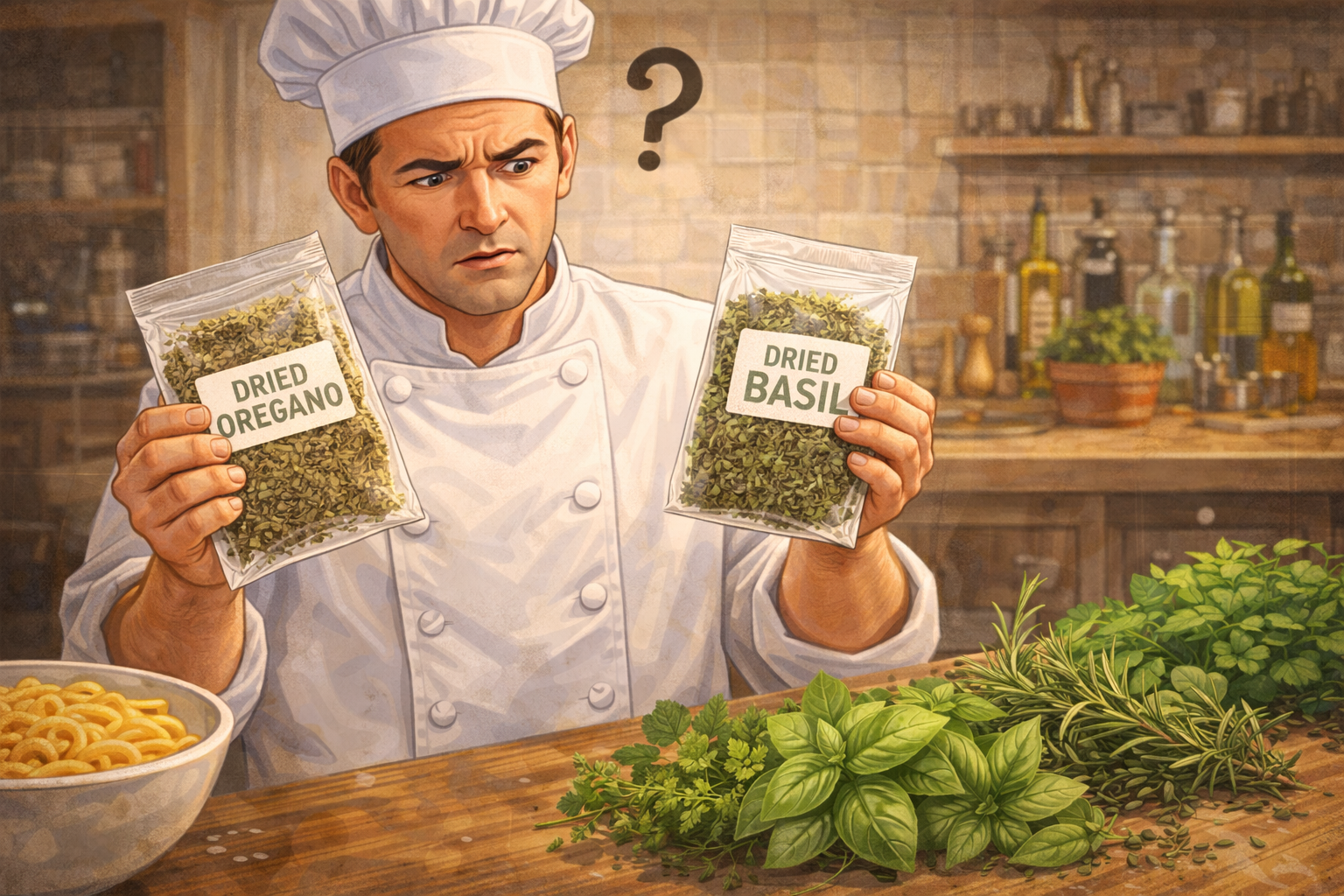
Dried oregano appears in tomato sauces. Bay leaf perfumes long-simmered dishes. Rosemary and thyme withstand extended heat. Basil and parsley rarely appear dried in traditional Italian kitchens because their delicate qualities do not survive dehydration well.
This restraint keeps flavors clean and recognizable.
Early Addition Prevents Harshness
If the herbs are added late taste is raw. They lack integration and often unpleasantly dominate the dish.
Added early, they soften and merge. Their bitterness fades, leaving depth behind. This difference explains why some dishes taste balanced while others feel heavy-handed.
Once I began adding them early and sparingly, my food tasted calmer and more confident.
Why This Reflects Italian Cooking Philosophy
Italian cooking values process over shortcuts. Dried herbs reflect that mindset. They are not about instant aroma or dramatic impact. They are about building flavor quietly.
Adding them early shows trust in time. It allows flavors to develop naturally rather than forcing them at the end.
Once you understand this, they stop feeling inferior to fresh ones. They simply play a different role—one that only works when given the time it deserves.