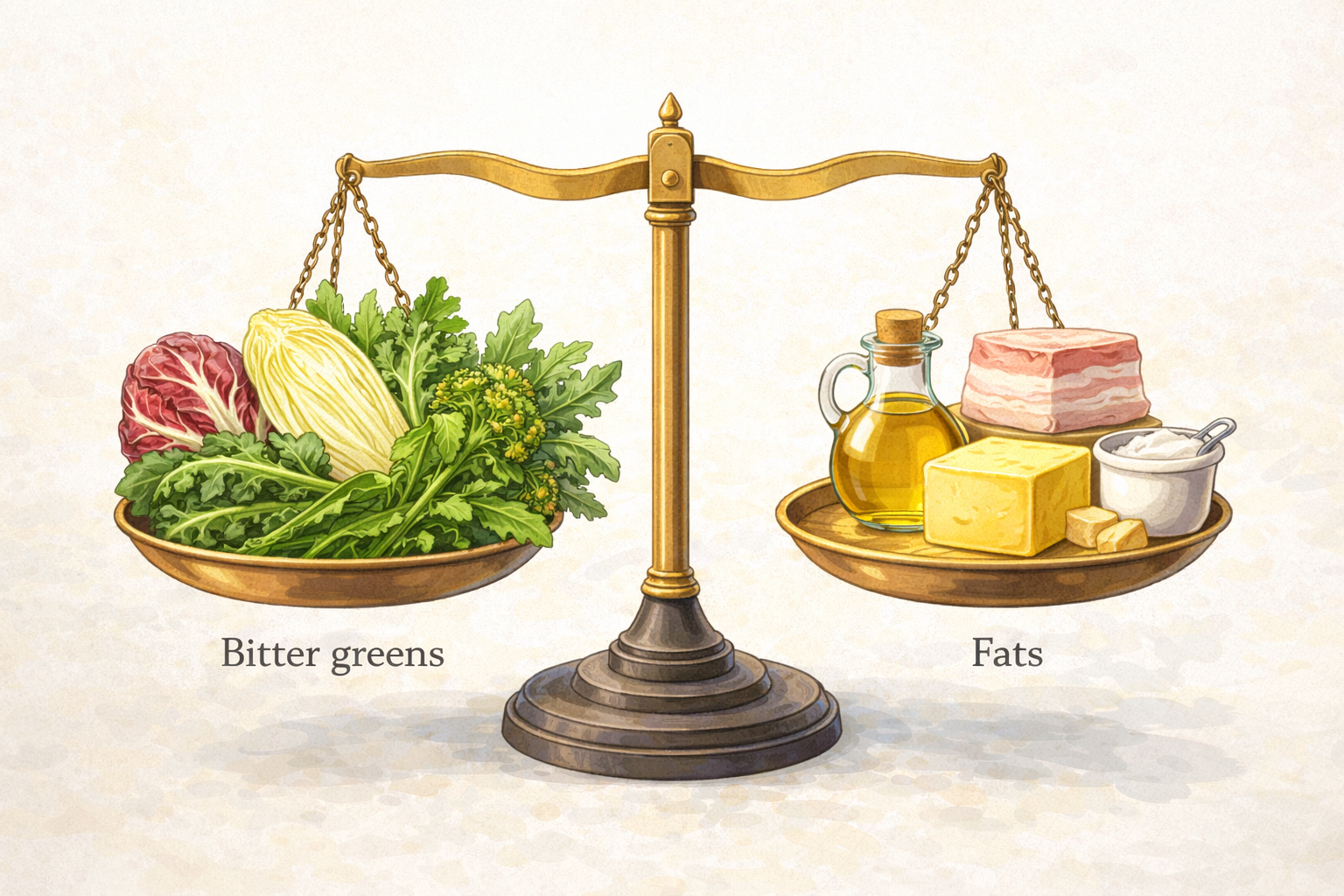
Bitterness is often misunderstood. Many cooks treat it as something to avoid, assuming it signals a mistake or an ingredient gone wrong. In Italian and Mediterranean cooking, bitterness plays a very different role. It is not a flaw to be corrected—it is a balancing force, and finding the bitterness balance is key. When used intentionally, bitterness keeps fat from becoming heavy, dull, or overwhelming.
Understanding this relationship explains why traditional dishes feel satisfying without feeling excessive. This is where the concept of bitterness balance makes a difference.
Fat Alone Quickly Becomes Too Much
Fat delivers comfort. It adds richness, softness, and depth. Olive oil, butter, cheese, and pork fat all coat the palate and carry flavor efficiently. However, fat lingers. Without contrast, it accumulates with every bite.
Bitterness interrupts that accumulation. It clears the palate and sharpens perception. Instead of adding more richness, bitterness creates space. Achieving the right bitterness balance is crucial to prevent the dish from feeling too heavy.
I noticed this clearly while eating rich pasta dishes. Without something bitter or sharp, each bite felt heavier than the last. Add a bitter green or sharp cheese, and the dish suddenly felt complete.
Why Mediterranean Cooking Welcomes Bitterness
Mediterranean landscapes produce many naturally bitter plants—radicchio, chicory, dandelion greens, and rapini. These ingredients were abundant and accessible.
Rather than masking bitterness, cooks learned to pair it with fat, salt, and heat. Olive oil softened harsh edges. Salt clarified flavor. Gentle cooking tamed intensity.
This pairing was practical and intuitive. Bitter foods made rich meals more enjoyable and easier to eat.
How Bitterness Works on the Palate
Bitterness activates taste receptors that contrast directly with fat. While fat coats and rounds, bitterness cuts and tightens. The ideal bitterness balance brings out the best in every ingredient.
This contrast shortens the lingering effect of fat on the tongue. It keeps flavors distinct instead of muddy. The result is balance rather than restraint.
This explains why bitter elements often appear at the edges of dishes rather than the center.
Classic Italian Pairings Reveal the Logic
Italian cooking offers clear examples of bitterness balancing fat.
Radicchio roasted with olive oil develops sweetness while retaining bite. Rapini sautéed with garlic and oil remains sharp enough to stand up to richness. Pecorino Romano cuts through egg yolks and pork fat in Roman pastas.
These pairings are not decorative. They are structural.
Cooking Shapes Bitterness Without Eliminating It
Italian cooking rarely removes bitterness entirely. Instead, it shapes it.
Blanching softens bitterness. Sautéing rounds it. Slow cooking integrates it. Acid sharpens it without exaggeration.
I learned this when I stopped trying to eliminate bitterness from greens. Letting it remain—just enough—made dishes feel alive instead of flat. In fact, the bitterness balance brings brightness and complexity to many classic Italian dishes.
Why Bitterness Feels Mature
Bitterness often reads as “adult” because it asks for attention rather than comfort. It does not reward excess.
Italian cooking embraces this maturity. It favors balance over sweetness and restraint over indulgence.
Bitterness anchors that philosophy.
Why This Understanding Improves Cooking
Once you understand bitterness, you stop compensating with extra fat or salt.
You begin adding contrast instead of richness.
Bitterness does not fight fat—it completes it. And when those two elements work together, dishes feel intentional, balanced, and deeply satisfying rather than heavy. Ultimately, mastery of bitterness balance enhances every meal.