Anchovie fans and critics alike know that anchovies often divide opinion. Many people think of anchovies as aggressively fishy or overpowering, best avoided unless clearly visible on a pizza. In Italian cooking, however, anchovies play a very different role, especially in anchovies sauces. They are rarely meant to be seen. Instead, they are meant to disappear.
Understanding why anchovies melt into sauces reveals one of Italian cooking’s most subtle techniques—using intensity to create depth, not dominance.
Anchovies Are a Concentrate, Not a Fish
Anchovies used in Italian cooking are not fresh fish. They are preserved—salt-cured and aged. This process transforms anchovies completely.
Curing breaks down muscle fibers and concentrates natural glutamates. As a result, anchovies become soft, fragile, and intensely savory. They no longer behave like fish. They behave like seasoning.
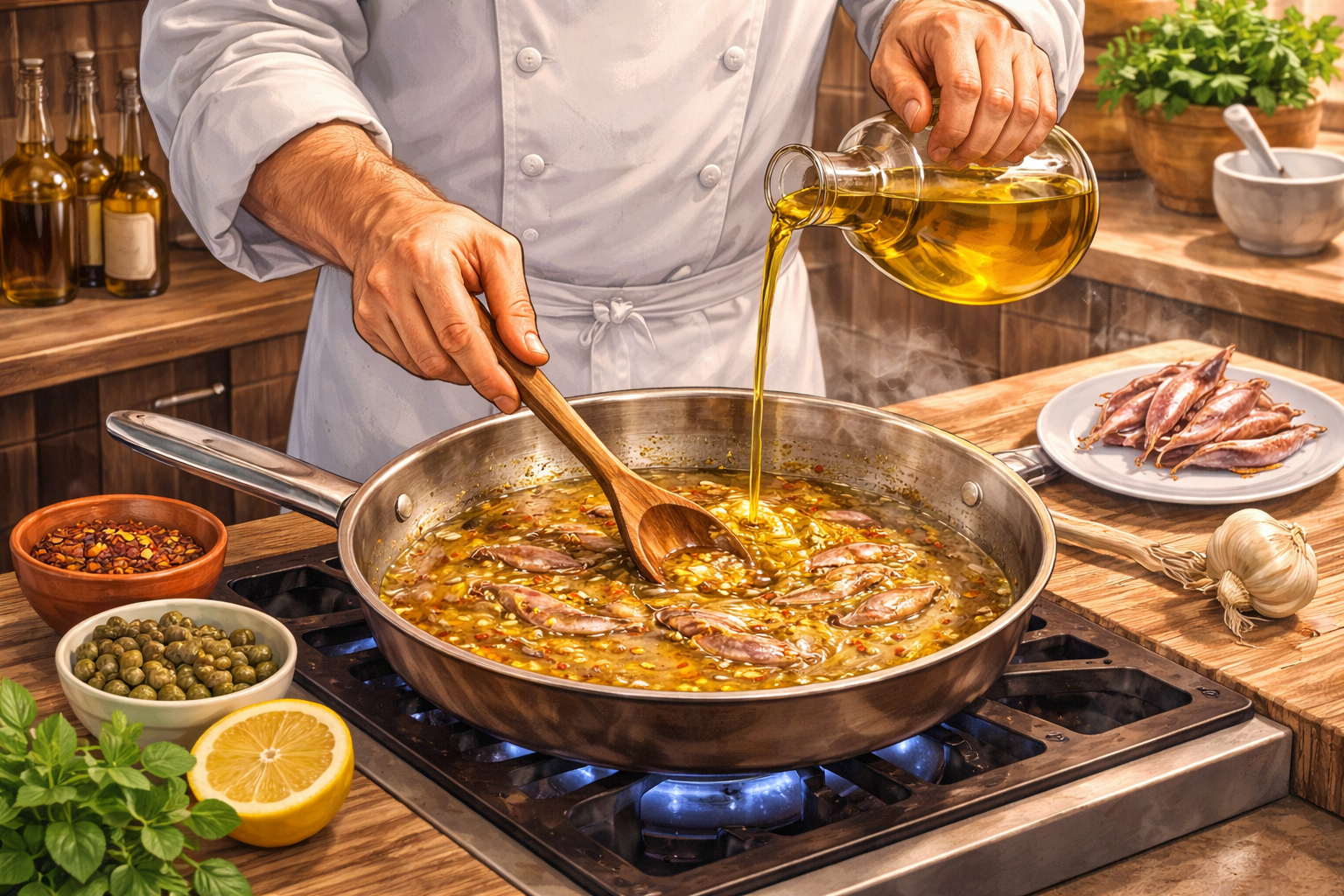
The first time I watched anchovies dissolve in olive oil, I expected something dramatic. Instead, they vanished quietly, leaving behind richness rather than fishiness.
Salt, Fat, and Heat Do the Work
Anchovies melt because they are already partially broken down. When placed in warm oil, their structure collapses quickly.
Salt weakens proteins. Fat disperses flavor. Gentle heat completes the process. Together, these elements allow anchovies to dissolve into the sauce, distributing umami evenly.
This is why Italian cooks add anchovies early, over low heat. High heat is unnecessary. Patience is enough.
Anchovies Create Umami Without Announcement
Once melted, anchovies do not taste like anchovies. They taste savory, deep, and rounded.
In pasta sauces, anchovies provide backbone.vegetable dishes, they add complexity. In braises, they deepen flavor without heaviness.
I once added anchovies to a tomato sauce without telling anyone. The reaction was telling. People described the sauce as “rich” and “balanced,” never fishy. That invisibility is the point.
Why Anchovies Pair So Well with Olive Oil and Garlic
Italian cooking often combines anchovies with olive oil and garlic. This trio appears repeatedly because it works structurally.
Olive oil carries flavor. Garlic adds aroma. Anchovies provide salt and umami. Together, they create a complete base with very few ingredients.
Once anchovies melt, garlic becomes sweeter, and oil becomes richer. The sauce gains body without added ingredients.
Classic Dishes That Rely on Melting Anchovies
Several Italian dishes depend on anchovies disappearing.
In puttanesca, anchovies dissolve into tomatoes and olive oil, anchoring the sauce. bagna càuda, anchovies melt completely, becoming the soul of the dish. And in vegetable sautés, they replace salt entirely.
Without melting anchovies, these dishes lose structure.
Why Anchovies Must Be Treated Gently
Anchovies demand low heat and patience. Added too late, they stay distinct. Added too aggressively, they scorch.
Italian cooks break anchovies apart with a spoon as they warm. No rushing. No force.
Learning this taught me restraint. Anchovies reward quiet attention.
Why Anchovies Change How You Season
Once you understand anchovies, salt becomes secondary. Anchovies season more deeply than salt alone.
They do not sit on the surface. They integrate.
Anchovies melt because they are meant to. In Italian cooking, their disappearance is their greatest strength.